




403
Sorry!!
Error! We're sorry, but the page you were looking for doesn't exist.
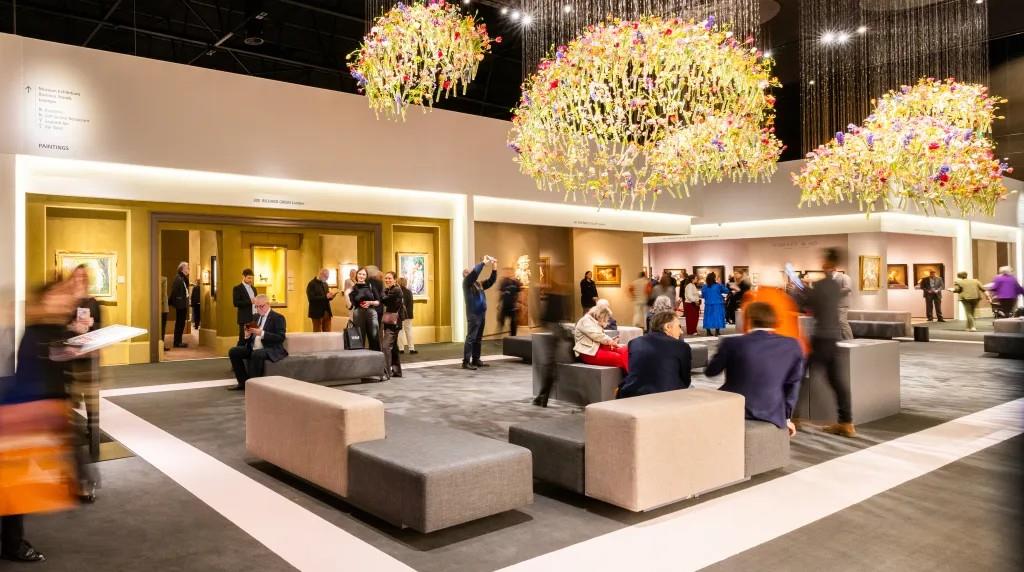
TEFAF Maastricht: A Superior Salvator Mundi, And 5 Other Masterpieces
(MENAFN- USA Art News)
TEFAF Maastricht 2026 Opens with a“De Ganay” Salvator Mundi and a €750,000 Pair of Japanese Vases
MAASTRICHT - Each March, TEFAF turns this Dutch city into a temporary capital of connoisseurship, and this year's edition arrives with the kind of objects that can stop even seasoned dealers mid-sentence. The fair opened Thursday and runs for six days, bringing together 276 dealers from 24 countries across sections spanning paintings, antiques, jewelry, modern and contemporary art, design, ancient art, and the arts of Africa and Oceania.
Among the early conversation pieces is a“Christ as Salvator Mundi” (the so-called de Ganay version), offered by Agnews of London. The work, dated to around 1505–15, is an oil on walnut panel measuring roughly 27 inches high. It reprises the familiar iconography: Christ raises his right hand in blessing and holds an orb in his left. But, to the eye, it appears in notably stronger condition than the“Salvator Mundi” that sold at Christie's for $450.3 million - still the highest price ever paid for an artwork at auction - following recent restoration.
Agnews' Cliff Shorer said the gallery has not attached a price to the painting, citing a lack of comparables. The question of attribution, however, is part of what keeps the picture in the spotlight. Over the years, some specialists have described it as“Leonardo and collaborators” or“partially autograph.” When the Louvre exhibited the work in 2019–2020, it was presented as by a“faithful pupil...with his possible intervention,” a formulation that underscores both its proximity to Leonardo's orbit and the limits of consensus.
The painting's provenance adds another layer of intrigue. It was long held by the de Ganay family and has been with its current owner since it sold at Sotheby's in 1999 for what Shorer characterized as a“modest” sum. Earlier chapters include ownership by a French baron and by the collector Martine de Béhague, known for her green hair and for hosting Marcel Proust and other writers - a reminder that TEFAF's objects often arrive with biographies as vivid as their surfaces.
Across the fair, another booth draws viewers with a different kind of magnetism: a pair of Japanese“birdcage” vases (circa 1700) presented by Vanderven Oriental Art of 's-Hertogenbosch.“Why are people so fascinated with these?” asked Nynke van der Ven, one of TEFAF's founders in 1988. Her answer was disarmingly direct:“Well, it's partly because they're slightly weird.”
Standing about 20 inches high, the blue-and-white vases have flaring mouths and are embellished with gold lacquer. Porcelain handles in the form of elephant heads - recently replaced by the gallery - flank each vessel. Most striking is the gold-lacquered wire cage that holds a porcelain pheasant, turning the vases into sculptural hybrids that feel at once ceremonial and playfully theatrical.
Their history is as specific as their silhouette. Augustus II the Strong, Elector of Saxony and king of Poland, is said to have collected 20 examples for his Japanese-style palace in Dresden. Related works from that group are now held by institutions including the Rijksmuseum in Amsterdam, the Ashmolean Museum at Oxford, and the Peabody Essex Museum in Massachusetts. Vanderven has priced the pair at €750,000 (about $864,000).
TEFAF's appeal has always been its compression of time: Renaissance devotional imagery, Edo-period eccentricities, and the market's present-tense negotiations all sharing the same aisles. With 276 dealers unpacking“many thousands” of objects, the fair's first days suggest a familiar TEFAF rhythm - scholarship, spectacle, and the quiet pressure of decisions made in front of masterpieces.

Legal Disclaimer:
MENAFN provides the
information “as is” without warranty of any kind. We do not accept
any responsibility or liability for the accuracy, content, images,
videos, licenses, completeness, legality, or reliability of the information
contained in this article. If you have any complaints or copyright
issues related to this article, kindly contact the provider above.
Most popular stories
Market Research

More Story








Comments
No comment