







403
Sorry!!
Error! We're sorry, but the page you were looking for doesn't exist.
Apple's Unrivalled Commitment To Excellence Is Fading A Designer Explains Why
Author: Christopher J. Parker
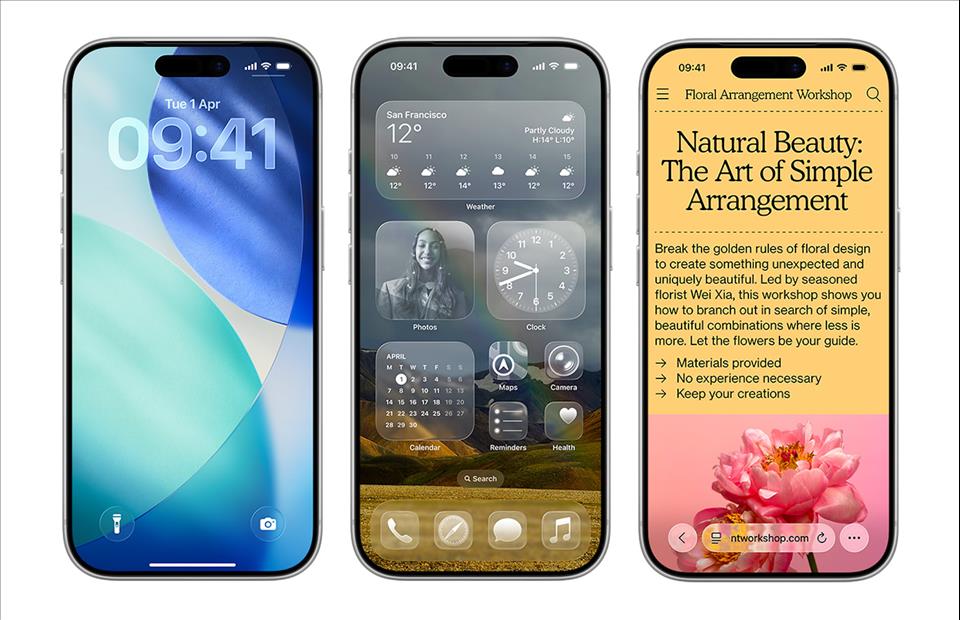
(MENAFN- The Conversation) Apple introduced Liquid Glass in June 2025 in a self-declared attempt to bring“joy and delight to every user experience”. The visual design style – which is being applied to all Apple products from iPhone to watch to TV – is named for the company's new type of screen designed to look like translucent liquid.

Standing out by design has been paramount for Apple ever since Steve Jobs co-founded the company half a century ago. He was quick to kill off every uninspired idea, declaring:“Deciding what not to do is as important as deciding what to do.”
Jobs' leadership style could verge on the tyrannical, yet his approach was essential to Apple's enduring success, which, more than 14 years after his death, still ranks as the world's most valuable brand.
To Jobs, the twin importance of design aesthetics and user experience (UX) was non-negotiable – both must be perfect for the public to see the product. But the recent history of Liquid Glass – introduced under Jobs' successor as CEO, Tim Cook – suggests Apple may now be losing that ethos.
Upon Liquid Glass's official release last September, many customers criticised the design of Apple's new operating system (known as OS 26). Social media was inundated with complaints about its slow or nonsensical animations, distracting colour shifts, excessive interactions, cartoonish or blurry icons, poor contrast, inconsistent highlighting, and battery-hungry effects that were too subtle to be worth the bother.
A review by the UX consultancy NN/g was equivocal at best:“At first glance, the system looks fluid and modern. But try to use it, and soon those shimmering surfaces and animated controls start to get in the way.”
Wired magazine called the new system “awful”, concluding:“People don't enjoy forking over data and dollars in exchange for annoyance.”
With OS 26 and Liquid Glass, Apple opted to throw away many of the interactions that its users had spent years ingraining into their motor functions. Poor usability feels unforgivable for a company built on Jobs' mantra:“It works like magic.” Evidently, it didn't.
Apple's difficult 2025 culminated in the sudden departure of its vice-president of human interface design, Alan Dye, to big tech rival Meta in December.
While this was primarily seen as a coup for Meta, some speculated that Dye's departure might have been partly due to Liquid Glass's underwhelming reception. When the news broke, Cook stressed that Apple“prioritises design and has a strong team”.
Where did Apple go wrong?As a senior lecturer in UX design, I have devoted much of my professional life to understanding how and why digital interactions shape the way we live and our consumer behaviour. Small interactions matter.
Central to the criticisms of Liquid Glass has been OS 26's poor usability – in particular, how the“transparency” of Liquid Glass made everything hard for many users to read.
Even during its pre-launch beta testing, Apple realised its new design had some issues, pushing design changes to reduce the transparency effects on notification backgrounds, for example. On the iPhone, the (very) transparent elements looked good on some stock wallpapers – but were widely rated unusable on others.
The first update, two months after the official September 2025 launch, let users disable Liquid Glass's transparency to increase legibility. But by reducing transparency and blurs on some backgrounds, the user experience also became more sterile.
There's still plenty to admire in Liquid Glass's design and functionality. When using my iPhone, for example, I find the“glass bubble” magnifying glass effect during text selection exquisitely decadent.
Yet all the while, the great German designer Dieter Rams' tenth principle haunts me:“Good design is as little design as possible.” Jony Ive, Apple's design guru for more than two decades, based almost all of the iPhone's original aesthetic on Rams' designs.
Liquid Glass's usability issues become (literally) clearest when I select the “clear” homescreen setting – a flagship visual aesthetic in Apple's promotional material. Not only is it hard to read, but the app icons become almost indistinguishable.
Every time I look at my screen in this mode, I feel pain from the lack of colour and muddiness of the icons blending into the background (I can't find the WhatsApp icon!). Selecting the“wrong” kind of wallpaper, such as a photo of my child on holiday, compounds the issue.
It feels a peculiar decision to let users get rid of the core colour signals that have underpinned Apple's exceptional usability for so long. After one day I can no longer take the pain, switching back to the default colour setting.
What's next for Liquid Glass?I believe Liquid Glass's design and UX issues are symptomatic of wider cultural issues at Apple. Dye's departure came hard on the heels of the announcement of John Giannandrea's retirement – the British software engineer who presided over the company's AI chatbot system, Apple Intelligence.
Like Liquid Glass, this has so far failed to signal excellence, having been unfavourably compared with rivals such as Google Gemini and ChatGPT since its (delayed) 2024 introduction.
These leadership shifts come at a time when, according to one UK survey, 69% of consumers desire more affordable smart products – a market now well served by Chinese brands. Where once brands such as Oppo copied Apple mercilessly, now they are producing highly distinctive handsets.
Fixing Liquid Glass's flaws will happen – I'll put money on March's OS 27 release making the necessary adjustments. But the necessity for them betrays an underlying problem: Apple is fallible. While a single poor design decision can be addressed, the pattern of underwhelming UX is eroding Apple's luxury status.
Apple's core philosophy of perfectionism should be non-negotiable. What it needs now is a bolder vision for the way people will interact with its products in future, not just yet another new aesthetic. To quote the American ice hockey legend Wayne Gretzky, as Jobs was fond of doing:“I skate to where the puck is going to be, not where it has been.”
Institution:Loughborough University

Legal Disclaimer:
MENAFN provides the
information “as is” without warranty of any kind. We do not accept
any responsibility or liability for the accuracy, content, images,
videos, licenses, completeness, legality, or reliability of the information
contained in this article. If you have any complaints or copyright
issues related to this article, kindly contact the provider above.
Most popular stories
Market Research

More Story








Comments
No comment