




403
Sorry!!
Error! We're sorry, but the page you were looking for doesn't exist.
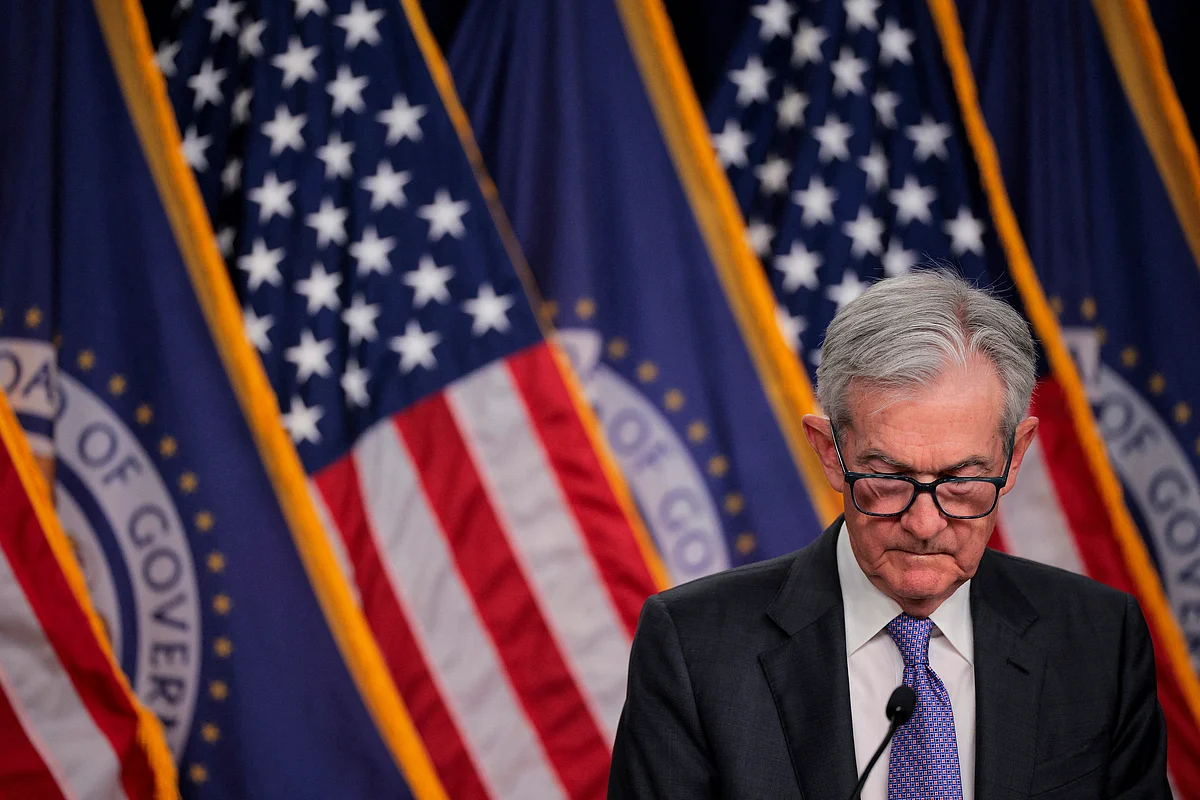
Looming Fed Rate Pause Nudges Bond Investors Back Into Risk
(MENAFN- Khaleej Times)
Bond investors are bracing for an extended pause in the Federal Reserve's rate-cutting cycle as they edge into slightly riskier trades, driven by a resilient economy and fresh U.S. fiscal stimulus plans that are likely to boost consumer spending this year.
The U.S. central bank's Federal Open Market Committee (FOMC) is widely anticipated to hold its benchmark interest rate steady in the 3.50%-3.75% target range at the end of a two-day policy meeting on Wednesday. The committee cut that rate by a quarter of a percentage point at its meetings in September, October, and December following a nine-month pause.
Recommended For YouWhatever signals Fed Chair Jerome Powell gives at his press conference on Wednesday about the speed of rate cuts, investors' focus will likely shift to who might replace him in May. BlackRock bond chief Rick Rieder has become the odds-on favorite, with Polymarket giving him a 49% chance of taking the top job.
Ahead of the Fed decision, bond investors have mostly added risk to their portfolios by extending duration or buying longer-dated debt, while being opportunistic on U.S. corporate credit. Duration, expressed in years to maturity, reflects how sensitive a bond's price is to changes in interest rates.
Adding duration is often viewed as a risk-seeking move because longer-maturity debt is more exposed to uncertainty in the economic and rate outlook.
Traders broadly continue to anticipate a shallow easing cycle from the Fed as labor market conditions remain stable, inflation shows signs of peaking, and the Fed funds rate moves closer to a neutral level - one viewed as neither restrictive nor accommodative. "When you factor in the policy implementation that's happening over the course of the next few quarters, like new tax cuts and some of the fiscal impact of the previous Fed rate cuts all coming through the economy, a pause makes a lot of sense," said Tony Rodriguez, head of fixed income strategy at Nuveen.
U.S. rate futures have priced in about 44 basis points (bps) of easing, or less than two 25-basis-point rate cuts, for 2026. That pricing was down from about 53 bps two weeks ago.
The current backdrop supports a measured return to risk-taking, portfolio managers said, though rich U.S. credit valuations are preventing investors from getting too adventurous.
"We have been telling our clients to... get out of cash, but don't be overly aggressive within your fixed income portfolios, mainly based on valuations, which are not supportive," said John Flahive, head of wealth investment solutions and co-head of municipal bonds at Insight Investment.
U.S. investment-grade credit spreads have further tightened recently and are now at historically low levels. IG spreads were last at 73 basis points over Treasuries, ICE BofA U.S. Corporate Index data showed, close to the tightest levels seen since the late 1990s. It reflects strong demand for higher-quality corporate debt, but poses limited opportunity for investors. Market players remain cautious in general as persistent fiscal strains and rising global tensions over trade and national security remain a focus of the Trump administration.
Christian Hoffmann, head of fixed income at Thornburg Investment Management, said the bigger risk lies in the United States' geopolitical relations.
The continued surge in gold as a major component in global central bank reserves is partly driven "by a desire to diversify away from U.S. debt... because people have long-term concerns about our fiscal position," Hoffmann said.
EXTENDING DURATION Overall, there has been an increase in long-duration positioning in the last week. J.P. Morgan's latest Treasury Client Survey showed that its client positioning had the most net long positions since mid-December. Investors typically extend duration, purchasing U.S. five-year to 30-year Treasuries, when the Fed is cutting rates. During easing cycles, yields on shorter-dated debt tend to fall first, prompting investors to move further out the curve to lock in higher long-term rates before they decline further.
As such, longer-dated debt has historically outperformed shorter-duration Treasuries during Fed rate-cut periods. A steeper yield curve makes the case for adding duration, said Vishal Khanduja, head of the broad markets fixed income team at Morgan Stanley Investment Management. A steeper curve shows yields on longer-dated Treasuries are outpacing those on short-term maturities.
"What you're getting on your money market is lower than what you're getting for the five- to the 10-year part of the yield curve," he added. "Extending out gives you that steepness... so higher yields and steeper curves allow you to get paid," he said.
Outside of extending duration in fixed-income portfolios, some bond investors see less room for doing anything riskier. While the Trump administration has committed to certain initiatives to boost consumer spending, such as a 10% interest rate cap on credit cards along with tax cuts, there's limited fiscal leeway for those plans to make a full impact, said George Catrambone, head of fixed income in the Americas at DWS.
"The U.S. is not in a position to have additional fiscal stimulus based on where deficits currently sit," Catrambone said. "There's some question on the longevity behind Trump's first-half stimulus, so I don't think it's a great time to just drop down to triple Cs," he added, referring to buying junk or distressed credit.

Legal Disclaimer:
MENAFN provides the
information “as is” without warranty of any kind. We do not accept
any responsibility or liability for the accuracy, content, images,
videos, licenses, completeness, legality, or reliability of the information
contained in this article. If you have any complaints or copyright
issues related to this article, kindly contact the provider above.
Most popular stories
Market Research

More Story








Comments
No comment