





403
Sorry!!
Error! We're sorry, but the page you were looking for doesn't exist.
Thermal Baths Are Multiplying And Moving Upmarket In Swiss Resorts
(MENAFN- Swissinfo)
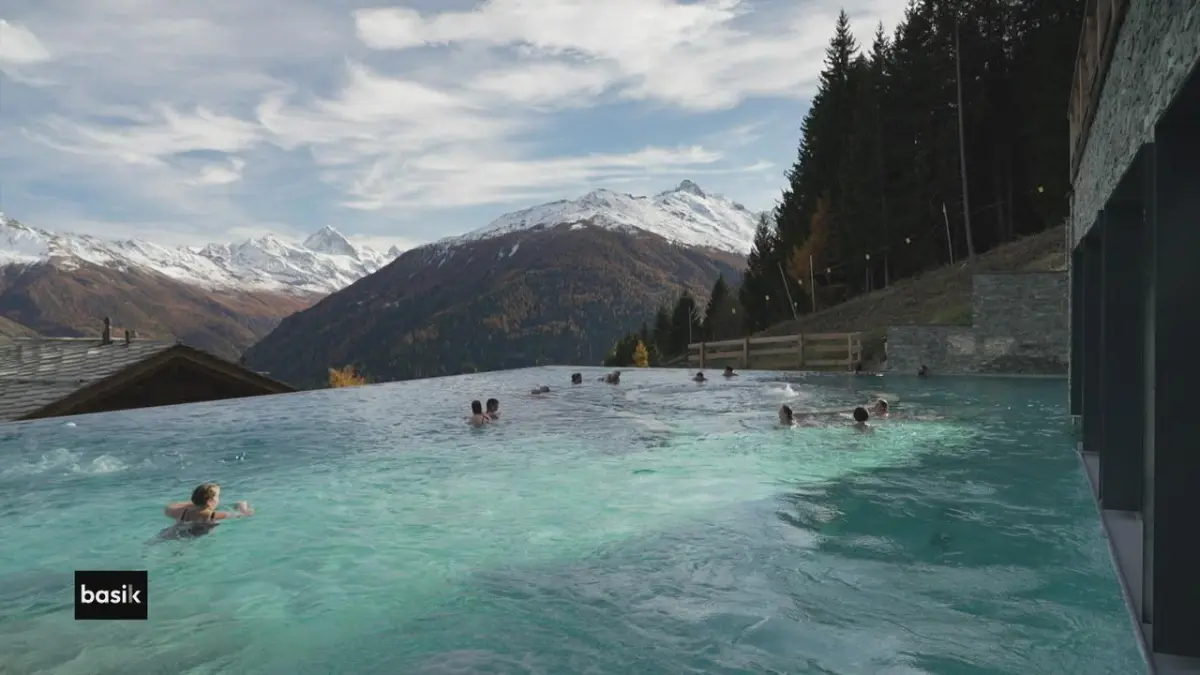
From the 'Aquae Helveticae' of Roman times to futuristic spa complexes, Switzerland's thermal water tradition spans two millennia. Today, several resorts are investing heavily in luxury and immersive wellness experiences. But as the sector expands, questions arise about sustainability and limits: how far can wellness fever go?
This content was published on
January 23, 2026 - 11:00
5 minutes
Serge Enderlin, RTS
-
Deutsch
de
Schweizer Thermalbäder: immer mehr, immer ausgefeilter
Read more: Schweizer Thermalbäder: immer mehr, immer ausgefe
Français
fr
Les bains thermaux se multiplient et montent en gamme dans les stations
Original
Read more: Les bains thermaux se multiplient et montent en gamme dans les sta
Italiano
it
Meno neve, boom del wellness: i bagni termali svizzeri puntano in alto
Read more: Meno neve, boom del wellness: i bagni termali svizzeri puntano in
People were already bathing at Aquae Helveticae some 2,000 years ago. At the time, mineral-rich thermal water gushed from the ground at around 42°C. Two millennia later, bathing continues on the same site – but in a very different setting. In Baden, ultra-modern thermal baths now line the banks of the Limmat. Designed by Mario Botta, the complex reopened four years ago following a renovation costing several tens of millions of francs.
The facility, known as FortySeven, reflects its proximity to Zurich, around 20 kilometres away, and the purchasing power of a wellness-oriented clientele. Entry costs CHF69 ($86), clearly positioning the baths at the upper end of the market.
“Our core target group is people aged between 25 and 60. We don't have a specific offer for children,” explained Franc Morshuis, CEO of FortySeven, on RTS's Basik programme.“We don't just offer thermal water. There are clothing-free saunas and saunas for conservative folks, a 'Kosmos' zone with different themed worlds, a salt bath, relaxation areas – and music composed by Boris Blank. That's the FortySeven spirit.”
CHF40 million investment in Yverdon-les-BainsThe Romans also left their aquatic traces in French-speaking Switzerland. In Yverdon-les-Bains, the thermal baths are currently undergoing a major transformation. Owned by the Boas hotel group, which also operates the Saillon baths in canton Valais, the site is being renovated at a cost of CHF40 million.
The aim is to replace the ageing 1990s infrastructure with a modern spa offering focused on experience rather than therapy alone. During the renovation, entry prices have been reduced to CHF18. The reopening is scheduled for the end of 2027.
“The traditional spa guest who came simply to 'take the waters' for therapeutic reasons no longer really exists,” says Matthias Philipps, director of the Yverdon-les-Bains Spa Centre.“Today's visitors have very different expectations – some want to alternate between hot and cold zones, others want to eat on the go before relaxing in the water. We try to cater to all of that.”
Less snow, more spasAcross Switzerland, hundreds of millions of francs are being invested in the wellness sector, which has become increasingly competitive. Not all projects have succeeded: the thermal baths in Ovronnaz have gone bankrupt, and those in Val-d'Illiez have been closed for several years, although plans to restart them exist.
In alpine regions, thermal baths are increasingly seen as an alternative to snow-dependent tourism.“Since 2020, the wellness sector has grown by around 15–20% per year,” says Nicolas Délétroz, professor at the HES-SO Valais Institute of Tourism.“Whether it's meditation walks, yoga at altitude or personalised coaching, mountains are being marketed as spaces for well-being – and thermal baths fit perfectly into that trend.”
One of the latest examples is the Grands Bains d'Hérémence in the Val d'Hérens. The complex is part of a CHF110 million hotel development at the end of the Quatre Vallées ski area. It offers indoor and outdoor pools, saunas, hammams and massages, with panoramic views of the Dent Blanche and the Matterhorn. Entry costs CHF50, with no time limit. According to director Gzim Seferi, attendance averages 1,000 to 1,200 visitors a day in winter, and around 300 in summer.
Water: a limited resourceSwitzerland already has almost 20 thermal bath facilities. Expanding the sector means additional construction in sensitive alpine areas and increased pressure on water resources – developments that have drawn criticism from environmental groups.
“There are clear limits,” says Délétroz.“First, the financial barrier is high: these projects cost tens of millions of francs, so not everyone can enter the market. Second, water is a finite resource. In the future, conflicts could arise between tourism needs and local consumption.”
In his view, these constraints are likely to curb the unchecked growth of new thermal bath projects, even as demand for wellness continues to rise.
External ContentTranslated from French using AI/amva
Legal Disclaimer:
MENAFN provides the
information “as is” without warranty of any kind. We do not accept
any responsibility or liability for the accuracy, content, images,
videos, licenses, completeness, legality, or reliability of the information
contained in this article. If you have any complaints or copyright
issues related to this article, kindly contact the provider above.
Most popular stories
Market Research

More Story






Comments
No comment