




403
Sorry!!
Error! We're sorry, but the page you were looking for doesn't exist.
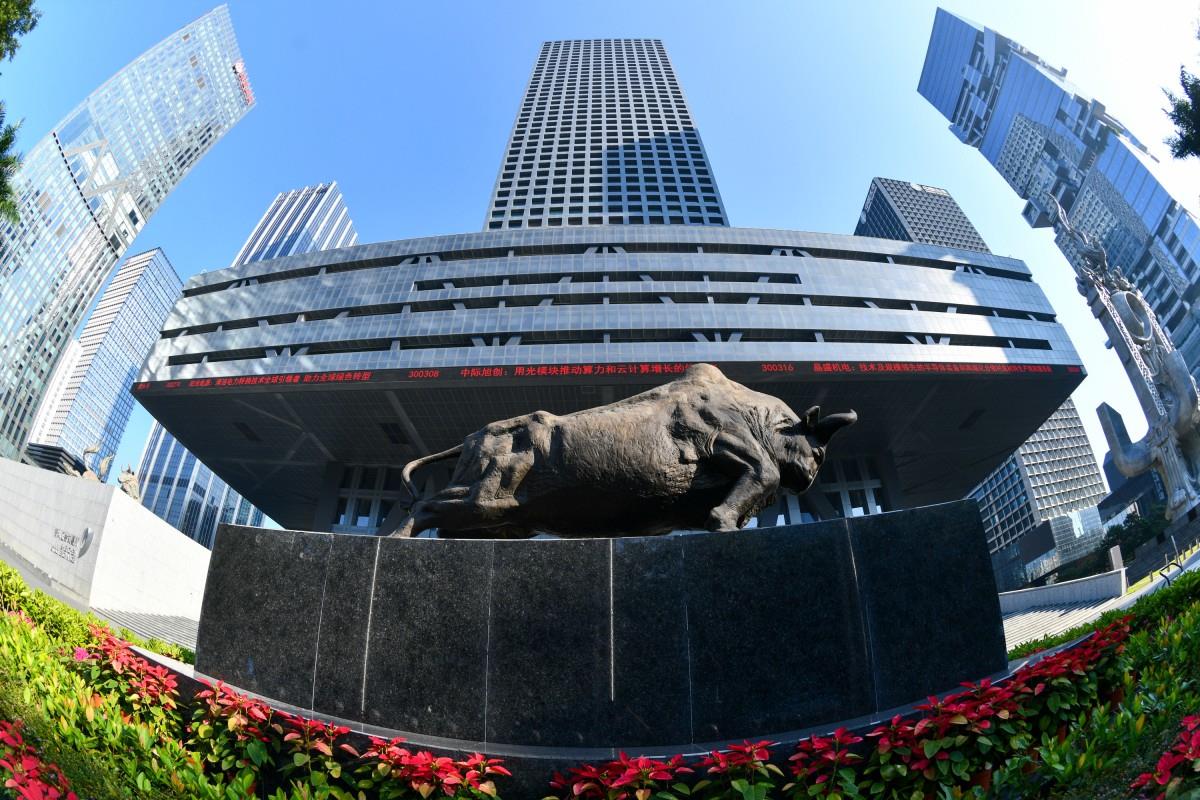
Seven Trillion And One Reasons China Stocks Will Keep Rallying
(MENAFN- Asia Times)
TOKYO - As Donald Trump makes the“sell America” trade great again, China's stock market is gearing up for a better year than his White House would likely want.
Goldman Sachs, for one, thinks the MSCI China Index will rise 20% this year, following a 28% rally in 2025.
“Our expected equity gains in 2026 are almost entirely earnings-driven,” says Kinger Lau, a strategist at the US investment bank. Profit growth will be“supported by AI, 'Going Global,' and 'anti-involution' policy.”
Enter the roughly US$7 trillion in Chinese time deposits coming due this year. That great wall of capital is a fresh reason to think Chinese shares have considerable upside even as geopolitical risks abound. Odds are also strong that President Xi Jinping's Communist Party will soon add fresh stimulus.
Though China achieved its 5% economic growth target in 2025, the fourth quarter delivered the weakest expansion in three years. That 4.5% year-on-year pace reflected softer consumption and investment and suggests that the People's Bank of China may soon return to monetary easing.
That is not to say China's capital markets do not need serious reform. At a minimum, Team Xi must move toward fuller yuan convertibility, greater transparency and faster stabilization of property prices. It must also reduce default risks among major property developers and strengthen social safety nets to prod households to spend more and save less.
Even so, global investors are now reappraising their previous downcast outlooks. Fidelity analyst George Efstathopoulos recently told CNBC that China is no longer“uninvestable.” Chinese assets, he said, could deliver healthy returns in 2026. Bernstein Societe Generale Group, meanwhile, recently upgraded its China equities outlook.
Wang Dan at Shenzhen Sunrise Asset Management told Bloomberg he expects“a slow bull trend in equities to continue this year. While economic fundamentals and data don't support a full-blown bull market, declining interest rates, stronger willingness for investment allocation and long-term positioning in undervalued assets” bode well for the rally to continue.
Some strategists find it noteworthy that both Shanghai stocks and the yuan staged rallies in 2025.“A firmer yuan can help equities by improving dollar-based returns and risk sentiment,” says strategist Christy Tan at Franklin Templeton.“At the same time, genuine equity inflows, driven by earnings and confidence, can support the currency.”
Latest stories Carney's China trip shows energy is Canada's gateway to Asia Germany's India pivot a test of strategic consistency Study debunks Trump's claim foreigners pay his tariffsCitigroup economist Xiangrong Yu argues that the yuan's gains indicate that“2025 witnessed a markedly positive shift in investor narrative on China.” Yu expects a“managed appreciation” to the 6.8 level against the dollar over the next six to 12 months, from roughly 6.96 now.
UBS Group also expects further yuan gains against the currencies of China's main trading partners.“There's room for the yuan to gain in the near term to reflect robust exports and trade surplus, especially after the currency fell last year on a trade-weighted basis,” notes UBS economist Ning Zhang.
In the meantime, Trump's chaotic foreign policy moves are making China, for all its flaws, look more hospitable to global capital.
In addition to imposing new tariffs, removing Venezuela's president and seizing its oil and suggesting Greenland could be next, Trump is spooking investors with steps at home as well, particularly his attacks on the independence of the Federal Reserve and its leader Jerome Powell.
As a result, the US dollar, bonds and stocks are vulnerable to a“sell-America trade similar to that in April last year, at the peak of the tariff shock and earlier threat to Powell's position as Fed chair,” says Krishna Guha, an analyst at Evercore ISI.
“We are stunned by this deeply disturbing development, which came out of the blue after a period in which tensions between Trump and the Fed seemed to be contained,” Guha said.
Trump's latest efforts to control the Fed, including US prosecutors threatening to indict Powell, are sure to unnerve global markets already questioning the dollar's status as the world's reserve currency and the sanctity of US Treasury securities, a linchpin of the global financial system.
On January 20, US Treasuries gyrated as bond market turmoil in Japan rippled outward. Concerns over Tokyo's finances and Trump's tariffs sent Japanese government debt yields to their highest levels since 1999. Forty-year yields rose to 4%, the highest rate for any sovereign Japanese issue in more than three decades.
Tokyo is among the governments highlighted by Emre Tiftik, an economist at the Institute of International Finance, who warns that even with“budget deficits still elevated,” some“sovereigns are likely to continue adding to their debt burdens and interest expenses. As a result, investor attention is increasingly shifting toward government bond auctions and government borrowing plans.”
Trump-driven turmoil is intensifying globally in real time, raising dire new questions about the safety of US markets. That, in turn, is buttressing China's position as a global alternative.
In many ways, Trump's antics are a gift to China, which is watching the US fire more and more financial bullets into its economy's feet. In their wildest dreams, top officials in Xi's party, including those pursuing currency internationalization and eventual domination, couldn't have imagined a better foil than Trump.
Since formally taking control of China's economy in 2013, Xi has made yuan internationalization a top priority. The rubber really hit the road in 2016, months before Trump's first election victory, when the currency was added to the International Monetary Fund's“special drawing rights” basket alongside the dollar, euro, yen and pound.
The Trump 1.0 era from 2017 to 2021 was a rocky one for the dollar. At the time, officials around Trump talked him out of some terrible ideas - from devaluing the dollar to defaulting on portions of the US debt to firing Powell.
This time, Trump 2.0 has fewer guardrails. As a result, Powell's job is less safe than ever, Trump's tariffs and their inflationary impacts are upending bond markets everywhere and a fiscal standoff that caused a debilitating government shutdown cost the US its final AAA credit rating.
At Davos this week, US Treasury Secretary Scott Bessent found himself arguing that the“sell America” trade is fake news and that the US commitment to NATO remains“unquestioned.”
Sign up for one of our free newsletters-
The Daily Report
Start your day right with Asia Times' top stories
AT Weekly Report
A weekly roundup of Asia Times' most-read stories
State Street Corp CEO Ron O'Hanley told Bloomberg that, for now, investor sentiment toward the US“remains positive.” Yet, O'Hanley added,“we are in territory as it relates to Greenland that we have never really seen before. How this plays out over the next few days will be quite important.”
The same could be true of where Trump takes tariffs and his brawl with the Fed. Over the weekend, Trump slapped additional 10% tariffs on countries that refuse to go along with his demands to buy or seize Greenland. The new tax would hit Denmark, Norway, Sweden, France, Germany, Finland, the UK and the Netherlands.
“The hit could be larger should there be adverse confidence or financial market effects,” notes Goldman Sachs economist Sven Jari Stehn.
Trump's assault on the Fed, meanwhile, risks damaging the world's most respected central bank, says Eurasia Group CEO Ian Bremmer.“Fed independence is central to the long-term stability of the dollar and the broader US economy. History is clear on what happens when central bank decisions become politicized,” he said.
Earlier this month, Trump proposed that government-sponsored enterprises Fannie Mae and Freddie Mac purchase $200 billion in mortgage-backed securities, the sort of financing role the Fed would perform in times of credit market distress. It struck many, including Allianz economist Mohamed El-Erian, as a form of backdoor quantitative easing.
Not surprisingly, all of this is prompting investors to take a fresh look at the globe's second-biggest economy. It is also a reminder to Beijing that it's high time to get on with the financial reforms it's been promising to implement since 2013. Not only as global investors are watching, but as Chinese households are soon to have trillions of dollars in capital to deploy.
Follow William Pesek on X at @WilliamPesek
Sign up here to comment on Asia Times stories Or Sign in to an existing accounThank you for registering!
An account was already registered with this email. Please check your inbox for an authentication link.
-
Share on X (Opens in new window)
Share on LinkedIn (Opens in new window)
LinkedI
Share on Facebook (Opens in new window)
Faceboo
Share on WhatsApp (Opens in new window)
WhatsAp
Share on Reddit (Opens in new window)
Reddi
Email a link to a friend (Opens in new window)
Emai
Print (Opens in new window)
Prin

Legal Disclaimer:
MENAFN provides the
information “as is” without warranty of any kind. We do not accept
any responsibility or liability for the accuracy, content, images,
videos, licenses, completeness, legality, or reliability of the information
contained in this article. If you have any complaints or copyright
issues related to this article, kindly contact the provider above.
Most popular stories
Market Research

More Story








Comments
No comment