





403
Sorry!!
Error! We're sorry, but the page you were looking for doesn't exist.
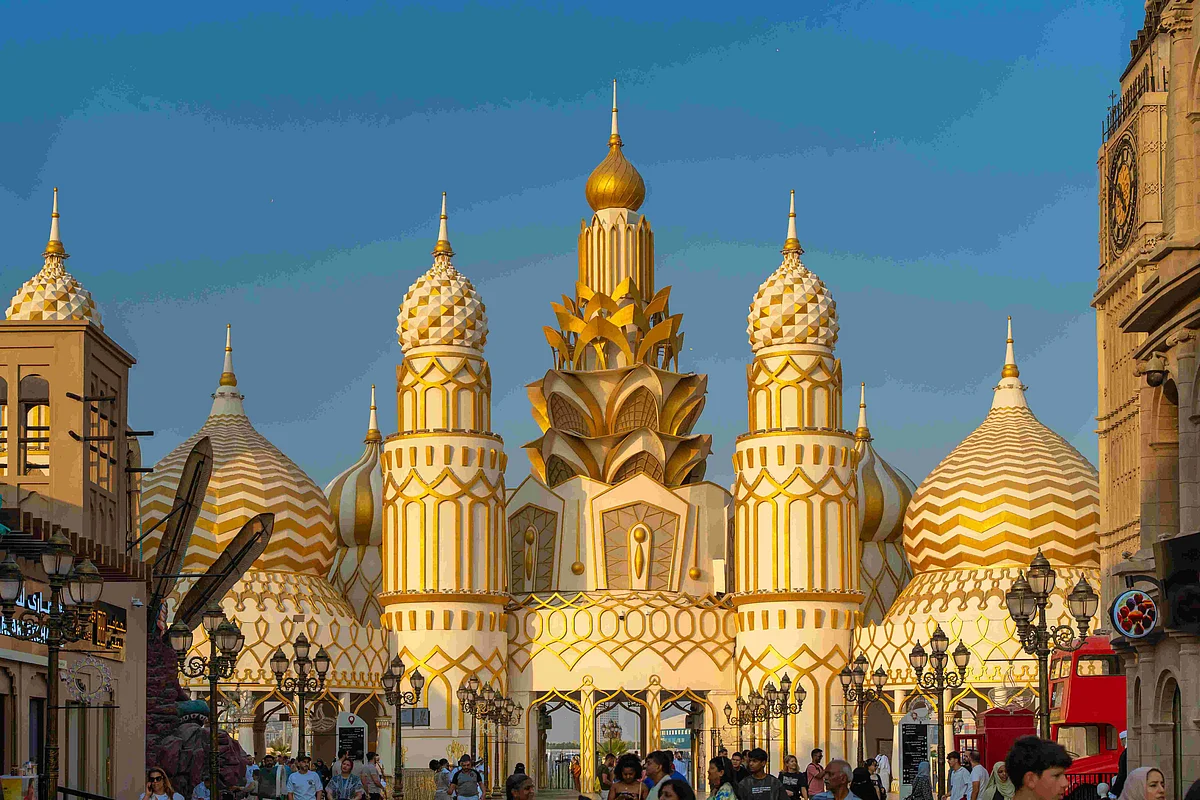
GCC Tourism Revenues Hit $120B As UAE Spurs Travel Boom
(MENAFN- Khaleej Times)
Tourism across the GCC has surged well beyond pre-pandemic levels, reinforcing the sector's growing role as a pillar of economic diversification, with the UAE emerging as the region's primary growth engine.
International tourism revenues in the GCC climbed to $120.2 billion in 2024, marking a 39.6 per cent increase compared to 2019 and an 8.9 per cent rise from 2023, according to the Statistical Centre for the Cooperation Council for the Arab States of the Gulf (Gulf-Stat).
Recommended For You Power outage halts Tokyo train lines after fire reports, disrupting travel for thousandsThe strong revenue performance reflects a sharp rebound in visitor flows and spending across the region. Gulf-Stat data show that international tourist arrivals reached 72.2 million in 2024, up 51.5 per cent from pre-pandemic levels and 6.1 per cent year on year, lifting the GCC's share of global tourism to 5.2 per cent. The recovery has been driven by expanded air connectivity, liberalised visa regimes, large-scale tourism investments and the diversification of tourism offerings, ranging from luxury hospitality and entertainment to cultural and eco-tourism experiences.
The UAE has remained at the forefront of this expansion, benefiting from its status as a global aviation hub and its aggressive push into new tourism segments. Dubai and Abu Dhabi continue to attract record visitor numbers, supported by strong airline capacity growth, major international events, cruise tourism expansion and sustained investment in hospitality infrastructure. According to the World Travel & Tourism Council (WTTC), the UAE's travel and tourism sector is expected to continue outperforming regional averages in the coming years, driven by high visitor spending and rising international demand.
Intra-GCC travel has also emerged as a powerful growth driver. Gulf-Stat said travel within the bloc accounted for 41.3 per cent of total international tourist flows, with an average annual growth rate of 51.2 per cent between 2019 and 2024, supported by greater regional mobility, joint tourism campaigns and cross-border events. By source market, the Middle East accounted for 18.8 per cent of inbound tourists, followed by Europe at 14.6 per cent and Asia-Pacific at 14.5 per cent, reflecting the GCC's expanding global appeal.
The tourism boom has been matched by rapid infrastructure expansion. The number of hotel establishments across the GCC rose to 11,200 properties, offering around 711,500 rooms, while tourism-related employment climbed to 1.7 million workers in 2024, up 33 per cent from 2020. This growth highlights tourism's increasing importance as a job creator and a catalyst for allied industries such as transport, retail, food services and entertainment.
Tourism's direct contribution to the GCC economy also continues to rise. Gulf-Stat estimates show that direct travel and tourism GDP reached $93.5 billion in 2024, accounting for 4.3 per cent of total regional GDP and achieving 64.1 per cent of the GCC's Tourism Strategy 2030 target. The data underline the sector's central role in reducing oil dependence and building more resilient, service-driven economies.
Sustainability indicators further point to strengthening sector fundamentals. Average tourist stays reached 8.4 nights, with average spending per visit at $674.6, alongside improvements in labour productivity and operational efficiency.
Gulf-Stat said the GCC has already achieved between 56 per cent and 78 per cent of its Tourism Strategy 2030 benchmarks, particularly in cultural tourism, eco-tourism and business and conference travel.
For 2026, the outlook remains positive. The IMF and global travel bodies expect Middle East tourism to continue expanding faster than the global average, supported by rising middle-class travel demand, expanding airline networks and continued government investment in mega tourism projects. For the UAE, ongoing developments in hospitality, entertainment, cruise tourism and sustainable travel infrastructure are expected to further cement its position as the region's leading tourism hub.

Legal Disclaimer:
MENAFN provides the
information “as is” without warranty of any kind. We do not accept
any responsibility or liability for the accuracy, content, images,
videos, licenses, completeness, legality, or reliability of the information
contained in this article. If you have any complaints or copyright
issues related to this article, kindly contact the provider above.
Most popular stories
Market Research

More Story






Comments
No comment