




403
Sorry!!
Error! We're sorry, but the page you were looking for doesn't exist.
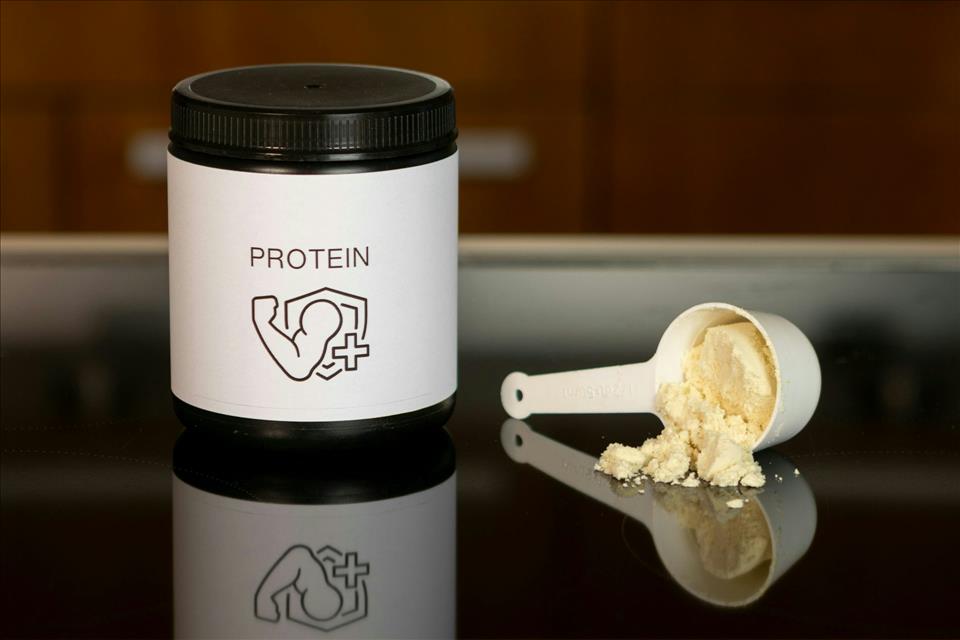
2025 Was The Year Protein 'Jumped The Shark'
Author: Stuart Phillips
(MENAFN- The Conversation) Thirty years ago, when I began studying protein metabolism, I would never have guessed that 2025 would be spent explaining why more protein is not always better.

Protein was once the quiet macronutrient that was always assumed sufficient. Carbs had their era, and fat had its moment in the sun. Protein arrived late, but I welcomed the attention.
The phrase“jumped the shark” comes from a now-infamous 1977 episode of the iconic sitcom Happy Days, when the character Fonzie (Henry Winkler ) literally water-skied over a shark. It was the moment the show sacrificed solid plot and logic for spectacle. In 2025, dietary protein repeated Winkler's performance and crossed the line from evidence-based nutrition into performance theatre.
In 2025, protein became a metabolic Jack-of-all nutrients: protein for fat loss, protein for longevity, protein for weight loss, protein for hormone balance, protein for menopause, protein for people on GLP-1 drugs, protein for people who exercise, protein for people who do not. Protein everywhere, and the more, the better.
Despite a number of prominent voices promoting very high protein intakes in 2025, the reality is that the research data hadn't changed. It was the messaging and volume that had been turned up.
Protein is not the cakeOne reason protein is so easy to overhype is that its effects are real, but conditional. Protein supports muscle function and adaptation, but it does not act in isolation.
I use analogies because they capture biology surprisingly well. Protein does not bake the cake; exercise does. Protein is the (thin) layer of icing (or the sprinkles on the icing). Once the cake is properly iced, adding more icing does not turn it into something else. At some point, you are just decorating.
Biology is full of plateaus. Protein is no exception.
How much protein is enough?The recommended dietary allowance (RDA ) of 0.8 grams of protein per kilogram of body weight per day (g/kg/day) was never designed to optimize muscle mass, muscle strength or support healthy aging. It was designed to be the minimal dose to balance nitrogen in the body. Nitrogen balance is used as a proxy for protein balance since protein is the only significant source of nitrogen we consume.
Over the past two decades, many researchers, including myself and several colleagues, have argued that higher protein intakes are often justified. Intakes of 1.2 to 1.6 g/kg/day appear to support better muscle maintenance and adaptation, but in reality, only when combined with resistance exercise.
But here is the critical point that was lost in 2025's protein enthusiasm: there is no strong, rational, evidence-based case for going beyond this range for most people (and yes, that includes folks in the process of weight loss and those crushing the big weights five or six days per week).
Meta-analyses pooling dozens of resistance exercise training (strength training) studies consistently show that the benefits of protein supplementation plateau at about 1.6 g/kg/day. Beyond that, additional protein does not increase lean mass or strength.
This axiom is not controversial, even if it became controversial in the minds of online influencers.
Muscle is built by resistance exerciseProtein is the bricks. Resistance exercise is the construction crew. You can deliver bricks all day long, but without workers and a blueprint, nothing gets built. When protein intake is increased to above deficiency intakes in people who are not performing resistance exercise, changes in lean mass are trivial or nonexistent.
When resistance exercise is present, additional protein can (very) modestly enhance gains in lean mass and strength, but the effects are small and saturable. More is not endlessly better.
Protein and weight loss: managing expectationsProtein hype was especially evident in discussions of weight loss. Protein was credited with boosting metabolism, melting fat, preventing fat gain in perimenopause or suppressing appetite indefinitely. These claims sound appealing. They are also grossly overstated.
Protein does not cause weight loss on its own; you need an energy deficit for that. It does not meaningfully increase long-term energy expenditure, and while it can reduce appetite in short-term studies, these effects often diminish over time, leaving a small overall benefit.
Where protein does matter during weight loss is in helping preserve lean tissue, particularly when paired with resistance exercise. But even here, the protein effect is modest, and the distinction between lean mass and muscle mass is frequently blurred.
Protein without resistance exercise, during weight loss, does very little. Exercise is the major driver that helps lean mass retention. Protein is the supporting material.
Protein leverage: Real, but not limitlessAnother concept that resurfaced in 2025 was protein leverage, the idea that humans eat until protein needs are met, potentially over-consuming energy when diets are lower in protein.
There is good evidence that protein leverage exists. But it operates within limits. Once basic protein needs are met, adding more protein does not continue to suppress appetite and depress energy intake endlessly. Notably, the intake at which protein's appetite-suppressing effect wanes is, uncomfortably for social media pundits, only marginally higher than intakes people generally consume. Again, biology is not fooled by abundance.
Why did this happen in 2025?My best explanation is that it often takes about 17 years for solid scientific evidence to filter into public awareness and practice.
Perhaps the social media world needed time to“do their research” - that is, read papers and form their conclusions - to catch up to what protein researchers had been doing for decades? But social media can spin things, and not always in the right direction.
Protein research matured in the 1990s and early 2000s. We refined methods, tested dose responses and clarified mechanisms. What we are seeing now is not a scientific breakthrough, but a delayed cultural uptake, amplified by social media, marketing and a wellness industry that thrives on extremes.
Unfortunately, as another lesson learned in 2025, neither science nor nuance fares well online.
Bringing protein back to realityProtein matters. It always has. It supports muscle, function and health across the lifespan. Many people, especially older adults, very likely benefit from consuming more than the RDA.
But 2025 was not the year protein finally got its due. It was the year protein was oversold, overvalued and overhyped. Protein supports adaptation; it does not cause it. It helps preserves lean tissues (which is not muscle) during weight loss; it does not drive fat loss. And beyond a certain point, more protein is simply more protein, not more benefit.
The science of protein has not been revolutionized; we just need to listen to it again.
Institution:McMaster University

Legal Disclaimer:
MENAFN provides the
information “as is” without warranty of any kind. We do not accept
any responsibility or liability for the accuracy, content, images,
videos, licenses, completeness, legality, or reliability of the information
contained in this article. If you have any complaints or copyright
issues related to this article, kindly contact the provider above.
Market Research

More Story







Comments
No comment