




403
Sorry!!
Error! We're sorry, but the page you were looking for doesn't exist.
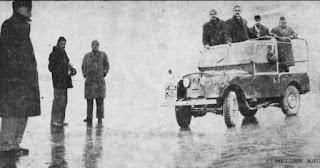
Kashmir Remembers A Prime Minister On Ice As Snow Drought Deepens
(MENAFN- Kashmir Observer)
By Arshid Mehraj
Srinagar- Abdul Rashid Shangloo was a teenager in Srinagar when he saw a jeep cross Dal Lake. The then prime minister of Jammu and Kashmir, Bakshi Ghulam Mohammad, used the stunt to show how strong winter could be in the valley.
ADVERTISEMENTNow in his mid-eighties, Shangloo can still hear the tires crunching on ice. He remembers the laughter, the thrill, and the way winter once seemed to command everything around it.
ADVERTISEMENTToday, he sits near the same lake during Chilai Kalan, the coldest part of winter, and watches sunlight ripple across open water.
“It looks like another season,” he said.“This doesn't feel like winter anymore.”
That old stunt now seems almost impossible.
In present-day Kashmir, the bright January sun shines on bare hillsides. Dal Lake doesn't freeze. Snow comes late, or sometimes not at all.
What once proved winter's strength now highlights how much it has changed.
“Kashmir is facing an ongoing snow drought,” says Shabir Ali, an eco-activist.“Snowfall in the plains is scarce. In the higher mountains, it arrives late and melts fast. The absence of snow may not stop daily life immediately, but its effects build slowly, and last long.”
Snow is Kashmir's natural water store. It settles in the mountains during winter and melts slowly in spring, feeding rivers, springs, farms, and hydropower stations.
Without it, water either rushes away too quickly or doesn't arrive when needed.
“This winter didn't store enough snow,” said Dr. Tanveer Dar, a hydrologist studying Himalayan water systems.“What people feel in spring and summer starts in winter.”
Satellite monitoring by the International Centre for Integrated Mountain Development shows that large parts of the western Himalaya had fewer snow-covered days this season than usual. Several river basins feeding Kashmir saw sharp drops in snow persistence, a pattern repeated since the late 2010s.
ADVERTISEMENTIn south Kashmir's Shopian district, Majeed Khan checks a spring above his apple orchard almost every day. It once flowed well into summer. Last year, it dried up by late spring.
“When snow stays, water stays,” he said.“Now we plan for less.”
Many villages depend on such springs for drinking water.
A 2023 study by the Central Ground Water Board found Himalayan springs now lose flow earlier in the year, linked to lower winter snow and warmer temperatures.
“Women now walk farther for water,” Khan continues.“Families store what they can.”
Officials say weak snow winters are putting orchards under pressure, especially in south and central Kashmir.
“Hydropower projects are feeling the heat too,” says a senior power department official.“Engineers rely on steady seasonal water flows. When snow melts too quickly or comes late, it becomes harder to plan early‐season power generation.”

Legal Disclaimer:
MENAFN provides the
information “as is” without warranty of any kind. We do not accept
any responsibility or liability for the accuracy, content, images,
videos, licenses, completeness, legality, or reliability of the information
contained in this article. If you have any complaints or copyright
issues related to this article, kindly contact the provider above.
Most popular stories
Market Research

More Story






Comments
No comment