



403
Sorry!!
Error! We're sorry, but the page you were looking for doesn't exist.
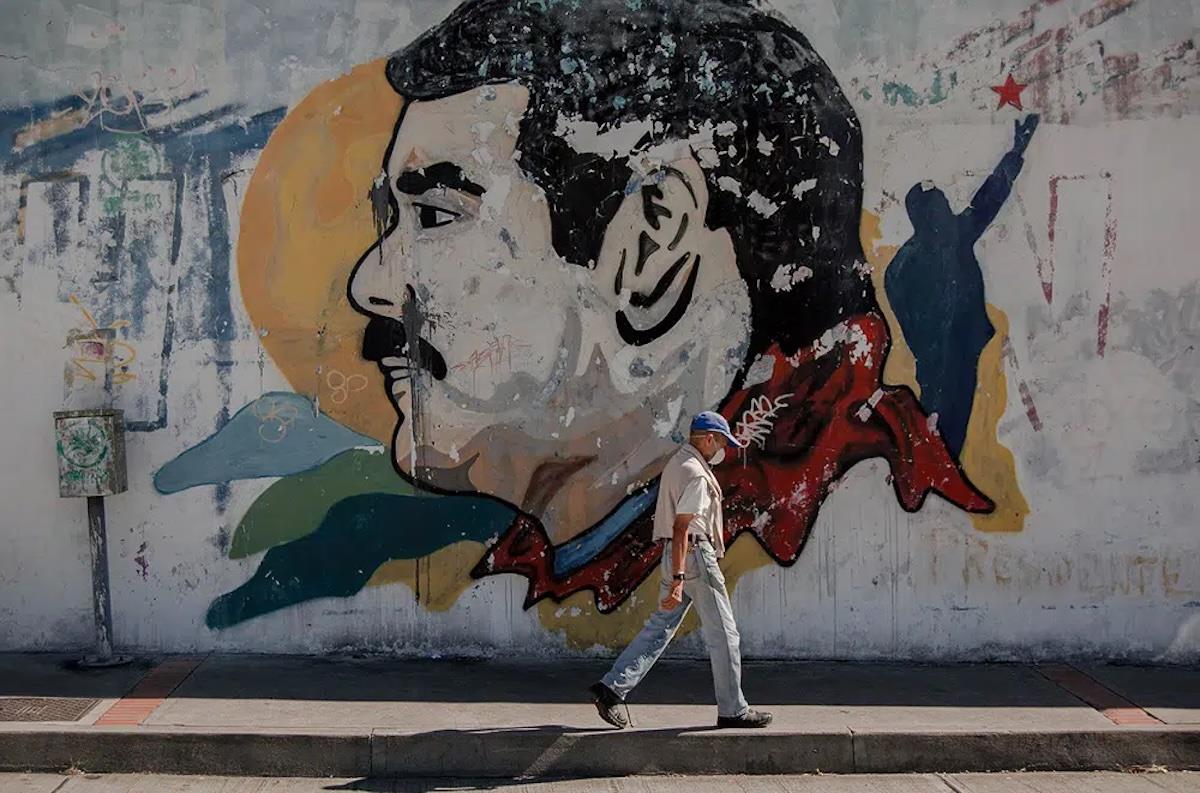
Anatomy Of An Economic Suicide: Venezuela Under Maduro
(MENAFN- Asia Times)
This report is not a political manifesto; it is an economic autopsy. It's about the arithmetic of ruin. Between 2013 and 2025, the Bolivarian Republic of Venezuela experienced the single largest economic contraction in modern history for a country not at war. According to data from the World Bank and the IMF, the economy evaporated approximately 80% of its GDP, a figure that dwarfs what happened to the United States in the Great Depression (29%) and to the Soviet Union during its collapse.
For the international observer, particularly in Asia, this collapse offers a critical case study in“fiscal dominance” and the destruction of the price mechanism. It was not merely the result of falling oil prices, or external sanctions, but the mathematical inevitability of specific technical decisions: the monetization of deficits, the expropriation of supply chains and the decapitalization of the state oil company (PDVSA).
The technical anatomy of this implosion is presented here in four distinct acts.
Act 1: the resource curse and the 'empty chest' (2013–2014)The Dutch disease and the Chinese mirage: When Nicolás Maduro assumed power in 2013, he inherited an economy in an acute stage of“Dutch Disease.” The country remained 96% dependent on oil exports for foreign currency. The non-oil tradable sector had been rendered uncompetitive by a wildly overvalued currency (the bolívar) and years of expropriations.
The structural fragility was masked by oil prices averaging $100 per barrel. However, unlike Norway or the Gulf states, which utilized sovereign wealth funds to sterilize excess liquidity, Venezuela's Macroeconomic Stabilization Fund (FEM ) was effectively empty, holding less than $3 million when the crisis began.
The strategic error: When crude prices collapsed in late 2014, the state faced a binary choice: fiscal austerity or monetary expansion. It chose the latter. The administration attempted to plug a fiscal gap – approaching 15% of GDP – not by cutting spending, but by expanding the monetary base.
The Asian connection – the railway to nowhere: This period was defined by massive, opaque borrowing from China (approximately $60 billion in loan-for-oil deals). A prime example of this era's failure is the Tinaco-Anaco railway, a $7.5 billion high-speed rail contract awarded to the China Railway Group. Intended to connect the agricultural plains, the project was abandoned by 2015 due to payment failures. Today, the looted remains of the factories stand as a monument to the inefficiency of the“rentier state” model.
Latest stories America's chip export controls are working Is Cuba next after Maduro's capture? Global outrage over 'state terrorism' as Trump attacks Venezuela Act 2: the death of the price mechanism (2015–2018)Supply shocks and the 'fair prices act ': As inflation ticked upward, the government made a fatal technical error: it attacked the symptom (prices) rather than the cause (liquidity). The 2014“Fair Prices Act” capped profit margins and mandated sales below replacement cost.
The economic result was a textbook negative supply shock. Manufacturers, unable to cover marginal costs, halted production lines. The scarcity index for basic goods skyrocketed to over 80%. To manage the fallout, the government militarized food distribution (CLAP), shifting from a market economy to a clientelist rationing system prone to massive corruption.
The monetary spiral – hyperinflation: Simultaneously, the Central Bank of Venezuela (BCV) lost all autonomy, functioning as a printing press for the Ministry of Finance. This triggered hyperinflation – technically defined as monthly inflation exceeding 50% – in November 2016. By 2018, annual inflation hit an astronomical 130,060% (official BCV figures), though IMF estimates were higher.
Currency redenomination – a history of zeros: To mask the collapse of the currency's value, the state engaged in serial redenomination.
-
2008: 3 zeros removed (bolívar fuerte).
2018: 5 zeros removed (bolívar soberano).
2021: 6 zeros removed (bolívar digital).
In total, 14 zeros were stripped from the currency in 13 years. Without structural reform to stop the printing presses, these measures were purely cosmetic accounting adjustments that failed to restore the“store of value” function of money.
The failed tech pivot – the 'petro ': In a desperate bid to bypass financial blockades, the regime launched the“Petro” in 2018, purportedly the world's first state-backed cryptocurrency pegged to oil reserves. It failed due to a lack of trust, technical opacity, and its inability to be traded on international exchanges. Instead of a financial revolution, it became another vehicle for illicit finance before quietly being dismantled.
Act 3: engine failure (the collapse of PDVSA)Decapitalization and the brain drain: The narrative that sanctions killed the oil industry is incomplete. Data show that the collapse began well before the severe 2019 sanctions. The root cause was the systematic destruction of human and physical capital within PDVSA, the state oil company.
Following the 2003 strikes, the executive branch fired over 18,000 technocrats – geologists, reservoir engineers, and managers – stripping the company of its institutional memory. They were replaced by political loyalists.
In the capital-intensive oil industry, failure to invest in depreciation and amortization (D&A) is fatal. PDVSA stopped injecting water and gas into aging wells to maintain pressure. Result: production freefall from 3 million barrels per day (bpd) to a nadir of under 700,000 bpd by 2020.
Infrastructure failure – the 2019 blackouts: The collapse was sealed by the physical failure of the power grid. The March 2019 nationwide blackout, caused by brush fires and neglected transmission lines at the Guri Dam, paralyzed the country for days. Without electricity to power the upgraders in the Orinoco Belt, the heavy crude turned into sludge in the pipes, causing permanent damage to the infrastructure. This event alone cost the economy an estimated $2.9 billion in GDP.
Act 4: the zombie economy and dollarization (2019–2025)Capitulation to the greenback: By 2019, facing total collapse, the administration implicitly surrendered to the market. Price controls were abandoned, and the US dollar was allowed to circulate freely (de facto dollarization).
This stopped the hyperinflationary bleeding but bifurcated the nation into two distinct economies.
-
The dollar economy (20%): A segment fueled by remittances, illicit gold exports to Turkey/UAE, and government contracting. This group shops in high-end“bodegóns” aiming to replicate Miami lifestyles in Caracas.
The bolívar economy (80%): Public sector workers and pensioners earning in
local currency, whose purchasing power was obliterated.
2025 status: the 'Chevron cushion ': By late 2025, Venezuela had stabilized into a“zombie economy” – not dead, but not truly alive. Oil production crawled back toward 900,000 bpd, aided by specific licenses for Chevron (US) and swap deals with Reliance Industries (India) involving naphtha for crude.
However, with a credit-starved banking sector (due to 73% reserve requirements) and decimated public utilities, sustainable growth remained mathematically impossible.
Inequality metrics: The Gini coefficient rose from 40.7 in 2014 to 53.9 in 2024, making Venezuela the most unequal country in the Americas.
The breaking point: The Venezuelan collapse serves as a grim case study in public goods failure. The primary economic mandate of a state is to provide a stable currency, security and basic infrastructure (power/water). When a government fails to protect the value of money or the stability of the grid, its economic legitimacy evaporates.
Sign up for one of our free newsletters-
The Daily Report
Start your day right with Asia Times' top stories
AT Weekly Report
A weekly roundup of Asia Times' most-read stories
The exodus of 7.7 million Venezuelans (approximately 25% of the population) represents a massive loss of human capital that will handicap the nation's recovery for decades. The crisis was a result not of low oil prices – other petrostates survived – but of the dismantling of the institutional frameworks that allow an economy to function.
Statistical annex: the scorecard of collapse *
*Data aggregated from BCV, IMF, OPEC secondary sources and ENCOVI
Amirreza Etasi, a former CEO in the oil and gas industry with over a decade of experience at the intersection of energy economics, institutional reform and public-sector management, is a Tehran-based Iranian economic and policy analyst, journalist and strategic consultant. He can be reached at ...
Sign up here to comment on Asia Times stories Or Sign in to an existing accounThank you for registering!
An account was already registered with this email. Please check your inbox for an authentication link.
-
Click to share on X (Opens in new window)
Click to share on LinkedIn (Opens in new window)
LinkedI
Click to share on Facebook (Opens in new window)
Faceboo
Click to share on WhatsApp (Opens in new window)
WhatsAp
Click to share on Reddit (Opens in new window)
Reddi
Click to email a link to a friend (Opens in new window)
Emai
Click to print (Opens in new window)
Prin

Legal Disclaimer:
MENAFN provides the
information “as is” without warranty of any kind. We do not accept
any responsibility or liability for the accuracy, content, images,
videos, licenses, completeness, legality, or reliability of the information
contained in this article. If you have any complaints or copyright
issues related to this article, kindly contact the provider above.
Most popular stories
Market Research

More Story







Comments
No comment