




403
Sorry!!
Error! We're sorry, but the page you were looking for doesn't exist.

TAQA Seals Al Dhafra Power Plant Deal
(MENAFN- The Arabian Post)
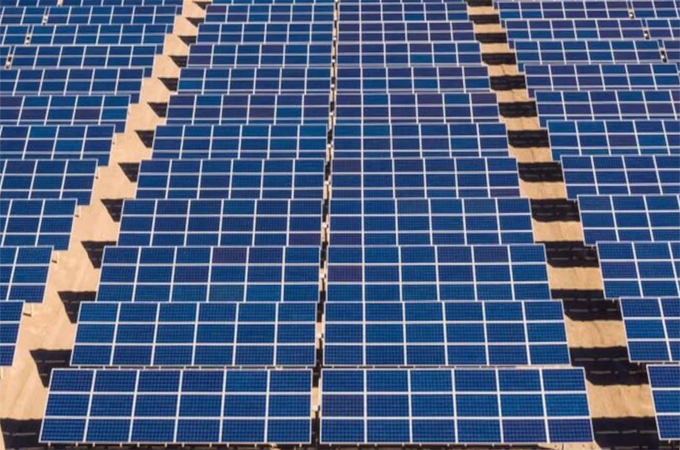
Abu Dhabi National Energy Company PJSC and Emirates Water and Electricity Company have completed a Dh3.6 billion financing and development agreement for the Al Dhafra Power Plant, marking a significant expansion of dispatchable power capacity aimed at supporting the emirate's fast-growing data centre sector. The project underlines Abu Dhabi's strategy of pairing digital infrastructure growth with firm, utility-scale energy assets as demand from artificial intelligence, cloud computing and hyperscale operators accelerates.
Abu Dhabi National Energy Company PJSC, widely known as TAQA, will build, own and operate the one-gigawatt gas turbine facility, holding full ownership of both the project company and the operation and maintenance entity. Emirates Water and Electricity Company will act as the principal offtaker, aligning the project with Abu Dhabi's centralised planning model for electricity and water supply.
The financing structure reflects strong lender confidence in the project's long-term cash flows and strategic relevance. About 85 per cent of the total cost has been raised through debt provided by a broad consortium of regional and international banks, including Standard Chartered Bank, Abu Dhabi Commercial Bank, Agricultural Bank of China, Doha Bank, First Abu Dhabi Bank, HSBC, ICBC, KfW, National Bank of Kuwait, RAK Bank, Woori Bank, Abu Dhabi Islamic Bank, Boubyan Bank and Ajman Bank. The remainder is being funded through equity, with TAQA retaining full control.
Project developers and financiers point to the scale and diversity of the lending group as a signal of continued appetite for large energy infrastructure in the Gulf, even as global capital markets weigh higher interest rates and geopolitical uncertainty. The presence of European, Asian and regional lenders highlights the cross-border nature of financing for assets that sit at the intersection of energy security and digital economy growth.
See also IHC lifts Invictus stake to 40 per centThe Al Dhafra plant is designed as a high-efficiency gas turbine facility capable of delivering stable baseload power. Its primary role will be to supply electricity to large data centre projects, a segment that has become one of the fastest-growing sources of power demand in the Gulf. Abu Dhabi has positioned itself as a regional hub for data processing and artificial intelligence, supported by regulatory frameworks, sovereign investment and access to energy at scale.
Industry analysts note that data centres require not only large volumes of electricity but also reliability and flexibility to manage variable computing loads. Gas-fired plants, particularly modern combined-cycle units, are increasingly viewed by utilities as a bridge technology that can complement renewable generation while ensuring grid stability. In Abu Dhabi's case, the project also fits within a broader portfolio that includes nuclear power, solar generation and grid-scale storage.
TAQA's decision to retain 100 per cent ownership sets this project apart from earlier utility developments that relied on joint ventures or independent power producer structures. The move reflects the company's strengthened balance sheet and its ambition to play a more direct role in critical infrastructure linked to economic diversification. TAQA has expanded its asset base in power, water and energy transmission, while also pursuing international investments across Europe and the Middle East.
For EWEC, the agreement reinforces its mandate to secure adequate and reliable power supplies while managing long-term costs for the emirate. By anchoring the project within its planning framework, EWEC ensures that new capacity aligns with forecast demand from industrial users, technology firms and urban development, reducing the risk of supply constraints as electricity consumption rises.
See also Dar Global moves ahead with Dubai Trump Tower enabling works awardThe deal also illustrates how Abu Dhabi is adapting its energy investment strategy to structural shifts in demand. While residential and traditional industrial consumption remain important, growth is increasingly driven by energy-intensive digital infrastructure. Policymakers and utilities are responding by prioritising projects that can be delivered at scale and integrated quickly into the grid.
Notice an issue? Arabian Post strives to deliver the most accurate and reliable information to its readers. If you believe you have identified an error or inconsistency in this article, please don't hesitate to contact our editorial team at editor[at]thearabianpost[dot]com. We are committed to promptly addressing any concerns and ensuring the highest level of journalistic integrity.

Legal Disclaimer:
MENAFN provides the
information “as is” without warranty of any kind. We do not accept
any responsibility or liability for the accuracy, content, images,
videos, licenses, completeness, legality, or reliability of the information
contained in this article. If you have any complaints or copyright
issues related to this article, kindly contact the provider above.
Most popular stories
Market Research

More Story







Comments
No comment