



403
Sorry!!
Error! We're sorry, but the page you were looking for doesn't exist.
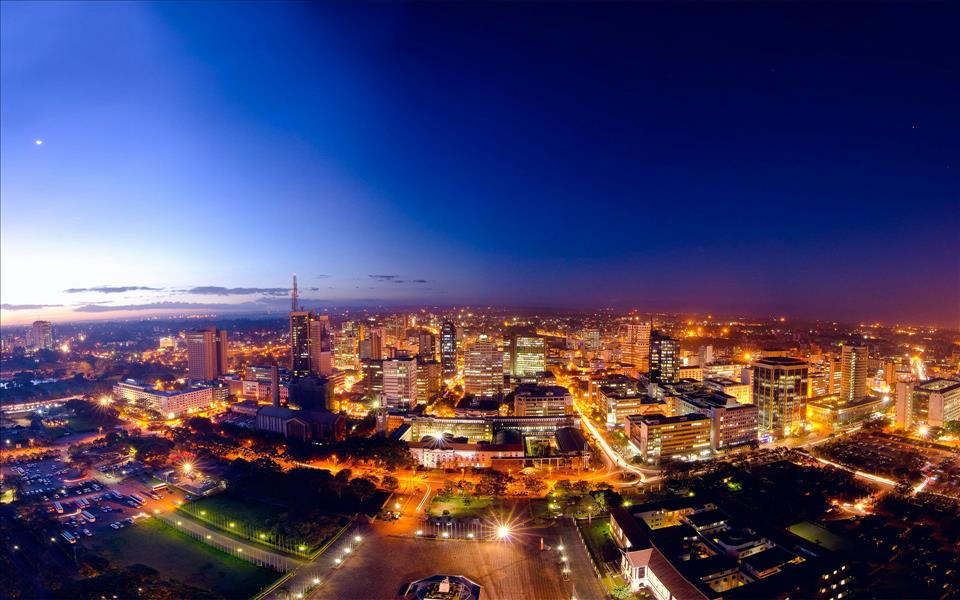
Kenya's 'Night Running': How A Rural Ritual With Links To Witchcraft Became An Urban Staple
Author: Maureen Amimo
(MENAFN- The Conversation) In parts of Kenya, Uganda and Tanzania, it is not uncommon to hear of individuals who run naked at night. They cause trouble and instil fear in the neighbourhood. They throw stones on rooftops, make animal noises, bang on windows and doors, and chase night travellers.

In Kenya, the practice is called night running, or night dancing in parts of Tanzania and Uganda. It is claimed to be a form of spiritual possession in the communities where it is rampant.
Night runners are largely left to their own devices, but there is a sense of stigma attached to the practice.
I am a cultural studies researcher and wanted to explore how night running is seen in popular culture through fictionalised print media narratives or other appropriations. I set out to study the concept of night running as practised in rural communities in western Kenya, as well as its adoption in cities.
I conducted interviews with informants from Kisumu and Vihiga counties in western Kenya to examine the ritual and its marginal taboo position. The ritual exists on the margins because it's a practice deemed unacceptable in public. I also examined Kenyan newspaper archives between 1990 and 2020 to trace the transformation of public discourse around night running. These articles and letters to the editor acted as a repository of understanding by Kenyans from different regions about night running.
I found that in the 1990s, newspapers reporting on night running largely exposed the ritual and its perceived links to witchcraft. Most of the reports captured the violence meted out on suspected night runners, or reflected on cases of night runners causing havoc.
These references to either night running or witchcraft appeared as hard news and in letters to the editor. They illustrated heightened stigma. In one letter to the editor published on 20 February 1993 in Kenya's oldest newspaper, The Standard, a reader observes
In the post-2000 period, a column titled The Night Runner in The Standard offered a direct modification of the idea of night running. The columnist, Tony Mochama, assumed the persona of a night runner as an alter ego to document his night adventures in the capital, Nairobi. Each week, the column documented different activities, from watching soccer matches to attending parties and official events.
The column co-opted the public's memory regarding the ritual figure of the night runner. Mochama invoked the night runner as his lens for seeing Nairobi by night. This column, therefore, offered a collective re-imagination. Readers were asked to re-imagine night running as a strategy of seeing, travelling and documenting the city of Nairobi by night.
I found that the inference in the column was that the night is a significant time-space that carries extensive activity and culture. The column presented the night runner as someone who disrupts the logical and accepted order of how to operate at night.
For instance, instead of taking the night as the time of rest, the contemporary night runner works, travels the city and explores its leisure zones.
By describing a night runner as someone who moves against the grain, Mochama turned night running into a metaphor for life in the city after dark. This view enabled his audience to look beyond the stigmatised ritual and imagine its usefulness as a signal for different forms of nightlife.
The contradictionsMy study found that Mochama's articles and others within the popular culture section of newspapers created space for forays into fictional and surreal tales of night running.
These narratives explored the ritual form of night running as defined by the veil of darkness – but also its contradictions in an over-illuminated city space.
The night runner, therefore, captures the anxieties of cityness embodied in the tensions of non-belonging, especially regarding social norms. This is in relation to subjects that exist outside acceptable social norms that dictate the night as a time of rest and sleep. The narratives also raised the complexities of taboo and family in the city, where boundaries are blurred because of the freedoms of urban life.
In Mochoma's column, readers laugh at the antics of this night runner, who is an extrapolation of a rural ritual into the city. But they are also forced to recognise the uneasy kinship ties unveiled in urban living. The night runner, in this form, is seen to overcome the unknowability of the city and instead forces an introspective inquiry into human beings as creatures with secret and uncanny habits.
The popular night runner is thus a subject that has“four eyes”. This is defined by anthropologists Filip de Boeck and Marie-Francoise Plissart as a person with a heightened sense of sight to see beyond the obvious, to see the shadows, the supernatural that is part of the nocturnal city.
The urban night runner sees the underbelly of the city in the invisible networks that thrive in dingy bars and backstreets. Here, prostitutes, street families and the police create uneasy alliances. In this regard, to night run in the city is to run the night, to rule over the city and its moods.
This reimagination created space for alternative ideas of night running that are less taboo. Mochama's column, which ran from 2006 to 2012, indicates a sustained national audience for these forms of night running narratives.
Why it mattersMy study found that night running as understood in modern times is a duality: the ritual of persons running naked at night and causing havoc, and a symbol of navigating the nocturnal city against the grain.
The rise in popular imaginaries of night running has enabled a public re-contemplation that has perhaps removed stigma from the taboo act. This is seen in the way people playfully use the term to reference night time activities, such as working or leisure. And in the way columnists inject humour and imagination into its references in their narratives.
These competing narratives on night running operate side by side in the public milieu through the media: the earlier ritual practice, the fictionalised narratives, and the co-opted modern appropriations.
It is no wonder that a supposed group of night runners in Homa Bay, another county in western Kenya, publicly demanded that the government allow for the registration and recognition of their union in 2023. And earlier in 2019, the BBC ran a documentary, Meet the Night Runners.
Institution:Maasai Mara University

Legal Disclaimer:
MENAFN provides the
information “as is” without warranty of any kind. We do not accept
any responsibility or liability for the accuracy, content, images,
videos, licenses, completeness, legality, or reliability of the information
contained in this article. If you have any complaints or copyright
issues related to this article, kindly contact the provider above.
Most popular stories
Market Research

More Story




Comments
No comment