




403
Sorry!!
Error! We're sorry, but the page you were looking for doesn't exist.

Waste Burning Continues As Kashmir's AQI Drops
(MENAFN- Kashmir Observer)
A man burns fallen Chinar tree leaves to make charcoal, which is used by people for heating in harsh winters. KO Photo, Abid Bhat
A man burns fallen Chinar tree leaves to make charcoal, which is used by people for heating in harsh winters. KO Photo, Abid Bhat
By Aaqyb Ashraf
On a cold morning in Srinagar, smoke rises from behind a row of houses near the Jhelum. A pile of dry chinar leaves burns in a courtyard, a plastic bag tossed in along the way, popping as it melts. The smoke drifts through narrow lanes and seeps into nearby homes.
ADVERTISEMENTThis scene repeats every winter across Kashmir. Most people barely notice anymore.
Burning leaves and household waste has long felt ordinary. It was how courtyards were cleared, lanes were cleaned, and households managed what they could not store or collect.
When formal waste systems were scarce, fire became the easiest solution. Many still see it that way: sweep, pile, burn, move on.
The problem is that Kashmir has changed, but this habit has not.
Municipal waste vans now come through most neighbourhoods in Srinagar. In many villages, panchayat-level collection systems operate on fixed days. People know this. They wait for the vans, hand over bags, and complain when a pickup is missed.
ADVERTISEMENTStill, the fires continue. Smoke rises even on days when collection vehicles are expected. The question is no longer about lack of options. It is about why people keep choosing fire when other choices exist.
When you ask, the answers are familiar. Waste cannot be stored for days, some say. Dry leaves are natural, others insist, so they must be harmless.
These explanations make sense if you remember how long burning was the only way out. Habits formed under pressure tend to survive long after the pressure eases.
What rarely enters these conversations is what the smoke actually does.
Open burning of leaves and mixed waste releases fine particulate matter, known as PM2.5, along with ultrafine particles that travel deep into the lungs and even the bloodstream.
The smoke also carries carbon monoxide, nitrogen oxides, benzene, and other toxic compounds. Even small fires can push pollution levels up sharply at the neighbourhood level, especially in places with narrow lanes and tightly packed homes.
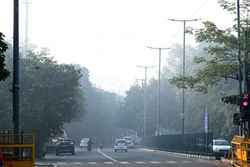
Kashmir's geography makes this worse. During autumn and early winter, cold air traps smoke close to the ground. What burns in one courtyard spreads across the street and into nearby houses.
ADVERTISEMENTAir quality readings in recent days have crossed 200 on the Air Quality Index, placing large parts of the valley in the poor category. This pollution does not stay outdoors.
Studies show that smoke seeps inside homes, affecting children studying indoors, older people resting during the day, and patients inside clinics.
Repeated exposure to biomass smoke worsens asthma, bronchitis, and chronic lung disease. It increases stress on the heart and blood vessels. Children exposed again and again show reduced lung growth. Older adults face higher risks of breathlessness and cardiac trouble.
These symptoms often get blamed on the season or the cold in the valley. The link to waste burning rarely gets made.
Courts and regulators have paid closer attention. The National Green Tribunal, while examining failures in solid waste management, has ruled that open burning of municipal waste is not allowed.
The logic is simple. Burning does not dispose of waste. It shifts the problem from land to air and spreads the harm to everyone nearby.
India's Solid Waste Management Rules of 2016 make the same point. They ban open burning of all solid waste, including biodegradable matter such as leaves.
The rules place responsibility on households to segregate waste and avoid burning it, while requiring local bodies to provide collection and processing systems.
These rules matter because the systems, while uneven, now exist.
Srinagar's wards are largely covered by municipal vehicles. Rural collection has expanded through development programs. Missed pickups and gaps remain, and people have every right to demand better service.
Still, the claim that there is no alternative no longer holds true in many localities.
Why, then, does burning continue?
Part of the answer lies in perception. Leaves feel harmless. Composting feels unfamiliar or messy. Keeping waste for even a day feels untidy.
Legal Disclaimer:
MENAFN provides the
information “as is” without warranty of any kind. We do not accept
any responsibility or liability for the accuracy, content, images,
videos, licenses, completeness, legality, or reliability of the information
contained in this article. If you have any complaints or copyright
issues related to this article, kindly contact the provider above.
Most popular stories
Market Research

More Story




Comments
No comment