




403
Sorry!!
Error! We're sorry, but the page you were looking for doesn't exist.
Mexico's Steep Tariff Hikes Will Hit 75% Of India's Exports From January: GTRI Report
(MENAFN- Live Mint)
Three-quarters of India's exports to Mexico are set to face a major setback from 1 January 2026, according to a report released on Friday by Global Trade Research Initiative (GTRI), after the Mexican senate approved steep tariff increases on goods imported from countries that don't have a free-trade agreement (FTA) with Mexico.
According to the report, nearly 75% of India's $5.75 billion of exports to Mexico in FY25 will be affected by the tariff hikes, fundamentally altering the economics of accessing India's largest export destination in Latin America after Brazil.
The tariff overhaul, cleared by both houses of the Mexican Congress on 11 December, raises duties on a wide range of products to as high as 50%, sharply eroding India's competitiveness in the Mexican market.
Also Read | The Mexican storm about to slam India's $2bn automobile expo What's behind the hike?The tariff hikes are widely seen as Mexico aligning its trade policy with that of the US, which has taken a protectionist turn under President Donald Trump ahead of the 2026 review of the US-Mexico-Canada Agreement (USMCA). By raising trade barriers for non-FTA partners, Mexico is signalling support for North American nearshoring (relocating a company's business operations or production activities to a nearby country) and tightening of supply chains around the USMCA region, the GTRI report noted.
GTRI co-founder Ajay Srivastava said Mexico's move also reflects the growing fragility of global trade rules.“Mexico is now the second major economy after the US to openly breach WTO tariff commitments. By charging different tariffs to different WTO members, Mexico undermines the most-favoured-nation principle, but these actions are going largely unchecked," he said.
The proposal to start FTA negotiations with Mexico is still at the discussion stage. On 10 September, commerce and industry minister Piyush Goyal met Francisco Cervantes, president of Mexico's Business Coordination Council (CCE), in New Delhi and said that India would work towards strengthening trade and investment ties with Mexico.
Impact on India: uneven but severeUnder the new tariff structure, Mexico will impose duties of 5-50% on imports from India, China, South Korea, Thailand and Indonesia. For most products-including machinery, electronics, plastics and textiles-duties will rise from 0-15% to around 35%. A few strategic items, primarily steel, will face a punitive 50% tariff, according to the GTRI report.
The impact of these hikes on India will be severe but uneven across sectors. Pharmaceuticals, for instance, will remain largely insulated. Duties will increase only marginally-from 0-5% to 0-10%-allowing India's generic drugs to remain competitive in Mexico. India exported $197 million worth of pharmaceuticals to Mexico in FY25.
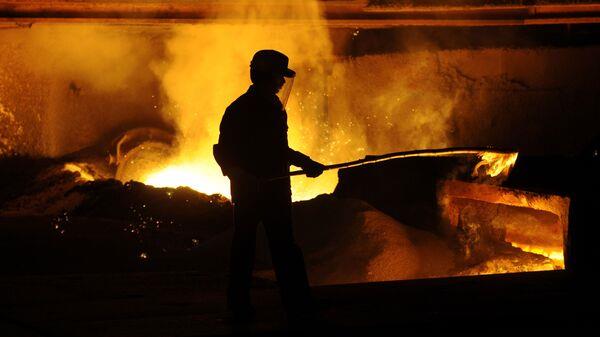
Metal exports, on the other hand, will face the steepest barriers. Aluminium exports of $383 million will see duties rise from 5-10% to 25-35%, while iron and steel exports of $128 million face the harshest increase – from 10-15% to 35% on long products and from 10–15% 50% on flat products, making Indian steel commercially unviable in Mexico.
Passenger vehicles, India's single-largest export to Mexico ($938 million in FY25), will see tariffs rise from 20% to 35%, weakening India's position in a market influenced heavily by USMCA sourcing rules.
Also Read | Mint Explainer | Why does the proposed India-Israel FTA mattDuties on auto component exports worth $507 million will be hiked from 10-15% to 35%, disrupting India's participation in supply chains based in Mexico that cater to the US market. Motorcycle exports worth $390 million, dominated by Bajaj Auto, TVS Motor and Hero MotoCorp, will also see tariffs increase from 20% to 35%.
Electronics and machinery will be hit hard as well. Smartphones, which currently enter Mexico duty-free, will attract a 35% tariff, effectively shutting down India's handset exports to that country. Industrial machinery worth $548 million will see duties rise from 5-10% to 25-35%, raising landed costs and reducing price competitiveness, it said.
Labour-intensive sectors such as garments, textiles and ceramics will also come under pressure, with tariffs climbing from 20-25% to 25-35%, threatening these exports that are largely driven by small and medium businesses.
Will India hit back?Srivastava said that India is unlikely to retaliate, as imports from Mexico stand at just $2.9 billion-about half the value of India's exports-leaving it with little economic leverage. Instead, India is expected to focus on diversifying markets and treating Mexico's tariff hike as another sign of the weakening multilateral trading system rather than a dispute suited for a bilateral confrontation.
“Mexico's tariff hike is a serious setback for Indian exporters, especially in autos, engineering goods and MSME-led sectors," said Arun Kumar Garodia, former chairman of the Engineering Export Promotion Council (EEPC).“A sudden jump to 35-50% duties will price many Indian products out of the Mexican market and disrupt supply chains built over years. At a time when global trade rules are weakening, Indian exporters will have to diversify quickly and build resilience against such unilateral tariff shocks," Garodia added.
The EEPC has previously flagged the issue to the commerce ministry, noting the urgent need to establish a trade agreement with Mexico after the Mexican president announced two major trade-related initiatives, including a significant reform to the General Import and Export Tariffs Law (LIGIE), in September.
“This reform aims to restructure tariff frameworks by substantially increasing import duties on a wide range of products across multiple sectors. This will directly impact countries that do not have FTAs with Mexico," EEPC chairman Pankaj Chadha wrote in a letter dated 2 December to Union commerce minister Piyush Goyal, the council said.
Given Mexico's importance as a key export destination for Indian engineering products, the industry body had warned the government that the new measures could erode India's competitiveness in the Mexican market. To address this, it said India should pursue an FTA or at least a preferential trade agreement (PTA) with Mexico covering the affected sectors, Chadha said in his letter.
India's engineering exports to Mexico have already begun to weaken. During April-October 2025, total engineering exports to Mexico declined by 12%. The fall was broad-based, with steel exports down 7%, iron and steel products down 26%, aluminium and its products down 56%, auto components down 20%, and exports of two- and three-wheelers down 32%.
Also Read | What is at stake for New Delhi as Vladimir Putin visits Ind
Legal Disclaimer:
MENAFN provides the
information “as is” without warranty of any kind. We do not accept
any responsibility or liability for the accuracy, content, images,
videos, licenses, completeness, legality, or reliability of the information
contained in this article. If you have any complaints or copyright
issues related to this article, kindly contact the provider above.
Most popular stories
Market Research

More Story








Comments
No comment