






403
Sorry!!
Error! We're sorry, but the page you were looking for doesn't exist.
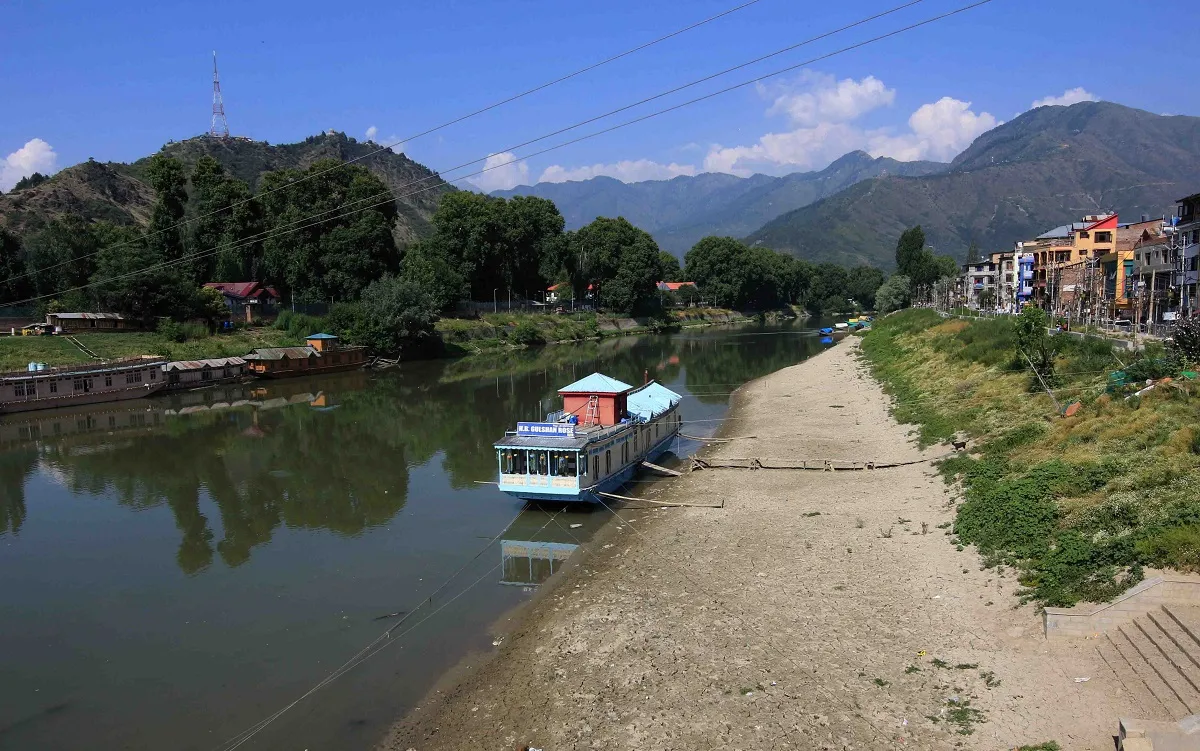
J&K Faces Major Rain Deficit, Fire Risk Rising
(MENAFN- Kashmir Observer)
KO File Photo By Faisal Khan
KO File Photo By Faisal Khan
Srinagar- Jammu and Kashmir is facing a severe rainfall deficit, with the region recording only 6.1 mm of precipitation between November 1 and December 9 against the normal 43.1 mm, indicating an 86 percent shortfall, official data shows.
The prolonged dry spell, which has persisted since early November, has begun to impact water systems. The Jhelum River at Sangam has slipped to minus 0.59 ft, falling below the zero-gauge level. Though not the lowest on record, it is among the lowest readings observed in recent years. With no major rain or snowfall expected over the next week, river levels may decline further.
The lack of precipitation has also increased vulnerability to forest fires in several districts, as surface heating, dry vegetation and depleted soil moisture have created favorable conditions for fire outbreaks.
ADVERTISEMENTMeteorologists attribute the current situation to multiple climatic factors rather than a single trigger. While some have linked the dry phase to the Madden–Julian Oscillation or broader ENSO patterns, experts caution that the influence of such systems is limited and not directly predictive of rainfall in Jammu and Kashmir.
Minimum temperatures have remained below freezing in many parts of Kashmir. Srinagar recorded minus 1.9 degrees Celsius, Gulmarg minus 5.5 degrees and Zojila minus 18 degrees. Jammu stood at 8.4 degrees Celsius.
Weather forecasters say weak western disturbances may bring light precipitation in the higher reaches over the next two weeks. However, the overall outlook suggests continued dryness until a more active system develops.
Centre Intensifies Glacier Monitoring In J&K
The Union Government on Wednesday said it is monitoring glaciers in Jammu and Kashmir and Ladakh through multiple national programmes to study the effects of climate change on the Himalayan region.
Minister of State (Independent Charge) for Science and Technology and Earth Sciences, Dr Jitendra Singh said the Ministry of Earth Sciences, through the National Centre for Polar and Ocean Research (NCPOR), has been monitoring Himalayan glaciers under the Cryosphere and Climate programme, a component of the PACER sub-scheme.
NCPOR has been monitoring representative glaciers in the western and eastern Himalaya to understand glacial responses to climate change and their impact on downstream hydrology.
Dr Singh, as per news agency KNO said the Department of Science and Technology has supported several research and development projects on Himalayan glaciers under the National Mission for Sustaining Himalayan Ecosystem and the National Mission on Strategic Knowledge for Climate Change.
The National Glacial Lake Outburst Floods (GLOF) Risk Mitigation Programme, implemented by the NDMA in four states and the Union Territories of Jammu and Kashmir and Ladakh, aims to establish Early Warning Systems to strengthen GLOF response.
The government said several Indian institutions and universities monitor Himalayan glaciers for studies, including glacier retreat and mass loss. The mean retreat rate of Hindu Kush Himalayan glaciers is 14.9 ± 15.1 metres per annum, with retreat rates varying across river basins.
NCPOR has been monitoring six glaciers in the Chandra basin in the western Himalaya since 2013, and field research is conducted through the 'Himansh' station.
Data shows the basin has lost about 6 per cent of its glacial area over 20 years. Annual retreat rates in the basin range from 13 to 33 metres.
The Union Minister further said more than 20 national institutions and state universities conduct glacier research, including the National Centre for Polar and Ocean Research, Geological Survey of India, Wadia Institute of Himalayan Geology, National Institute of Hydrology, National Remote Sensing Centre, Divecha Centre for Climate Change, and universities in Delhi, Kashmir, Jammu, Ladakh, and several Indian Institutes of Technology.
Two glacial lakes in Sikkim - South Lhonak and Shako Cho - are monitored in real time.
Three Centres of Excellence for Glacial Studies were established at the Universities of Sikkim, Tezpur and Kashmir under programmes of the Department of Science and Technology.
On the ground, the retreat of glaciers such as Kolahoi is already reshaping ecosystems and livelihoods.
Once a major source of irrigation for rice paddies, apple orchards, saffron fields, and grazing lands, Kolahoi has thinned significantly, exposing bare rock and altering alpine habitats.
Scientists report that species such as musk deer, Himalayan ibex, and Hangul face shrinking habitats, while predators like snow leopards are increasingly spotted near villages.
Legal Disclaimer:
MENAFN provides the
information “as is” without warranty of any kind. We do not accept
any responsibility or liability for the accuracy, content, images,
videos, licenses, completeness, legality, or reliability of the information
contained in this article. If you have any complaints or copyright
issues related to this article, kindly contact the provider above.
Most popular stories
Market Research

More Story





Comments
No comment