






403
Sorry!!
Error! We're sorry, but the page you were looking for doesn't exist.
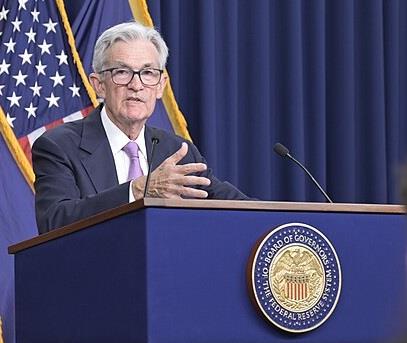
US Federal Reserve Cuts Interest Rate By 0.25%
(MENAFN- IANS) New York, Dec 11 (IANS) The US Federal Reserve has cut the interest rate by 0.25 per cent, bringing it to the 3.5 to 3.75 per cent range, as it tried to balance inflation risk with a labour market showing signs of cooling.
Fed Chairman Jerome Powell said after the rate cut announcement on Wednesday (local time), "We are trying to keep inflation under control, but also support the labour market and strong wages, so that people are earning enough money, and feeling economically healthy again."
Overall, he said, "We have an extraordinary economy."
Reacting to that sentiment, Wall Street sent the Dow Jones index up by almost 500 points, or 1.05 per cent at close.
The rate set by the Fed is known as the overnight rate, which banks and lending institutions charge for short-term lending to each other, and it has a wide economic impact, influencing the interest rates for loans to businesses or mortgage and credit card rates for consumers.
It also influences some rates abroad.
This was the third rate cut after US President Donald Trump returned to power in January, and they came consecutively in September, October, and now.
Trump, who has been pushing Powell to cut rates aggressively, wasn't happy with the 0.25 per cent cut.
It could have been double that, he said after a meeting with business leaders.
Taking issue with Powell's caution about inflation, he said, "You can have tremendous growth without inflation. Everything goes up with the growth, but that's not inflation."
Powell, who was appointed by Trump in 2018, is to end his term in May next year.
Trump has started to consider his successor from a short list prepared by Treasury Secretary Scott Bessent, and said he would interview one of them, Kevin Warsh, a former member of the Federal Reserve Board of Governors, on Wednesday.
He has criticised Powell often and said that he would like to fire him.
It could hinge on a Supreme Court decision on the president's powers to fire heads of independent bodies.
At a recent hearing, the justices sounded sceptical about whether those powers would extend to the Fed chair.
Powell blamed Trump's tariffs for some of the inflation.
"If you get away from tariffs, inflation is in the low 2s (that is, 2 per cent range). It is really tariffs that are causing most of the inflation overshoot," he said.
Inflation is now at 3 per cent.
On the jobs situation that influenced his decision, he said, "Gradual cooling in the labour market has continued" and "unemployment is now up three-tenths from June through September".
The unemployment rate was 4.4 per cent in September.
(Arulk Louis can be contacted at...)

Legal Disclaimer:
MENAFN provides the
information “as is” without warranty of any kind. We do not accept
any responsibility or liability for the accuracy, content, images,
videos, licenses, completeness, legality, or reliability of the information
contained in this article. If you have any complaints or copyright
issues related to this article, kindly contact the provider above.
Most popular stories
Market Research

More Story






Comments
No comment