




403
Sorry!!
Error! We're sorry, but the page you were looking for doesn't exist.
Aging Bridges Are Crumbling. Here's How New Technologies Can Help Detect Danger Earlier
Author: Amirreza Torabizadeh
(MENAFN- The Conversation) New signs of deterioration recently discovered on the Île-aux-Tourtes Bridge in Montréal have spurred the Québec government to reinforce beams and install shoring just to keep the structure open.
With a construction site (right) on the northern side in full operation, traffic crosses the l'Île-aux-Tourtes bridge from the western tip of the island of Montréal, in December 2023 after a large crack was found during repairs to the bridge. (THE CANADIAN PRESS/Peter McCabe) Detecting danger earlier
A damaged concrete bridge along Highway 8 in British Columbia after massive floods in December 2021. THE CANADIAN PRESS/Jonathan Hayward Old inspection models are inefficient
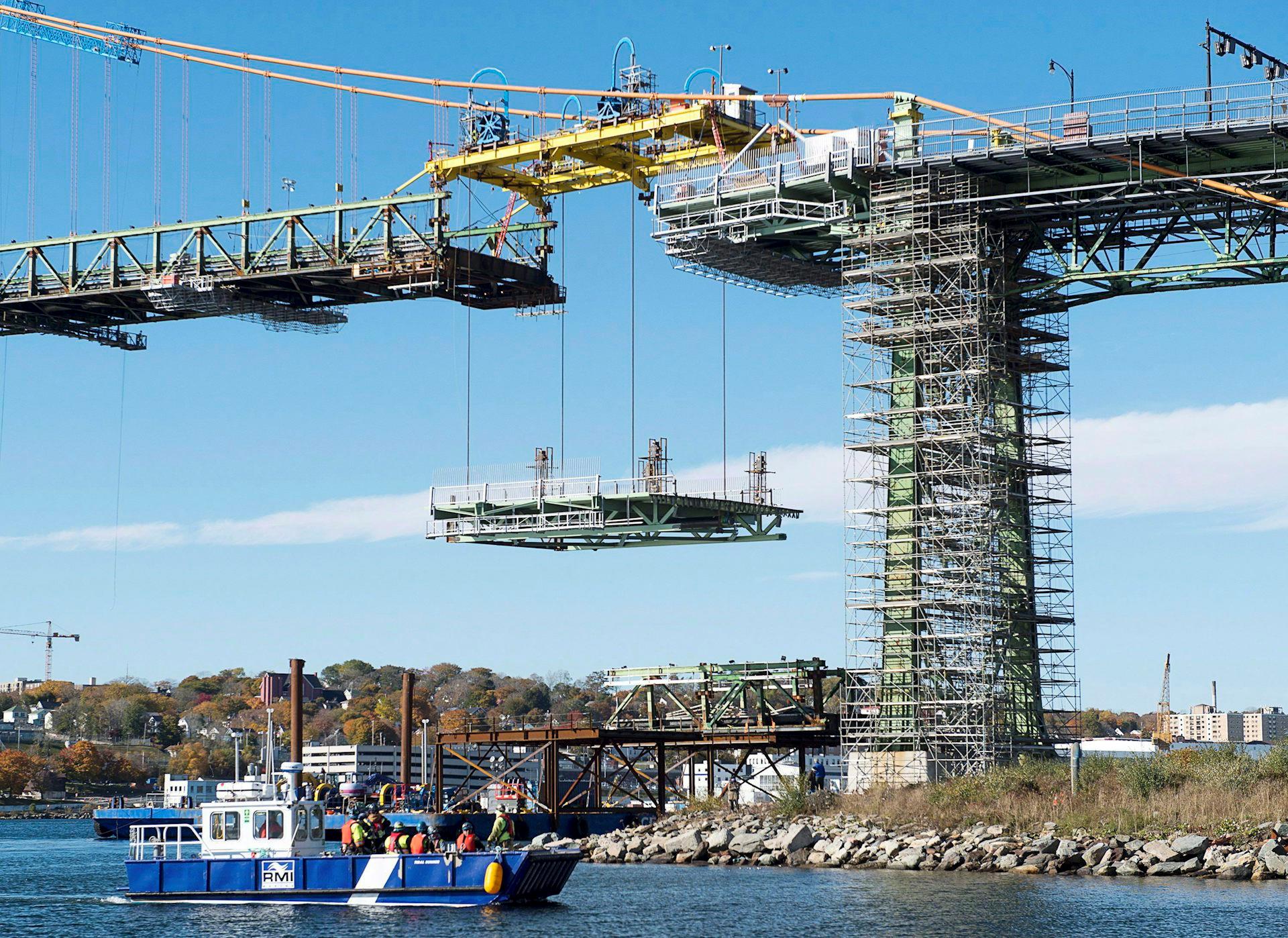
Workers move a new section of the deck for the Angus L. Macdonald Bridge spanning the harbour in Halifax in October 2015. Crews replaced the entire suspended deck structure of the 70-year-old bridge to extend its life significantly and reduce future maintenance. THE CANADIAN PRESS/Andrew Vaughan How tech can help

The bridge carries about 87,000 vehicles a day, yet requires constant monitoring and emergency repairs to ensure its safety.
This is a reminder of how aging concrete can deteriorate and cause safety problems.
Canada has thousands of concrete bridges like Île-aux-Tourtes that are reaching or exceeding their intended lifespans. As these structures age, they become more prone to deterioration, much of it happening slowly and out of sight.
With a construction site (right) on the northern side in full operation, traffic crosses the l'Île-aux-Tourtes bridge from the western tip of the island of Montréal, in December 2023 after a large crack was found during repairs to the bridge. (THE CANADIAN PRESS/Peter McCabe) Detecting danger earlier
Our research focuses on the modelling of concrete structures that might deteriorate due to environmental stresses and aging. Our goal is to determine how long a structure remains safe and, if necessary, what retrofitting strategies are applicable.
To fully understand these risks, researchers can make use of the most recent technological advances such as drone imaging, AI-assisted defect detection and non-destructive testing to collect regular and reliable data about a structure's condition.
Combining these technologies with advanced computer modelling techniques could move Canada towards a system that detects danger earlier, prevents costly failures and supports smarter decisions about repair and retrofit strategies.
Across Canada, many of the concrete bridges built between the 1960s and 1980s are now nearing the end of their service life. The 2019 Canadian Infrastructure Report Card found that nearly 40 per cent of the country's roads and bridges were in fair, poor or very poor condition, showing how widespread the problem has become.
Read more: Concrete with a human touch: Can we make infrastructure that repairs itself?
Due to environmental conditions in Canada, freeze-thaw cycles, road salt and moisture serve to accelerate cracking and surface deterioration. Research on concrete durability in cold climates has documented how these mechanisms gradually reduce structural performance.
Climate change is also intensifying heavy rainfall, temperature swings and loading conditions, all of which place additional stress on aging structures. In Western Canada, seismic vulnerability adds another layer of risk for older concrete bridges.
Together, these factors contribute to growing maintenance backlogs and a pattern where deterioration is often addressed only after it becomes visible or disruptive.
A damaged concrete bridge along Highway 8 in British Columbia after massive floods in December 2021. THE CANADIAN PRESS/Jonathan Hayward Old inspection models are inefficient
Traditional bridge inspections performed by rope access teams - trained professionals who use ropes and specialized gear to work at height on complex structures like bridges - often require lane closures, disrupt traffic and are expensive.
As a result, these inspections are infrequent, allowing damage to develop unnoticed between inspection cycles. The information collected during these inspections is often inconsistent, since different crews may use different ways of recording defects.
When problems are found late, repairs require more lane closures, detours and long work periods. These shutdowns also carry economic costs because downtime affects businesses, commuters and essential services. Earlier detection would let cities plan smaller repairs and use strengthening methods that cause less disruption.
Cost, time and accuracy are the three main factors engineers must balance when assessing aging infrastructure. Our research focuses on accurately predicting the structural risks by modelling how concrete deteriorates over time by considering the occurrence of cracks and environmental stresses.
But even the best model relies on the sufficiency of the collected field information and how much it represents the current state of the structure. To predict the behaviour of a bridge accurately, data must be precise, consistent and updated regularly, something that traditional inspections rarely provide.
Workers move a new section of the deck for the Angus L. Macdonald Bridge spanning the harbour in Halifax in October 2015. Crews replaced the entire suspended deck structure of the 70-year-old bridge to extend its life significantly and reduce future maintenance. THE CANADIAN PRESS/Andrew Vaughan How tech can help
New technological advancements on data science and observation techniques are now changing this landscape.
Drones can capture high-resolution images of cracks and surface damage in minutes, without lane closures or heavy equipment. AI systems can scan these images and highlight subtle patterns that might go unnoticed in a manual survey. Other non-destructive testing methods, like radar or ultrasonic scanning, can detect hidden problems beneath the surface.
When these technologies are combined with advanced computer modelling, civil engineers get a much clearer picture of the state of a structure. This early and accurate understanding helps them plan repairs that are faster and less disruptive. It also reduces downtime - the closures and delays that can create economic costs for businesses and commuters.
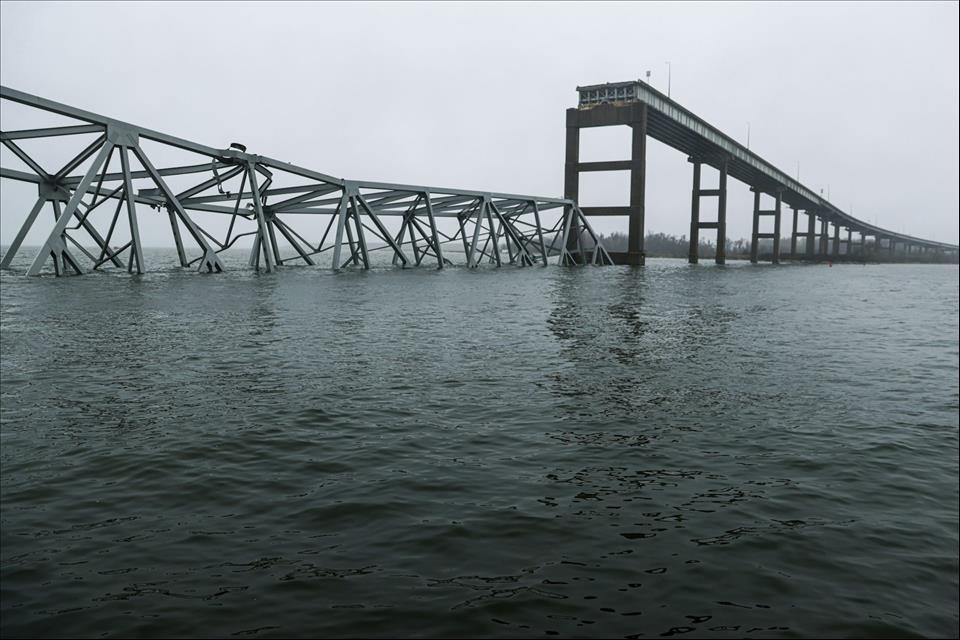
Read more: After the Baltimore bridge collapse, we need clear-eyed assessments of the risks to key infrastructure
With better information, communities can choose repair and retrofit solutions that are more efficient and better timed.
Canada cannot rely on infrequent inspections and emergency repairs to manage its aging bridges. By combining better models with more consistent and automated data collection, engineers can detect problems earlier and avoid the large disruptions that come with last-minute closures.
These tools will not replace engineers, but they will give decision-makers clearer information and more time to plan. Investing in these modern approaches now can help keep our bridges safer, our cities moving and our communities better protected in the years ahead.
Institution:Concordia University

Legal Disclaimer:
MENAFN provides the
information “as is” without warranty of any kind. We do not accept
any responsibility or liability for the accuracy, content, images,
videos, licenses, completeness, legality, or reliability of the information
contained in this article. If you have any complaints or copyright
issues related to this article, kindly contact the provider above.
Most popular stories
Market Research

More Story






Comments
No comment