





403
Sorry!!
Error! We're sorry, but the page you were looking for doesn't exist.
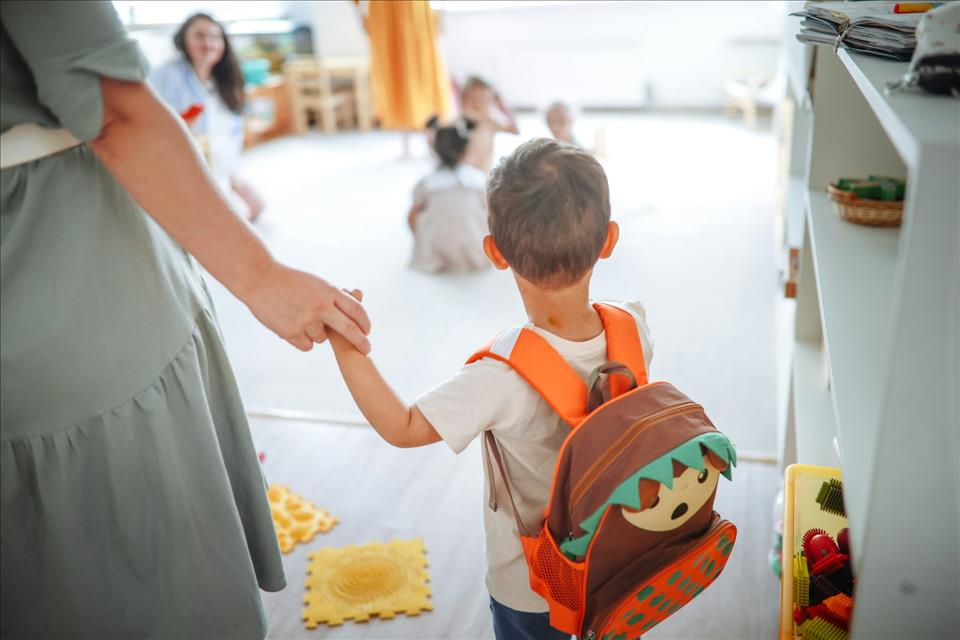
Active Zones And Mini Retreats How To Build Preschools Suitable For Neurodivergent Kids
Author: Fatemeh Aminpour
(MENAFN- The Conversation) An estimated 15–20% of children are neurodivergent, with diagnoses rising each year. They may have a neurodevelopmental condition such as autism or attention-deficit/hyperactivity disorder.

Colour coding can help children understand which activity belongs in which space. StockPlanets/Getty Images The need for micro-retreats![A child sits in a reading nook in a library.]()
A reading nook can provide a space for children to relax on their own. Sanjeri/ Getty Images Transitions need careful planning

We know many neurodivergent children experience sensory information differently from their peers. So the spaces they learn in can strongly influence their comfort, participation and inclusion in education.
Most research on inclusive educational settings has focused on primary or high schools. Our new research examines how preschools can be designed to better support neurodivergent children. What features help or hinder inclusion in the early years?
Our researchWe conducted a“Delphi study”. This is a method designed to gain consensus among a diverse range of experts.
We brought together experts from both education and built-environment design. We did a focus group with five Australian experts and five individual interviews with both Australian and international experts.
Sensory overload hotspotsExperts consistently emphasised how sensory overload is the biggest challenge neurodivergent children face in preschools. Previous research on school environments has noted noise in classrooms is the major issue. Our study found preschool playrooms filled with materials, and walls and ceilings covered in displays are visually distracting.
Also, kitchens, dining areas and circulation zones (including corridors, hallways and open-plan spaces) can often be overwhelming. These areas are noisy, busy and filled with unpredictable activity. And because kitchens and dining areas are often integrated into learning spaces, the effects extend beyond mealtimes.
We also found smell is an under-examined sensory stressor. Strong kitchen and food smells can trigger distress for children who experience multi-sensory processing challenges. If possible, preschools should consider how they can separate kitchen and dining spaces from learning spaces.
Overcrowding intensifies sensory stressSome neurodivergent children require greater interpersonal distance than their neurotypical peers. But high adult to child ratios in preschools can lead to overcrowding, with adults dominating the space. This is particularly the case if there are assistants for children with extra needs.
While safety regulations mean a certain number of adults per child is required, experts said preschools should consider the room sizes in use. As one noted:
Open-plan spaces are trickyWhile previous research criticises open-plan classrooms for poor acoustics, our experts identified a different issue. Open plans without any visual structure can feel confusing and overwhelming for children.
Our experts said design features can help. This includes storing materials in cabinetry to reduces visual clutter, sight lines to allow children to see what's ahead, and colour cues. For example, the reading zone has a blue mat, the blocks zone has a green mat. Age-appropriate signs (for example, with pictures or symbols) can also help children understand what a space is for.
Colour coding can help children understand which activity belongs in which space. StockPlanets/Getty Images The need for micro-retreats
Neurodivergent children vary widely. Some are hypersensitive, some are hyposensitive, and some have a mixed sensory profile. This means preschools need a range of spaces to choose from.
This could include active areas for running, jumping and climbing, and quiet zones for reading, drawing or daydreaming. This allows children to choose settings that match their current sensory needs and gradually expand their comfort zones.
As an architect told us:
Experts in our study cautioned against creating rooms exclusively allocated to neurodivergent children. They can create“bubble” environments that risk fostering over-attachment to specific supports or spaces. They can also unintentionally reinforce stigma.
They noted“micro-retreats” (small, accessible places where any child can withdraw briefly from the main group) support self-regulation for all children, to normalising their use and promote inclusion.
These retreat spaces (such as small terraces or courtyards) could incorporate elements of nature and spaces that encourage movement to calm children down. If this kind of landscaping isn't available, a simple nook, an open cubby, bean-type chairs and window seats can also be helpful.
A reading nook can provide a space for children to relax on their own. Sanjeri/ Getty Images Transitions need careful planning
Research suggests preschoolers spend 20–35% of their day transitioning between activities.
Our study found unnecessary transitions between high- and low-stimulation zones, with a change in light or temperature (such as when moving from inside to outside), can create distress.
Locating similar-sensory activities together and providing clear visual cues can help smooth these movements. When children move between indoors and outdoors, a veranda or sheltered transition space can provide a pause point where they can regulate their senses before entering a new environment.
Co-design is essentialFinally, our experts told us designing for neurodiversity must involve educators, children and families, who have vital knowledge about what works. As one of the participating architects put it:
Many inclusive features identified in our study are considered“good practice” but not mandated in design codes or licensing guidelines. Embedding minimum spatial and sensory standards into policy would help ensure these practices are not sidelined by budget or time pressures.
Inclusive preschool and daycare environments are crucial for supporting children's engagement in learning and for ensuring a smooth transition into mainstream schooling. And when we design preschools to be neuroinclusive, we're not designing for a minority, but we are creating calmer, clearer and more supportive spaces that benefit every child.
Institution:UNSW Sydney

Legal Disclaimer:
MENAFN provides the
information “as is” without warranty of any kind. We do not accept
any responsibility or liability for the accuracy, content, images,
videos, licenses, completeness, legality, or reliability of the information
contained in this article. If you have any complaints or copyright
issues related to this article, kindly contact the provider above.
Most popular stories
Market Research

More Story








Comments
No comment