







403
Sorry!!
Error! We're sorry, but the page you were looking for doesn't exist.
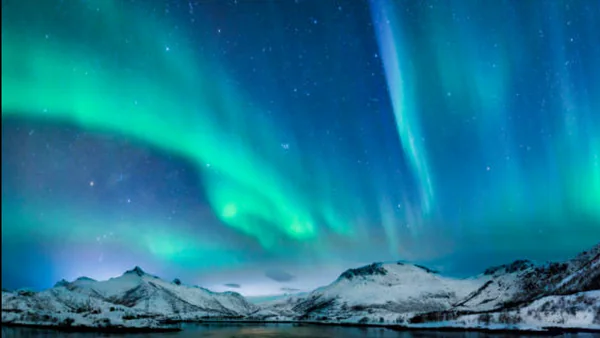
Northern Lights Forecast: When And Where To See Aurora Borealis, And Will Moon Affect Visibility?
(MENAFN- Live Mint) Skywatchers in northern parts of the United States might catch a glimpse of the Northern Lights on the night of Sunday, December 7, continuing into early Monday, December 8, according to an updated forecast from the National Oceanic and Atmospheric Administration (NOAA). This opportunity comes after recent solar activity, including a coronal mass ejection (CME) and disturbances in Earth's magnetic field.
The event coincides with the Geminid meteor shower, one of 2025's most prominent annual celestial shows, which is expected to gain intensity ahead of its peak next weekend.
Also Read | California Northern Lights Tracker: How to watch stunning aurora display What are NOAA's Aurora predictions?NOAA has issued a G1-rated geomagnetic storm alert. Although this is the lowest level on the geomagnetic scale, it is still strong enough to expand aurora visibility to areas farther south than usual. Officials noted that the auroral oval could stretch across up to 12 US states, if skies are clear and light pollution is minimal.
The geomagnetic disturbance originates from a CME that left the sun on December 4, shortly after an M6-class solar flare. CMEs are clouds of fast-moving charged particles that can distort Earth's magnetic field and create vivid auroral displays near the poles.
Spaceweather reports that a large sunspot facing Earth is currently active and capable of releasing major solar flares, which may further enhance aurora sightings through next week.
Will the Moon affect viewing conditions?Aurora visibility may be affected by the waning gibbous moon. The moon reached its full supermoon phase on December 4, and although its brightness is now decreasing, it may still make faint auroras difficult to see with the naked eye. Nevertheless, amateur astronomers and photographers using long-exposure cameras might capture subtle glows.
This week's auroral activity coincides with the Geminid meteor shower, which started on December 4 and continues until December 17. The shower is expected to peak on the night of December 13–14, according to the American Meteor Society, as reported by Forbes.
Also Read | Rare northern lights dazzle across US and other regions in a spectacular display Which states could see the Northern Lights?According to NOAA models, faint auroras may appear near the northern horizon in the following states:
Alaska
Northern Washington, Idaho, Montana, and Wyoming
North Dakota and South Dakota
Minnesota and Wisconsin
Michigan
New York
Maine
Observers are advised to seek dark, open spaces for the best chance of spotting the lights. Light pollution maps and tools like the Dark Sky Place Finder can help locate ideal viewing areas. NOAA cautioned that some minor auroras may only be visible via cameras, even under favorable conditions.
Also Read | Aurora alert: Northern Lights may be visible across 18 US states tonight How do Northern Lights form?The Northern Lights, or aurora borealis, occur when charged solar particles reach Earth and interact with its magnetic field. While most are deflected, some travel along magnetic field lines near the poles and collide with atmospheric gases. These collisions energize oxygen and nitrogen atoms, producing the green, red, or purple lights characteristic of auroras.
NOAA summarised the situation:“The geomagnetic field is likely to reach active levels over 06 Dec as influence from the coronal hole slowly wanes. G1 (Minor) geomagnetic storm levels are likely on 07–08 Dec due to the anticipated onset of influence from the periphery of a CME that left the Sun on 04 Dec.”

Legal Disclaimer:
MENAFN provides the
information “as is” without warranty of any kind. We do not accept
any responsibility or liability for the accuracy, content, images,
videos, licenses, completeness, legality, or reliability of the information
contained in this article. If you have any complaints or copyright
issues related to this article, kindly contact the provider above.
Most popular stories
Market Research

More Story






Comments
No comment