




403
Sorry!!
Error! We're sorry, but the page you were looking for doesn't exist.
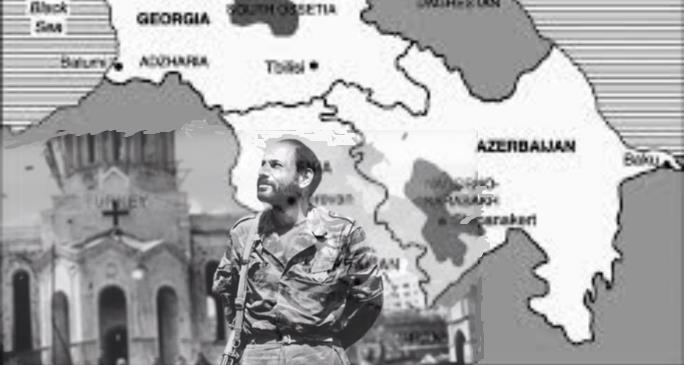
EU Silence On Terrorist Glorification Undermines Its Credibility In S Caucasus
(MENAFN- AzerNews)
Elnur Enveroglu
Read more
The open letter sent by Azerbaijani civil society representatives to senior EU officials this week is more than a routine diplomatic protest. It is an alarm bell, rung by those who have lived through decades of war, occupation, and human loss, warning that Europe is on the verge of repeating one of its most consequential moral errors: confusing the perpetrators with the victims, and granting legitimacy to those who built their reputations on terror. The decision to admit the Armenian Military-Sports Lyceum named after Monte Melkonyan into the European Union Military Secondary Schools Forum is not merely a bureaucratic lapse. It is a profound ethical contradiction that risks eroding the EU's credibility as a promoter of human rights, justice, and conflict-sensitive governance.
For Azerbaijanis, particularly the families of the missing, this is not an abstract debate. It is a deep wound torn open. Only days after these families held a dignified silent protest at the UN Office in Geneva, pleading for accountability for their decades-long suffering, news emerged that an EU-affiliated platform was preparing to sign a memorandum of membership with a school named after a man whose legacy is inseparable from pain, terror, and violence.
Monte Melkonyan is not simply a controversial figure. He is a documented participant in some of the most violent operations carried out during the occupation of Azerbaijan's Kalbajar district in the 1990s, territory that Armenia itself acknowledges as part of Azerbaijan. His prior affiliation with the Armenian Secret Army for the Liberation of Armenia (ASALA), a terrorist organisation that carried out assassinations and bombings across Europe, places him squarely among those who targeted civilians, diplomats, and family members. Countries including France, Greece, Austria, and Spain were among ASALA's victims. How, then, can a figure shaped by terrorism be elevated, under the auspices of the European Security and Defence College, into a model for military education?
It is not only Melkonyan's actions that speak volumes, but also the ideology he represented. In his brother Markar Melkonian's book My Brother's Road: An American's Fateful Journey to Armenia, one chilling confession stands out. Melkonyan reportedly sought guidance from a priest, asking how he might atone for killing“dogs.” The priest, when clarifying whether they were “ four-legged or two-legged,” absolved him completely upon learning these were human beings, i.e., Azerbaijanis. This exchange is not only disturbing; it is revelatory. It exposes a worldview that dehumanised an entire population, legitimised violence, and nurtured a culture that justified atrocities. It is the antithesis of everything the European Union claims to stand for.
How is it, then, that Europe, a continent still bearing the scars of extremism, has allowed an institution named after such a man to be welcomed into a forum designed to promote shared values, ethical military conduct, and inter-institutional cooperation? At best, it suggests astonishing negligence. At worst, it reflects another instance of the EU's persistent double standards toward Azerbaijan, particularly on questions of territorial integrity and state sovereignty.
For more than thirty years, Azerbaijan lived under occupation, its civilians displaced, its lands subjected to systematic destruction, and its missing persons unaccounted for. Kalbajar, where Melkonyan's forces were active, witnessed forced expulsions, brutality, and a pattern of conduct that any serious human rights organisation would categorise as war crimes. Yet rather than confronting this dark history, Armenia continues to elevate the individuals who orchestrated it, turning them into heroes, naming schools after them, and erecting monuments in their honour.
This glorification of war criminals poses a direct challenge to international humanitarian law, human rights norms, and the global fight against terrorism. More importantly, it sends a dangerous message to young Armenians: that participation in armed groups, even those linked to internationally recognised terrorist organisations, is not only acceptable but admirable.
By failing to challenge this, the European Union risks becoming complicit. The EU cannot claim to champion justice while turning a blind eye to the elevation of individuals whose legacies contradict every democratic principle the Union professes to uphold. The dilemma is simple yet profound: If Europe raises no objection to the celebration of Melkonyan, how can it credibly demand accountability, equality, and respect for human rights elsewhere? How can it criticise extremist propaganda abroad while tolerating, even indirectly legitimising, a terrorist legacy within its own networks?
Azerbaijani civil society is right to demand answers. The EU Delegation in Baku owes them an explanation, one that goes beyond diplomatic pleasantries. The admission of the Melkonyan-named institution should be annulled immediately. Anything less is an affront not only to Azerbaijani families searching for truth about their missing loved ones, but also to Europe's own moral foundations.
There is a simple principle at stake: choosing criminals and presenting them as heroes is incompatible with international law, incompatible with regional peace, and incompatible with humanity's collective commitment to fight terrorism. Melkonyan's crimes, documented in Kalbajar and evidenced in his own brother's writings, must not be glossed over, sanitised, or repackaged as a legacy worthy of European endorsement.
For Europe, this is a moment of choice. It can either uphold its stated values or allow the spirit of terrorism to infiltrate the very institutions meant to prevent it. The Azerbaijani public has made its stance clear. Now the European Union must decide whether it will stand with justice or with those who glorify the violators of it.

Legal Disclaimer:
MENAFN provides the
information “as is” without warranty of any kind. We do not accept
any responsibility or liability for the accuracy, content, images,
videos, licenses, completeness, legality, or reliability of the information
contained in this article. If you have any complaints or copyright
issues related to this article, kindly contact the provider above.
Most popular stories
Market Research

More Story




Comments
No comment