




403
Sorry!!
Error! We're sorry, but the page you were looking for doesn't exist.
Why China Is Watching Trump's Venezuela Campaign Closely
Author: Tom Harper
(MENAFN- The Conversation) Donald Trump's campaign against Venezuela escalated recently with the US president announcing that the country's airspace should be considered“closed”. This is a move that has preceded US military interventions in the past, perhaps most notably in Iraq in 2003.
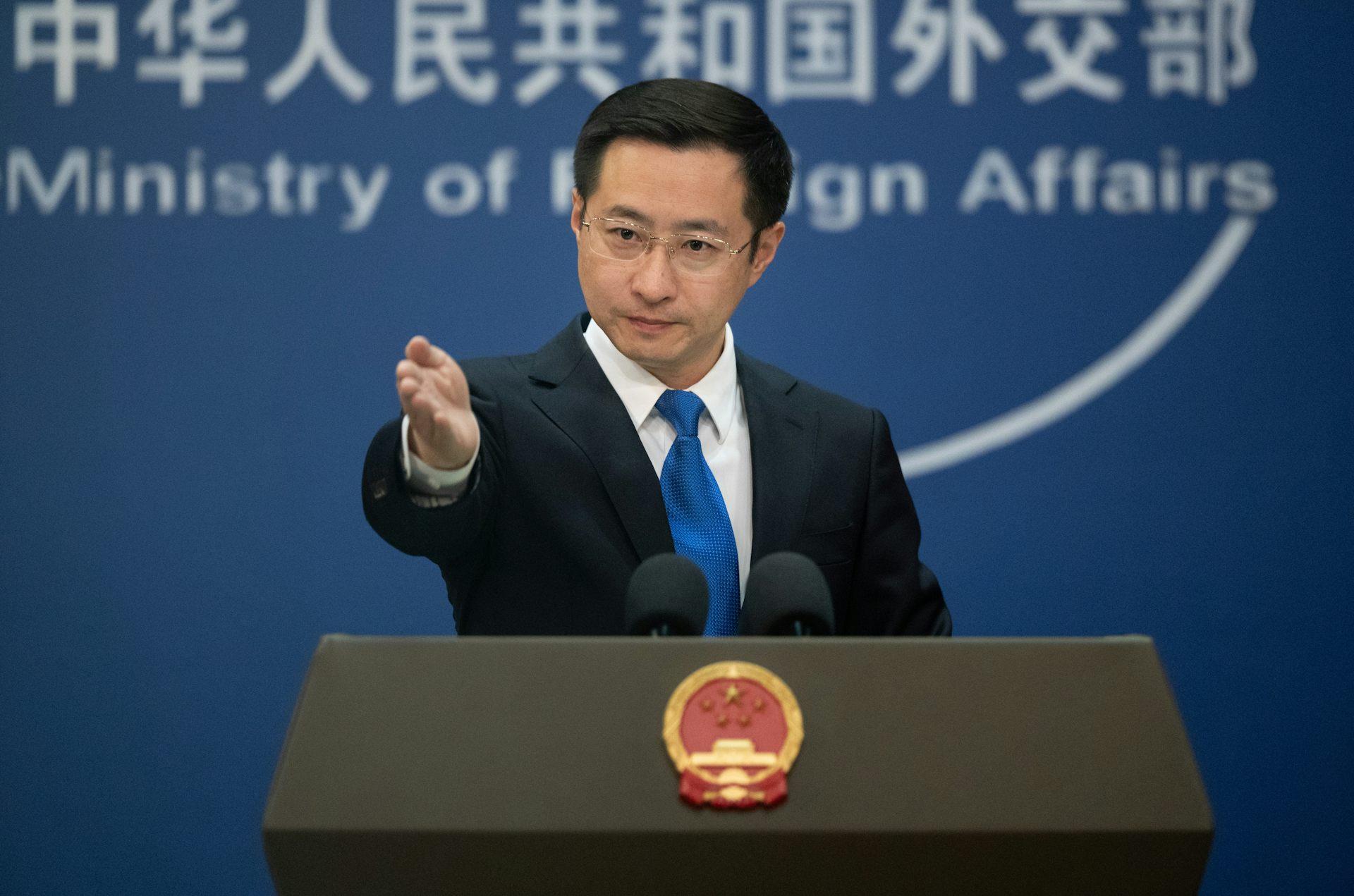
Lin Jian responded to Trump's comments by saying China rejects interference in Venezuela's internal affairs 'under any pretext'. Jessica Lee / EPA![Xi Jinping shaking hands with Hugo Chávez.]()
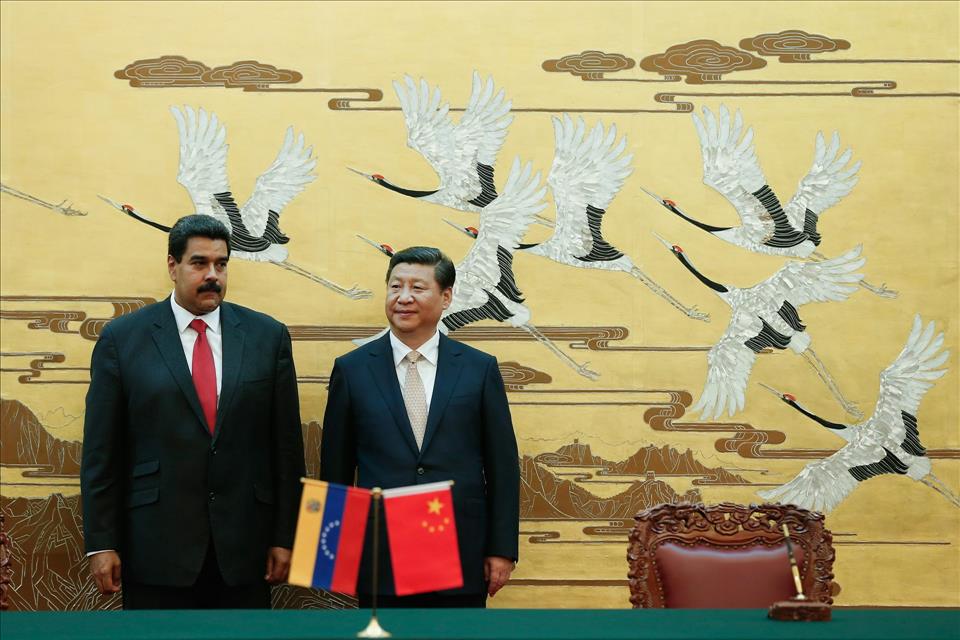
Xi meeting Chávez on a state visit to Venezuela in 2009. Harold Escalona / Shutterstock Challenging Chinese influence

It remains to be seen whether Trump's declaration will be followed by military action or is just a means of raising the pressure on the Venezuelan leader, Nicolás Maduro, in an attempt to force him from office. But regardless of what happens next, what has been notable is the reaction of China.
In a December 3 briefing, Chinese foreign ministry spokesperson Lin Jian said that closing Venezuelan airspace would violate international norms and infringe on national sovereignty. Jian added that China rejects interference in Venezuela's internal affairs“under any pretext” and called on all parties to keep Latin America a“zone of peace”.
This stance is no great surprise. China has developed strong relationships with several Latin American countries, including Venezuela, as part of a broader strategy to expand its presence in regions long dominated by the US. Trump's threats of military action could jeopardise the influence China has built there.
Lin Jian responded to Trump's comments by saying China rejects interference in Venezuela's internal affairs 'under any pretext'. Jessica Lee / EPA
China has been involved in Latin America for centuries. But its ties to the region have grown rapidly over the past 25 years or so, with China becoming an indispensable partner to many Latin American countries. Brazil is a clear example of this indispensability.
The election of Jair Bolsonaro's right-wing government in 2018 led to expectations that Brazil would tilt towards Washington. However, such expectations were soon dampened due to China's role as a major consumer of Brazilian goods. By 2020, China was Brazil's largest trading partner, accounting for over 30% of total exports from the country.
Ties between Brazil and China have only deepened under Bolsonaro's successor, Luiz Inácio Lula da Silva. This has been helped by the intensification of the US-China trade war, which has seen Brazil become a crucial alternative source of agricultural products such as soybeans that China has historically imported from the US.
This relationship has enabled China to exert economic pressure on the US. Brazil's large soybean exports to China have increased the global supply, which has suppressed prices for all suppliers – including those in US.
China has been a similarly indispensable partner to Venezuela since the days of Maduro's predecessor, Hugo Chávez, who took power in the Latin American state in 1999. Chávez was a keen advocate of a multipolar international order, a concept that has gained traction as Beijing's political and economic power has grown.
Over the years, China has become the main destination for Venezuelan oil. In 2024, China bought around 268,000 barrels of oil from Venezuela on average every day – a figure that, in reality, is likely to be higher as Venezuelan oil is routinely mislabelled to bypass US sanctions.
Venezuelan oil is key for China. Beijing has been attempting to diversify its sources of natural resources in recent years as part of efforts to retain its global advantage in cheap manufacturing and wean itself off a dependency on Middle Eastern oil. Trump's threats to intervene militarily in Venezuela may, at least in part, be aimed at challenging Chinese interests.
Indeed, the White House issued an official statement on December 2 affirming the Trump administration's commitment to the Monroe Doctrine. Signed in 1823, the doctrine said the US would reject other countries' influence in Latin America. A new“Trump Corollary” to the doctrine states that“the American people – not foreign nations nor globalist institutions – will always control their own destiny in our hemisphere”.
Xi meeting Chávez on a state visit to Venezuela in 2009. Harold Escalona / Shutterstock Challenging Chinese influence
Any US military action in Venezuela will probably increase paranoia across the region. Trump warned recently that any country he believes is making illegal drugs destined for the US is vulnerable to a military attack, and singled out Colombia.
On December 2, Trump told reporters at the White House that he“heard” Colombia was“making cocaine”.“They have cocaine plants”, he added. The Colombian president, Gustavo Petro, hit back immediately on social media, saying:“To threaten our sovereignty is to declare war”.
But China is unlikely to step in militarily to defend countries in Latin America from US aggression. While China has used its developmental influence there to pursue some political objectives – most notably persuading El Salvador, the Dominican Republic and Honduras to renounce diplomatic recognition of Taiwan in recent years – its engagement with Latin America has largely been transactional.
China's strategy in Latin America is driven primarily by economic considerations, and Beijing has generally been reluctant to enter into formal alliances with states there. This hesitance to commit to defending its partners could strain relations with countries in the region that may expect Beijing to support them in the event of a crisis.
However, Trump's Latin America campaign does provide China with some opportunities. Just as European countries concerned about Russia's expansionist intentions have become a key market for American arms, it's possible that Latin America becomes a lucrative destination for Chinese weaponry.
Venezuela is already buying Chinese arms, varying from riot control equipment to missiles and – possibly in the future – fighter jets. China has also sold military equipment to Argentina, Bolivia and Ecuador.
The US appears to be taking an increasingly active interest in Latin America. As outlined in its recently published National Security Strategy, the Trump administration is looking to readjust the US's“global military presence to address urgent threats” in the western hemisphere.
Having carefully built up its influence in Latin America over many years, China's leadership will be keeping a keen eye on how events unfold there in the months ahead.
Institution:University of East London

Legal Disclaimer:
MENAFN provides the
information “as is” without warranty of any kind. We do not accept
any responsibility or liability for the accuracy, content, images,
videos, licenses, completeness, legality, or reliability of the information
contained in this article. If you have any complaints or copyright
issues related to this article, kindly contact the provider above.
Most popular stories
Market Research

More Story





Comments
No comment