




403
Sorry!!
Error! We're sorry, but the page you were looking for doesn't exist.
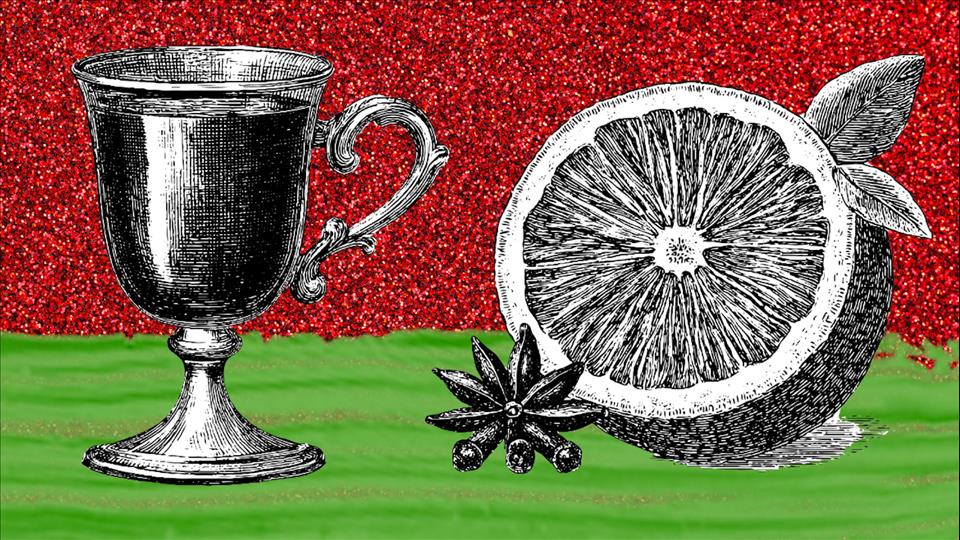
A Brief History Of Mulled Wine From Health Tonic To Festive Treat
Author: Sara Read
(MENAFN- The Conversation) When frost sparkles in the morning and our breath is visible as we venture outside, thoughts turn to winter warming treats like mulled wine – a drink full of ingredients that have become synonymous with Christmas.![A man drinking wine.]()
An illustration from a medieval manuscript showing 'ypocras' being made.![Scrooge and Bob Cratchit]()
'We will discuss your affairs this very afternoon, over a Christmas bowl of Smoking Bishop, Bob!'![]()

Mulled wine is made by adding spices such as cinnamon, cloves, ginger, mace and nutmeg to sweetened red wine, which is then warmed gently. Across Europe and Scandinavia, it can be purchased in many pubs, bars and festive markets – while supermarket shelves groan with bottles of readymade mulled wines for you to heat at home.
There are many different English recipes out there, including some dating back to the 14th century – from a collection of manuscripts that later became known as The Forme of Cury. The beverage made by following this recipe would certainly have packed a punch, as it contains several spices from the ginger family including galangal, in addition to the more familiar ones.
And before wine was known as mulled, drinking wine flavoured with spices has a long history. There is a mention of drinking spiced wine in the biblical poem the Song of Solomon, which states:“I would give you spiced wine to drink.”
Read more: Five historical hot cocktails that are perfect for cold weather
It is thought that spice-infused wine was introduced to Britain by the Romans. An older name for it was“hippocras”, although this was mainly taken as a health tonic – made from spice-infused red or white wine and taken hot or cold.
An illustration from a medieval manuscript showing 'ypocras' being made.
In The Merchant's Tale from Geoffrey Chaucer's Canterbury Tales (1392), the wealthy, elderly knight January takes“ypocras, clarre, and vernage / Of spices hote, to encrese his corrage” (hypocras, clary, and vernage / of spices hot to increase his courage). January sups these three types of spiced wine to boost his virility on his wedding night for his young bride, May.
Diarist and civil servant Samuel Pepys also mentions taking “half-a-pint of mulled sack” – a sweetened Spanish wine – in an almost medicinal way to comfort himself in the middle of a working morning in March 1668, when things had been going wrong for him.
The name mulled wine comes from the Old English mulse – an archaic name for any drink made of honey mixed with water or wine, derived from the Latin word for honey (mel) and still used in modern Welsh as mêl. From mulse we get“musled”, which was used to describe anything that has been“mingled with honey”.
Before the growth of the global sugar trade, honey was the main way that food and drink was sweetened. Vin chaud, the French equivalent of mulled wine, is traditionally sweetened with honey. England imported spiced wine from Montpellier in large quantities from the 13th century, but only those of social status, like Chaucer's knight January, would have been able to indulge in those days.
Warm sweet and spiced wine continued to be drunk for health and enjoyment throughout the centuries. But in the 18th century, mulled wine evolved again, as reflected in a recipe in Elizabeth Raffald's The Experienced English House-keeper (1769) for a warm drink thickened with egg yolks:
The result of this method is a frothy, velvety smooth confection, enjoyed with dipping toast or biscuits.
'We will discuss your affairs this very afternoon, over a Christmas bowl of Smoking Bishop, Bob!'
Our ancestors didn't associate mulled wines with Christmas, so it seems likely that the pairing was popularised by Charles Dicken's 1843 novella A Christmas Carol – like so much of what we now regard as a traditional Christmas.
After Mr Scrooge has seen the error of his miserly ways, he says to Bob Cratchit:“We will discuss your affairs this very afternoon, over a Christmas bowl of Smoking Bishop, Bob!” Smoking Bishop is a recipe for mulled wine that combines port in the wine and uses dried oranges for an added flavour note. The smoke refers to the steam rising from this hot drink.
So this year, as you cup your hands around the warm mug and inhale the fragrant steam coming off your mulled wine, think of the long history you are a part of.
Looking for something good? Cut through the noise with a carefully curated selection of the latest releases, live events and exhibitions, straight to your inbox every fortnight, on Fridays. Sign up here.
Institution:Loughborough University

Legal Disclaimer:
MENAFN provides the
information “as is” without warranty of any kind. We do not accept
any responsibility or liability for the accuracy, content, images,
videos, licenses, completeness, legality, or reliability of the information
contained in this article. If you have any complaints or copyright
issues related to this article, kindly contact the provider above.
Most popular stories
Market Research

More Story








Comments
No comment