







403
Sorry!!
Error! We're sorry, but the page you were looking for doesn't exist.
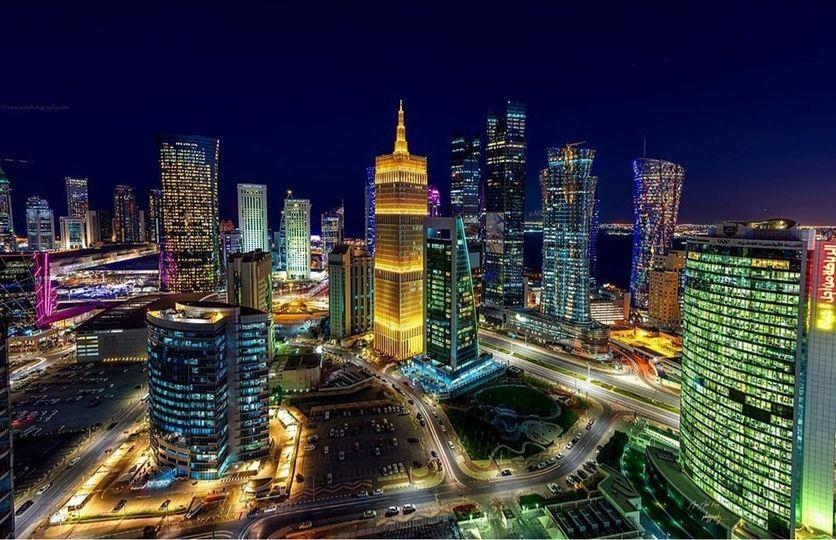
World Bank Forecasts 2.8 Percent Growth For Qatar's Economy In 2025
(MENAFN- The Peninsula)
QNA
Washington: The World Bank expects Qatar's real GDP growth to reach 2.8 percent in 2025, with public fiscal surpluses remaining strong.
The World Bank's report, released on Thursday under the title "Digital Transformation in the Gulf: A Powerful Driver of Economic Diversification," states that non-oil sectors in Qatar have maintained their strength even amid declining oil and gas prices. It adds that the expansion of the North Field will drive a substantial increase in liquefied natural gas (LNG) production, further strengthening Qatar's role in meeting global market needs.
The report highlights three key themes: the evolution of economic diversification indicators over the past decade; tracking macroeconomic developments; and spotlighting digital transformation, all against a backdrop of global uncertainty and oil market volatility.
The report reviews the progress of economic diversification efforts across GCC countries over the past decade, noting moderate advancement, with some promising recent indicators.
However, the report stresses that the oil sector still dominates, shaping economic conditions, development strategies, and national plans. Meanwhile, non-oil exports remain modest, with chemicals topping the list, indicating that the process of shifting away from oil dependence still requires sustained effort.
The report also highlights the rapid digital transformation underway in the Gulf and the accelerated adoption of artificial intelligence. GCC countries boast high-quality telecommunications networks, with over 90 percent 5G coverage and affordable high-speed internet. Significant investments in data centers and high-performance computing are strengthening AI readiness. Progress is further supported by robust ecosystems of incentives, finance, and innovation, as well as the adoption of generative AI applications within government operations.
Commenting on the findings, World Bank's Division Director for the GCC countries, Safaa El Tayeb El Kogali, stated that diversification and digital transformation are no longer luxuries; they are necessities for long-term economic stability and prosperity. Strategic investments in non-oil sectors and innovation will be essential for sustaining growth and economic resilience.
She added that the digital leap achieved by GCC countries is remarkable. Strong infrastructure, growing computing capabilities, and expanding AI talent pools position the region for leadership and innovation, provided environmental and labor-market challenges are addressed proactively.
The report also points out that women's participation in STEM fields in the Gulf exceeds the global average, boosting the region's digital competitiveness. To maximize the benefits of diversification and digital transformation, the Gulf Economic Update recommends supporting SMEs in adopting AI to strengthen the innovation landscape and implementing skills-training programs to address labor-market gaps.
The report stresses that regional cooperation in digital infrastructure and the creation of AI centers of excellence are crucial to building unified digital markets and driving transformation across the Middle East, North Africa, Afghanistan, and Pakistan.

Legal Disclaimer:
MENAFN provides the
information “as is” without warranty of any kind. We do not accept
any responsibility or liability for the accuracy, content, images,
videos, licenses, completeness, legality, or reliability of the information
contained in this article. If you have any complaints or copyright
issues related to this article, kindly contact the provider above.
Most popular stories
Market Research

More Story







Comments
No comment