







403
Sorry!!
Error! We're sorry, but the page you were looking for doesn't exist.
K'gari's Unique Ancient Lakes Once Dried Out. Could This Happen Again?
Author: John Tibby
(MENAFN- The Conversation) The lakes on the world's biggest sand island, K'gari, are famous. Pivotal to the World Heritage listing of the Queensland island formerly known as Fraser Island, their turquoise waters feature in international tourism campaigns and social media posts.
Lake Garawongera is a tannin-stained perched lake, which is isolated from deeper, larger groundwater sources. John Tibby, CC BY-ND The eyes of K'gari![]()
Ocean Lake. In the foreground is a day waterlily, an invasive species on K'gari. Dave Sternberg, CC BY-ND A gap in the record![]()
Researchers at Lake Garawongera. From left to right are Conway Burns, Caitlin Jones, Margaux Dupuy, Harald Hofmann and Bob Broome. John Tibby, CC BY-ND Future of a special place
Lake Allom, on K'gari. John Tibby, CC BY-ND

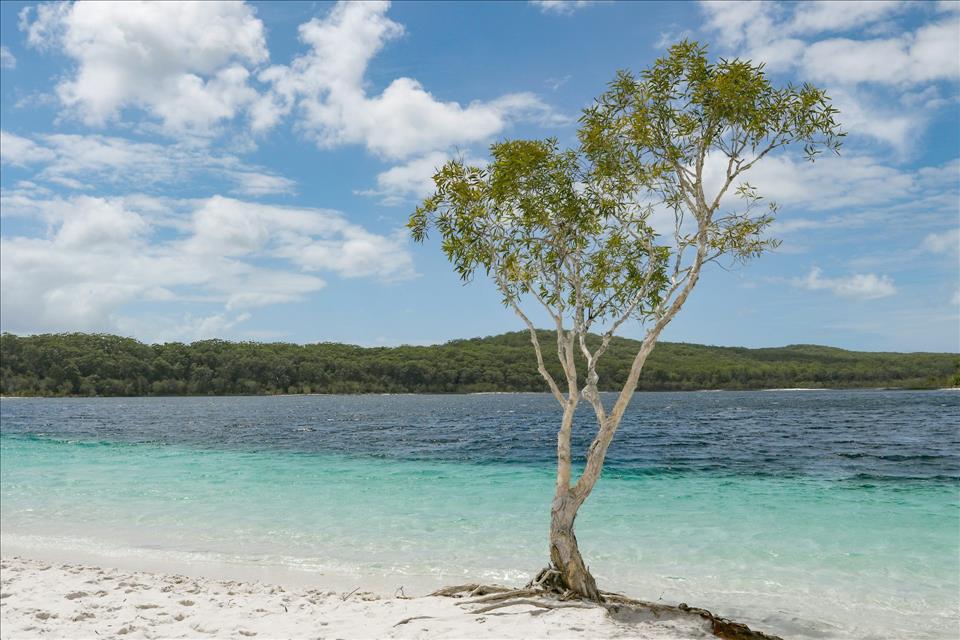
K'gari has more than 40 unique lakes, some more than 55,000 years old. They range from the photogenic clear waters of Boorangoora (Lake McKenzie), pictured above, which filters through the sand dune it rests in, to the emerald-green waters of Lake Wabby, a window lake which is (very) slowly being swallowed by a giant sand dune.
In fact, K'gari is home to more than half of the world's perched lakes, more than 50, including Boorangoora. Perched lakes form when sand is cemented together with decomposed organic matter (such as leaves and bark), aluminium and iron. This creates an impermeable layer well above sea level. It's remarkable these lakes exist, given water usually passes quickly through sand.
Until now, it was believed K'gari's lakes would have contained water since the last ice age ended, about 11,500 years ago. But our new research found some of the island's deepest lakes dried out only 7,500 years ago. In the current era of climate change, it's possible this could happen again.
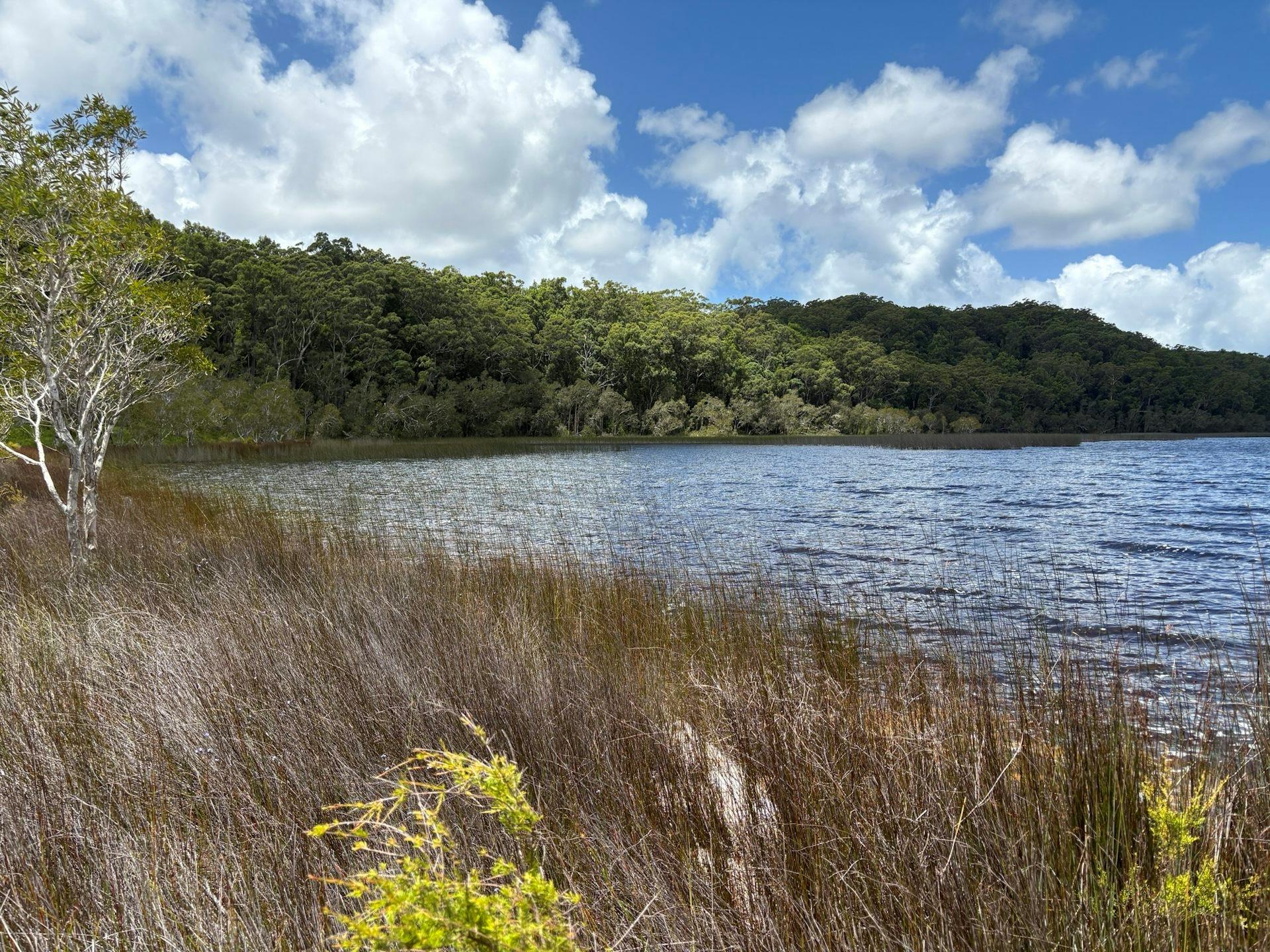
Lake Garawongera is a tannin-stained perched lake, which is isolated from deeper, larger groundwater sources. John Tibby, CC BY-ND The eyes of K'gari
For the island's Traditional Owners, the Butchulla people, these lakes are the“eyes of K'gari” and their waters are sacred. The Butchulla believe they have been entrusted with an eternal responsibility: to preserve K'gari's beauty, spirit, waterways and lakes so future generations may experience the same connection.
K'gari is home to two key types of lakes. Perched lakes (described above) are the best-known type, while window lakes, filled by rain and groundwater, are so named because they offer a“window” to groundwater below the land.
The climate history of these lakes is recorded in their muddy sediment. What happens in and around the lake gets“written” into the layers: plant pollen tells us about local vegetation while greater amounts of sand might indicate erosion.
Ocean Lake. In the foreground is a day waterlily, an invasive species on K'gari. Dave Sternberg, CC BY-ND A gap in the record
In our research we found this sediment was missing from some of K'gari's oldest lakes between 7,500 and 5,500 years ago. This gap in the record was identified by radiocarbon dating of sediments from K'gari's Lake Boorangoora, Lake Allom and Basin Lake.
This gap in sediment suggests the lake basins were not then covered by water. This can happen when there is not enough rainfall over decades. Many Australian lakes dried up during more than the decade-long Millennium Drought.
Our findings were unexpected. We would not have expected the lakes to dry up, as the sediment gap happened during the current Holocene geological epoch, during which global temperatures have varied by less than one degree and moisture has been abundant.
Recent sediment research from another major sand island, Minjerribah (or North Stradbroke Island), shows this island was wetter than K'gari during the same period. Why, at a time of relatively mild climate variation, was it generally wetter just 250 kilometres south? We think southeasterly trade winds supplied rainfall to Minjerribah but not K'gari.
Researchers at Lake Garawongera. From left to right are Conway Burns, Caitlin Jones, Margaux Dupuy, Harald Hofmann and Bob Broome. John Tibby, CC BY-ND Future of a special place
Our findings highlight the pressing need to know much more about K'gari's beautiful lakes. In a warming climate expected to become drier but punctuated with more intense rainfall, are these lakes at risk of evaporating? At the moment, we simply don't know.
For most lakes on K'gari, there's no information about how much water they hold or even how deep they are. The little information available from a few simple surveys hints that lakes were generally deeper in the 1970s.
In response, we have started surveying the underwater depth and topography of the lakes, using automated monitoring devices to measure how much they fill and drop. Gathering data to understand the water inputs and outputs of today's lakes will help us better interpret the past – and possibly model the future.
While we are concerned about the future of these lakes, K'gari hosts the greatest diversity of fish and amphibians of any Australian island, hinting at a resilience to climate-driven changes.
In our scientific work, we also try to follow Butchulla teachings. These are: what is good for Country comes first; do not touch or take anything that does not belong to you; and if you have plenty, you must share.
“Gung K'gari Marigurim Yaa”: K'gari's water makes voice strong.
Lake Allom, on K'gari. John Tibby, CC BY-ND
Institution:CSIRO

Legal Disclaimer:
MENAFN provides the
information “as is” without warranty of any kind. We do not accept
any responsibility or liability for the accuracy, content, images,
videos, licenses, completeness, legality, or reliability of the information
contained in this article. If you have any complaints or copyright
issues related to this article, kindly contact the provider above.
Most popular stories
Market Research

More Story







Comments
No comment