




403
Sorry!!
Error! We're sorry, but the page you were looking for doesn't exist.
White House Prepares For Overruling Of IEEPA Tariffs
(MENAFN- ING)
Plans to find alternative tariff options are already in motion
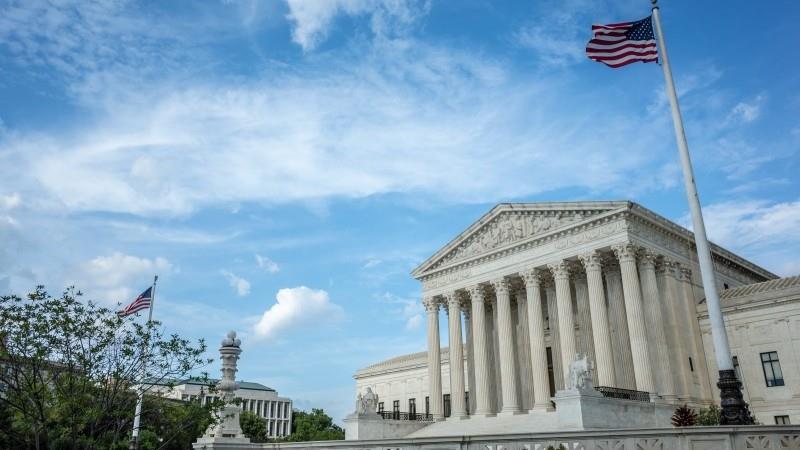
Following the Supreme Court hearings on the legality of tariffs enacted by the US administration under the International Economic Emergency Powers Act (IEEPA), the government has started preparing fallback options to ensure the continuation of the tariff agenda. Although no comment was made on the specifics of these preparations, this has fuelled expectations that the court might overrule President Trump's use of the authorities granted under IEEPA. Betting markets already think President Trump will lose his tariff court battle.
The main strategies will probably involve making more prominent use of sections 301 and 232, which are already used to impose sectoral tariffs in response to unfair trade practices and national security threats. Currently in place and unaffected by the ruling are Section 301 tariffs on Chinese products and Section 232 tariffs on steel, aluminium and copper, as well as cars and car parts.
To implement further tariffs under Section 301, an investigation into the trade and economic policies of foreign countries is required, a process that can take up to nine months. This has led Trump to launch a Section 301 investigation against Brazil. Because Section 232 also requires a lengthy investigation before new duties can be imposed, the administration must plan for interim measures to avoid a tariff gap and mitigate potential retaliation payments if existing tariffs are overturned.
Trump won't hesitate to adopt new approachesGiven the extensive legal framework offered by the United States, Trump's tariff toolkit also includes measures that have not yet been implemented. The two main options not yet invoked are the following:
Section 122, for instance, has far fewer procedures and could be implemented almost instantaneously. However, drawbacks include a 15% cap and a 150-day time limit, which could be extended with Congressional approval. Section 122 has never been invoked, but its requirement of a large balance of payment issues applies to many major trading partners, such as China or Mexico. Therefore, it is likely to be a measure of last resort or useful for a transitional period, but would not help to sustain a long-term tariff strategy.
Another possible tool is Section 338, which would allow tariffs of up to 50% to be imposed at a country level, based on discrimination against US commerce. Implemented during the Great Depression with the 1930 Tariff Act, it is untested in modern trade law. Moreover, it lacks procedural safeguards like mandated investigations, timelines or disclosure requirements. This provides scope for potential legal challenges.
A ruling is expected in early 2026Regardless of the Supreme Court's decision, tariffs will remain a core part of Trump's trade agenda. However, without IEEPA, the administration would lose both speed and credibility, weakening its negotiating leverage. Due to the complexity of the issue and the Supreme Court's typical annual term, a ruling within the next month is unlikely.
Normally, big Supreme Court decisions are announced before the summer. However, given the importance of the issue, a decision could already be released in early 2026. No matter what the final verdict will be, the US government clearly intends to keep tariffs.

Legal Disclaimer:
MENAFN provides the
information “as is” without warranty of any kind. We do not accept
any responsibility or liability for the accuracy, content, images,
videos, licenses, completeness, legality, or reliability of the information
contained in this article. If you have any complaints or copyright
issues related to this article, kindly contact the provider above.
Most popular stories
Market Research

More Story







Comments
No comment