




403
Sorry!!
Error! We're sorry, but the page you were looking for doesn't exist.
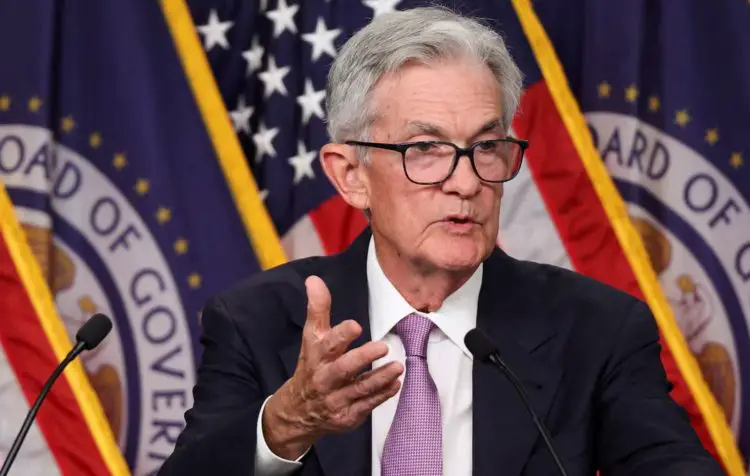
US Federal Reserve Chair Powell: Trump's Trade Policies Risk US Recession
(MENAFN- Khaama Press) US Federal Reserve Chair Jerome Powell warns that Trump's trade policies may lead to a recession by impacting economic stability.
The U.S. Federal Reserve has decided to hold interest rates steady amid growing concerns over the economic impact of President Donald Trump's trade policies. The decision was announced after the Federal Open Market Committee's two-day meeting on May 7. This move signals the Fed's cautious stance as it navigates the uncertainty triggered by the trade policies and their potential effects on inflation and employment.
Jerome Powell, the Federal Reserve Chair, stated that the economic outlook is unclear, making it challenging to decide on future monetary policies. He emphasized that the central bank is adopting a“wait-and-see” approach until the full consequences of Trump's trade decisions become clearer. The uncertainty has left the Fed in a dilemma, balancing its dual mandate of keeping inflation low while maintaining high employment levels, according to the NBC News.
In response to the growing risks of rising inflation and job losses, Powell noted that the economy remains dynamic, although the job market is showing signs of instability. Despite some challenges, the Fed has yet to make any significant policy changes. Powell highlighted that the central bank remains vigilant and will act promptly if needed to address emerging economic pressures.
The ongoing tariff situation is causing significant uncertainty for businesses and consumers. Powell acknowledged the dilemma posed by Trump's trade policies, which could potentially lead to stagflation, a scenario where inflation and unemployment rise simultaneously. This scenario places the Federal Reserve in a difficult position as it attempts to balance the opposing forces of inflation control and job preservation.
The Fed's cautious stance contrasts with its approach in 2019, when Powell reduced interest rates three times to offset the economic damage from Trump's earlier tariff threats. However, Powell indicated that the current situation is different, as inflation is rising at a faster rate, making preemptive rate cuts more complicated. The core personal consumption expenditures (PCE) index, the Fed's preferred inflation measure, was at 2.6% in March, significantly higher than in 2019.
Despite market expectations for rate cuts later this year, some analysts remain skeptical. Bank of America researchers expressed doubts, suggesting that the current labor market and rising inflation may not warrant cuts. Powell, however, has refrained from committing to future actions, given the unpredictable nature of the economic situation caused by the trade tensions.
Meanwhile the Federal Reserve remains cautious and committed to its monitoring role, it acknowledges the ongoing economic risks due to the trade policies implemented by the Trump administration. The central bank is prepared to adjust its policies as necessary, but it is awaiting further clarity on the economic impacts before taking significant steps. As uncertainty continues to affect both businesses and consumers, the Fed's ability to navigate these turbulent conditions will be crucial in shaping the future economic landscape.
ShareFacebook Twitter WhatsApp Email Print Telegram
Legal Disclaimer:
MENAFN provides the
information “as is” without warranty of any kind. We do not accept
any responsibility or liability for the accuracy, content, images,
videos, licenses, completeness, legality, or reliability of the information
contained in this article. If you have any complaints or copyright
issues related to this article, kindly contact the provider above.
Most popular stories
Market Research

More Story







Comments
No comment