






403
Sorry!!
Error! We're sorry, but the page you were looking for doesn't exist.

The Dark Side Of Topping Exams In Kashmir
(MENAFN- Kashmir Observer)
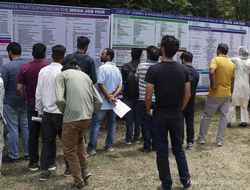
Representational Photo
Representational Photo
By Ikkz Ikbal
The exam results in Kashmir are out. Social media is glowing with pictures of mark sheets and shiny percentages. Parents update their bios with their children's scores. Schools send out press releases. Coaching centers take credit.
But beneath the celebration is a quiet concern: Is this what education is supposed to be?
In Kashmir, and much of South Asia, exams have become the centerpiece of learning. The system rewards memory over meaning, speed over understanding. Students are trained to produce perfect answers, not to ask good questions. That isn't just outdated, it's unfair.
Each year, I meet students who top their classes but cannot explain a concept without referring to their notes. I've seen average scorers thrive in life because someone finally told them it's okay to think differently. Yet the pressure to perform on a single test day continues to shape how children study, how teachers teach, and how families dream.
Read Also J&K Class 12 Data Leak Triggers Cyber Probe When 89% Isn't Enough: Kashmir's Toxic Obsession with MarksThis obsession with marks isn't unique to Kashmir, but it's amplified here by economic uncertainty and limited opportunities. In a place where many see education as the only route to mobility, exams become a kind of lottery ticket. Success is measured by ranks, not by reflection. Students grow up thinking their worth lies in a report card.
That belief comes at a cost. Children stop learning for learning's sake. They grow afraid of being wrong. Creativity is smothered under sample papers and last year's question banks.
It doesn't have to be this way.
Across the world, education is changing. The Programme for International Student Assessment (PISA), a global benchmark, shows that countries focused on conceptual learning consistently outperform rote-based systems. Finland delays formal exams but produces engaged, capable students. In Singapore and Japan, critical thinking is built into the curriculum. Even India's National Education Policy 2020 recognizes the need for a shift toward skill-based, multidisciplinary learning.
But implementation is slow, especially in conflict-affected regions like Kashmir. Schools lack trained teachers, parents lack awareness, and children bear the brunt. They're judged on answers they can memorize, not ideas they can build.
As a school principal, I see how hard it is to change this mindset. Parents want results. Teachers are overburdened. Students feel trapped between expectation and exhaustion. But I also see sparks. Children who write beautifully when no one is watching, who ask why the sky is blue when they're not afraid to look foolish.
That's the kind of curiosity we need to protect.
Education is not about producing doctors, engineers, or civil servants. It's about preparing young people to live with purpose, kindness, and clarity. It's about giving them tools to think, question, and adapt in a world that won't stop changing.
We need to reframe success. A student who paints with emotion or repairs a radio with care deserves as much praise as one who gets a 95 in science. Ranks and medals are temporary. Curiosity lasts.
Parents must stop pushing children into careers they neither enjoy nor understand. Schools must celebrate effort, not just outcome. And teachers must be trained to nurture minds, not just finish syllabi.
We have a long way to go. But it starts with asking a simple question: not what the child scored, but what the child learned.
If we keep chasing marks, we'll keep raising students who can write answers, but not their own stories.
-
Ikkz Ikbal is a school principal holding a master's degree in Biotechnology.

Legal Disclaimer:
MENAFN provides the
information “as is” without warranty of any kind. We do not accept
any responsibility or liability for the accuracy, content, images,
videos, licenses, completeness, legality, or reliability of the information
contained in this article. If you have any complaints or copyright
issues related to this article, kindly contact the provider above.
Most popular stories
Market Research

More Story







Comments
No comment