



403
Sorry!!
Error! We're sorry, but the page you were looking for doesn't exist.

Trading Their Future: How Young Kashmiris Are Betting It All
(MENAFN- Kashmir Observer)
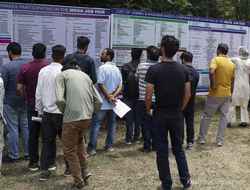
Representational photo
Representational photo
By Samreen Hamdani
When Faizan Mir made his first trade, he felt like he had found a secret door. It was 2020, deep into the pandemic lockdown. The world outside his home in Anantnag, Kashmir, had fallen still, but inside his small room, life seemed to speed up.
On his phone screen, a few clicks sent numbers jumping, turning green. His heart raced. His mind raced faster.
He made ₹600 that day. More than what his father earned in a full shift at the orchard. It felt magical.
He didn't know it then, but that day would change everything.
Read Also Is Higher Education Going Beyond Skilled Laborers and Building Visionaries? When Others Run, You BuyAcross India, Faizan was part of a quiet revolution that was only just beginning. In those lockdown months, millions of young Indians, some still teenagers, discovered trading. With free apps, viral Instagram reels, and Telegram groups promising riches, the stock market no longer looked like an old man's game.
By 2024, nearly half of all stock investors in India were under the age of 30. It's a staggering jump from just a few years ago. What was once a slow climb toward wealth had turned into a race. A race most young traders did not understand they were running uphill.
At first, the trading apps felt like video games. Bright charts. Leaderboards. Notifications that buzzed like rewards. Every small win felt like leveling up. Every loss, like a challenge to try again.
Psychiatrists now warn that the brain does not know the difference. Dr. Parth Soni, based in Vadodara, says the highs and lows of trading trigger the same parts of the brain as gambling.“It's addictive,” he says.“It makes you believe the next win is just around the corner.”
But the next win rarely comes.
Seven out of ten day traders lose money, according to SEBI. Nine out of ten futures and options traders lose even more. Over three years, retail traders in India lost ₹1.8 lakh crore.
You wouldn't know it by scrolling through Instagram or YouTube. Finfluencers flood young people's feeds with videos about escaping the 9-to-5, driving luxury cars, living in beach houses. Most make more money selling courses and memberships than they ever did trading.
It's a dream built on false hope.
Nobel laureate Robert Shiller once warned that bubbles form when people feed each other stories of easy wealth. Today, that bubble grows through hashtags and viral clips. The old scams have new packaging.“Pump and dump” schemes, where influencers hype up cheap stocks only to dump them later, cheated dozens last year alone. SEBI fined 55 groups for market manipulation in 2023.
In the background, the education gap yawns wider. Only 27 percent of adults and just 16.7 percent of teenagers in India are considered financially literate. Without knowing the basics of money-risk, patience, planning-many young people mistake gambling for strategy.
Some pay with lost savings. Others pay with something even more precious.
In Chennai, a 21-year-old student ended his life last year after falling into debt from trading losses: ₹22 lakh borrowed from friends, apps, anyone who would lend.
In Kashmir, Faizan's story did not end so tragically, but it did leave scars.
After a few small wins, his bets grew bigger. He borrowed from cousins and friends. He joined premium Telegram groups that promised secret tips. Sometimes he would wake up in the middle of the night just to check his trades. Slowly, his balance slipped into red.
When the calls from lenders started coming, Faizan stopped answering. He pulled away from friends. He stopped showing up to classes. For a while, he barely left his room.
Today, Faizan says he is done with trading. His phone is quieter now. No notifications. No charts. No leaderboards. He is working toward his degree again, thinking about a steady job. Something real. Something that doesn't vanish with a single swipe.
“I wanted a shortcut,” he says, looking down at his hands.“But there are no shortcuts. Only lessons.”
Faizan learned that in trading, easy wins come with hard falls.
-
– Samreen Hamdani is a student of the Economics Department at Islamic University of Science and Technology (IUST), Awantipora.

Legal Disclaimer:
MENAFN provides the
information “as is” without warranty of any kind. We do not accept
any responsibility or liability for the accuracy, content, images,
videos, licenses, completeness, legality, or reliability of the information
contained in this article. If you have any complaints or copyright
issues related to this article, kindly contact the provider above.
Most popular stories
Market Research

More Story







Comments
No comment