







403
Sorry!!
Error! We're sorry, but the page you were looking for doesn't exist.
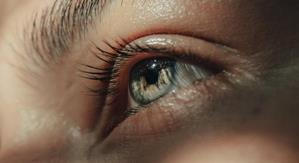
Pupil Size Plays Key Role In Storing Memories In Brain: Study
(MENAFN- IANS) New York, Jan 2 (IANS) The pupil of the eye is key to understanding how, and when, the brain forms strong, long-lasting memories, according to a mice study.
Researchers from Cornell University in the US found that new memories are being replayed and consolidated when the pupil is contracted during a substage of non-REM sleep. And when the pupil is dilated, the process repeats for older memories.
The team explained that the brain prevents“catastrophic forgetting” in which the consolidation of one memory wipes out another one by separating these two substages of sleep.
The findings, published in the journal Nature, showed that it could lead to better memory enhancement techniques for humans and may help computer scientists train artificial neural networks to be more efficient.
Azahara Oliva, assistant professor at Cornell noted that the study proposes that“the brain has this intermediate timescale that separates the new learning from the old knowledge”.
In the study, the team equipped mice with brain electrodes and tiny eye-tracking cameras while they indulged in a variety of tasks, such as collecting water or cookie rewards in a maze.
One day, the mice learned a new task and when they fell asleep, the electrodes captured their neural activity and the cameras recorded the changes in their pupils.
The recordings showed that the temporal structure of sleeping mice is more varied, and more akin to the sleep stages in humans than previously thought.
Further, they found that when a mouse enters a substage of non-REM sleep, its pupil shrinks, and it's here the recently learned tasks -- that is, the new memories -- are being reactivated and consolidated while previous knowledge is not.
In contrast, older memories are replayed and integrated when the pupil is dilated, the report said.

Legal Disclaimer:
MENAFN provides the
information “as is” without warranty of any kind. We do not accept
any responsibility or liability for the accuracy, content, images,
videos, licenses, completeness, legality, or reliability of the information
contained in this article. If you have any complaints or copyright
issues related to this article, kindly contact the provider above.
Most popular stories
Market Research

More Story








Comments
No comment