




403
Sorry!!
Error! We're sorry, but the page you were looking for doesn't exist.
Qatar University Shows Potential Of Perovskite Materials For Sustainable Future
(MENAFN- The Peninsula)
The Peninsula
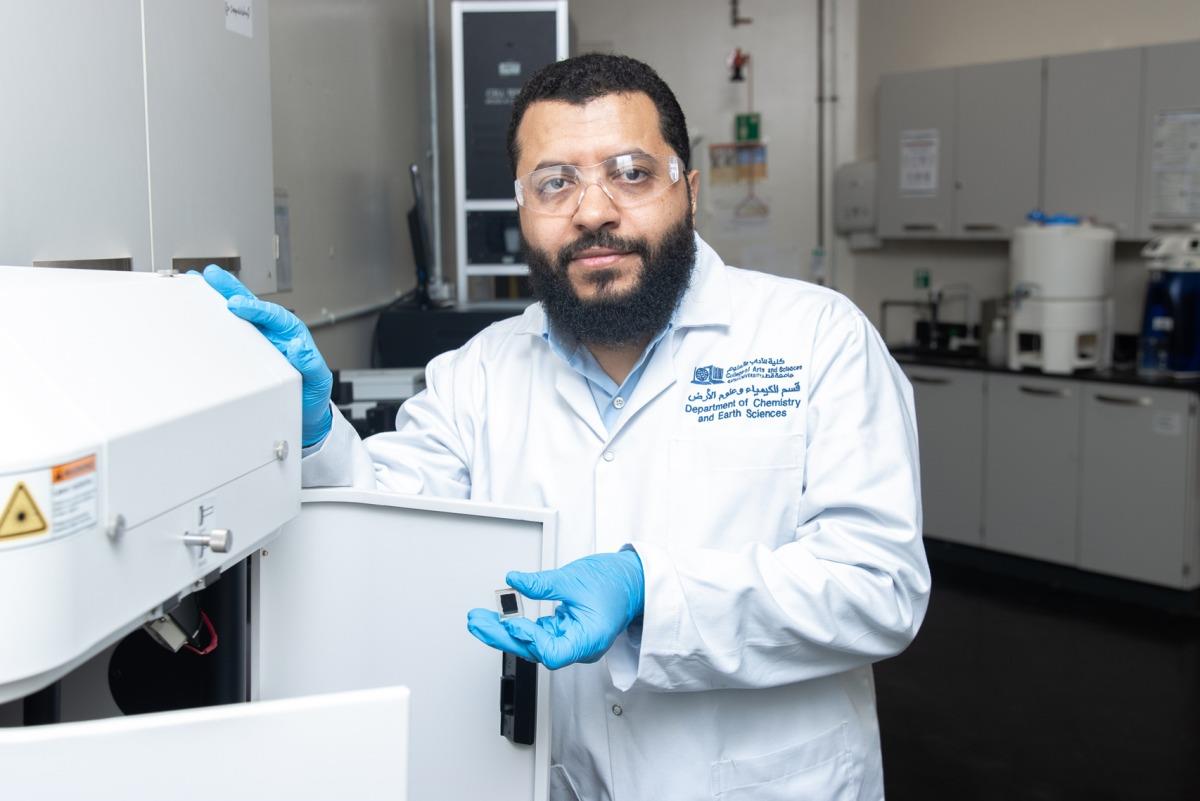
Doha, Qatar: A significant step forward in unveiling the potential of recently discovered perovskite materials as versatile semiconductors for solar energy applications has been taken by nanotechnology chemist Dr. Yasser Hassan, Assistant Professor of Chemistry at Qatar University's (QU) College of Arts and Sciences.
Perovskites offer incredible promise for an array of emergent technologies like efficient optoelectronics and sensors, to name just a few.“Perovskites could revolutionise how sunlight is harvested, how the world is lit, how radiation is sensed, and how nuclear waste is cleaned,” said Dr. Hassan, who has been researching the field for nearly a decade.
Harnessing energy from the sun to generate electricity is costly due to the advanced technologies required, limiting its accessibility to everyone. In reality, the current solar cells technology do not deliver the expected performance, as they fail to convert a significant amount of the energy absorbed. Moreover, the high cost of these cells, which primarily rely on silicon, poses a major barrier, making the cost of solar energy surpass that of other sources such as wind and hydropower.
While there is a lot of progress in the field, innovative ways to accelerate sustainable materials development processes are still in dire need. Over the years, incredible fundamental understandings and obligations have been accumulated by scientists regarding structural and multifunctional hybrid materials such as organic-inorganic composites and finding creative means for synthesising them.
Perovskites are an inexpensive material with pure colour quality that promises efficient energy performance and can be fabricated using low-cost processing techniques. The energy efficiency of this class of semiconductors is due to their extraordinary optoelectronic properties such as having a panchromatic absorption profile, exhibiting intense and narrow-band luminescence (strong absorption coefficient of ~105 cm−1), and possessing excellent ambipolar charge carrier mobility as well as relatively long carrier diffusion length (>1 μm), bringing them to the forefront of emerging optoelectronic materials.
Despite these promising features, the commercialisation of metal halide perovskites faces significant challenges: Their bandgap instabilities and non-radiative recombination processes affect their performance metrics and eventually initiate degradation trails, putting the device's long-term stability on the line. The main persistent challenge has been their chemical instability, hindering their widespread application. This issue was taken head-on by the research team.
The Nature Journal study focused on the critical issue of perovskite instability caused by unbounded lead atoms on the material's surface. These atoms are responsible for a phenomenon known as halide segregation, which leads to the degradation of the perovskite structure over time.“Learning from mother nature, particularly how biological systems like the human liver detoxify lead, it was discovered that lead-complexing multidentate ligands, such as ethylenediaminetetraacetic acid (EDTA) and L-glutathione reduced, can 'clean' the perovskite nanocrystal surface,” explained Dr. Hassan.
The team's innovative approach neutralises the surface defects and inhibits halide segregation, thereby increasing the material's photo and chemical stability. The results are excellent, with red electroluminescence peaking at an external quantum efficiency (EQE) of over 20%. Dr. Hassan's work showcased a route to control surface defect formation and migration, a vital step for achieving band gap stability needed in light-emission applications.
“Studies like this are essential in understanding how perovskites work as a material and how they could be used in everyday life,” said Dr. Hassan.

Legal Disclaimer:
MENAFN provides the
information “as is” without warranty of any kind. We do not accept
any responsibility or liability for the accuracy, content, images,
videos, licenses, completeness, legality, or reliability of the information
contained in this article. If you have any complaints or copyright
issues related to this article, kindly contact the provider above.
Most popular stories
Market Research

More Story







Comments
No comment