


Puerto Rico's bankruptcy will make hurricane recovery brutal here's why


(MENAFN- The Conversation) The United States had already seen its share of disasters, from back-to-back hurricanes thatdevastated Texas, Florida and the U.S. Virgin Islandsto roaringwildfires in the West .
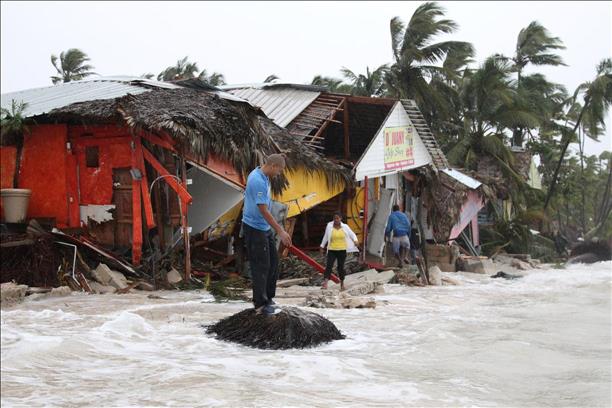
Then, after battering the rest of the Caribbean, Hurricane Maria left the island of Puerto Rico facing ahumanitarian crisis . About a dozen people died in the Sept. 21 storm and the islandwas plunged into darkness .
Now, some 3.4 million Puerto Ricans – which is to say, 3.4 million American citizens – are confronting life without electricity, gas, cellular service and, inmany cases , a home.
After a decade of fiscal decline and aMay 2017 bankruptcy , Puerto Rico has become exceptionally vulnerable to disasters like Maria. As both a policy analyst and the daughter of Puerto Rican immigrants, I'm concerned about how austerity-related reforms are now threatening the survival of not just my family there but everyone on the island.
Thoughfood insecurity ,poor health careandresource-starved public transitall predate the hurricane, the result of both damaging U.S. policy and deepening financial crisis, these three problems will dramatically complicate Puerto Rico's recovery.
Food insecurity
Because Puerto Ricoimports over 85 percentof its food, food security on the island has always been fragile. The U.S. territory has beenrationing suppliessince Hurricane Irma in early September, but according to Puerto Rico's former secretary of agriculture, it may have justone month's worth of food on hand .
Puerto Rico's main portreopened Sept. 23 , allowing 11 ships to begin arriving with aid and resources, including clean water and food. Even so, distributing supplies across the 3,515-square-mile island will prove difficult on roadwaysdamaged by flooding, debris and downed power lines .
Puerto Rico's food supply is also uncertain given that several islands from which it imports food,including the Dominican Republic, Dominica and St. Martin , were also hit hard. And if the island goes without power forup to six months , the shelf life of the meat, vegetables, fruit and other staples of thetraditionally fresh Puerto Rican dietwill be awfully short.
This is the U.S. territory's second food shortage in recent years. When a Puerto Rico-bound cargo vessel, El Faro,sank during Hurricane Joaquinin 2015, residents spentmonths in strifeas the government struggled to develop a plan that ensured everyone had enough to eat.
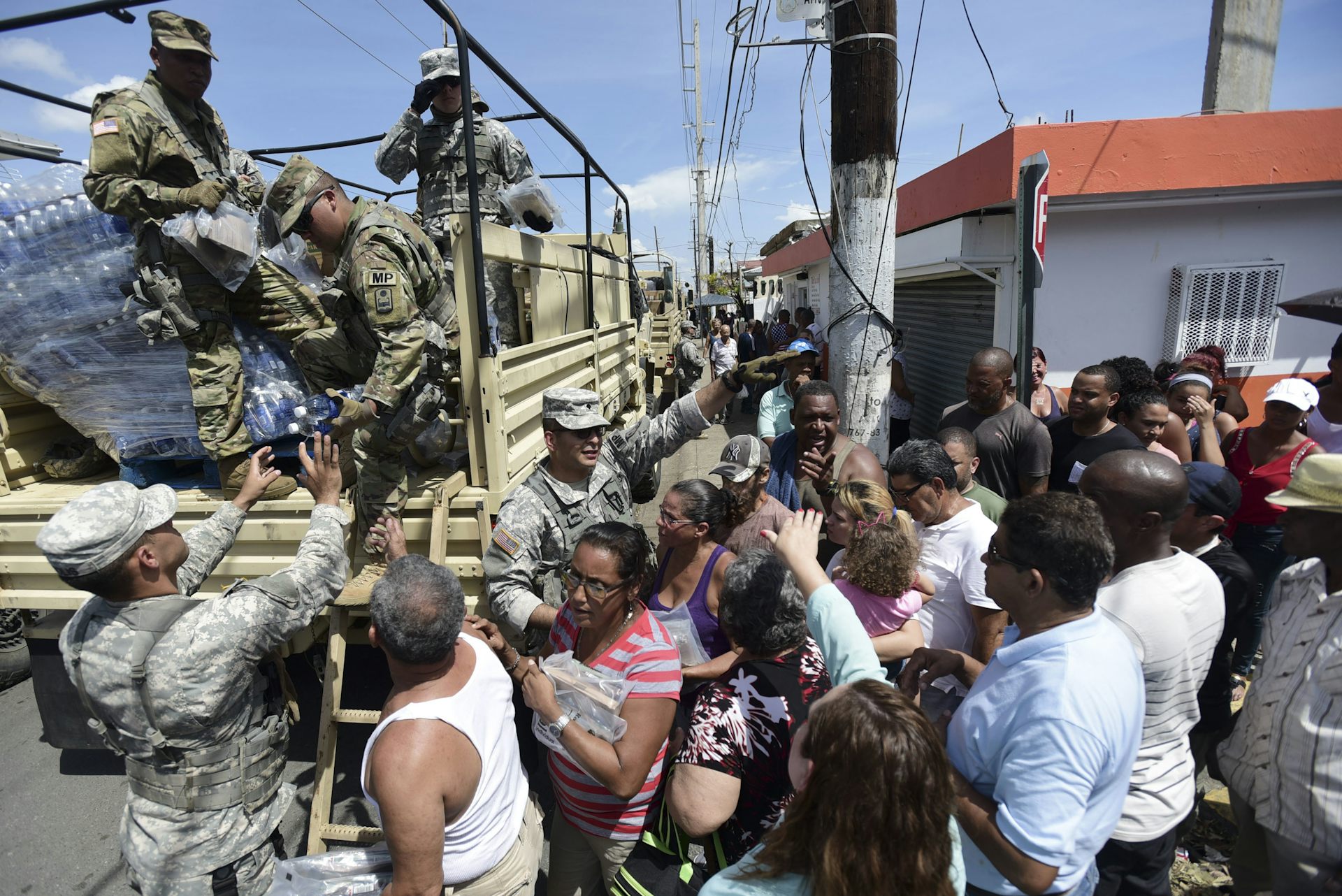
The National Guard distributes food and water to Puerto Ricans.
AP Photo/Carlos Giusti
Prior to World War II , Puerto Rico actually had an agricultural economy, producing and exporting sugar cane, tobacco and citrus fruits. But, post-war industrialization andgrowing stigma around farm workled to a downturn. Today, the island can't feed its populaceor compete with developed countries' agribusiness and cheap prices .
In response, Puerto Rico has made an effort to grow domestic food production,which has increased 24 percentin the past five years. But Maria's winds and floodwaters demolished these gains in bananas, plantains, coffee, dairy and corn production. Roughly 80 percent of Puerto Rico's crop value justvanished over night , a loss of approximately US$780 million.
Poor health care
Puerto Rico had poor health care before HurricanesIrmaand Maria, but the storms will exacerbate this desperate situation, too. Ravaged byausterity , hospitals and other health care facilities saw their budgets cut by 15 percent from 2011 to 2015. Countless public clinics across the island closed during the past year, whilefour hospitals have filed for bankruptcy .
The island is also short on health care professionals, with 72 percent of Puerto Rico's 78 municipalities deemed ' medically underserved .'
This deficient system will face grave challenges in providing medical care to Puerto Ricans injured during and after the storm. Serious cuts and broken bones are extremelycommon following hurricanes, as are heat-related and infectious illnesses .
Loss of power may also lead to the worsening of illnesses for residents with suchchronic conditionsas diabetes, heart disease, psychiatric disorders and HIV whose medications require refrigeration. My own abuela (grandmother), a diabetic who began having mild cardiac episodes last year, is one Puerto Rican among thousands in this situation.
These domestic barriers to medical care are magnified by theongoing debatearound health care in the U.S. Even though Puerto Rico residents are more likely to bepoor, elderly and diagnosed with a chronic illnessthan the general population, caps to Medicaid reimbursementshave forcedseveral hospitals on the island to cut services, close wings, leave positions unfilled and reduce employee hours and pay.
In the wake of this natural disaster,experts expectPuerto Rico's hospitals to be overburdened, especially in San Juan and other metropolitan areas, where most medical facilities are located. In recent days, Gov. Ricardo Roselló has resorted to retweeting information about which hospitals are open and receiving patients.
Transportation shortages
Many Puerto Ricans will not be able to reach help, though. Upwards of 45 percent of the populationlives in povertyandan estimated 35,000 ridersdepend daily on public transit to get around.
With a limited budget, an aging infrastructure and too few vehiclesto support the island's population, however, the transit authority has been struggling to meet needs. The agencyunderwent austerity-related budget cuts in 2015, operating at a deficituntil, finally, in May 2017, itfiled for bankruptcy .
This history has complicated evacuation efforts. Locals were puzzled at the ' leave or die ' warnings sent to Isabela residents on Sept. 23 when a large crack in theGuajataca damthreatened to flood surrounding areas. How, exactly, were they supposed to leave? And how could they get out on roadways long since rendered impassable?
As rescue and recovery efforts continue, transportation shortages have effectively left many residentsreachable only by helicopter .
People across the island are already suffering the consequences. One family –Irees Gonzalez Collazo, 74, and her two sisters , Carmen, 73, and Sara, 72, of Utaudo municipality – exemplifies the cascading effect of this tragedy. All three women had immobilizing health complications and, unable to evacuate, were killed on Sept. 24 when a mudslide buried the home where they rested.
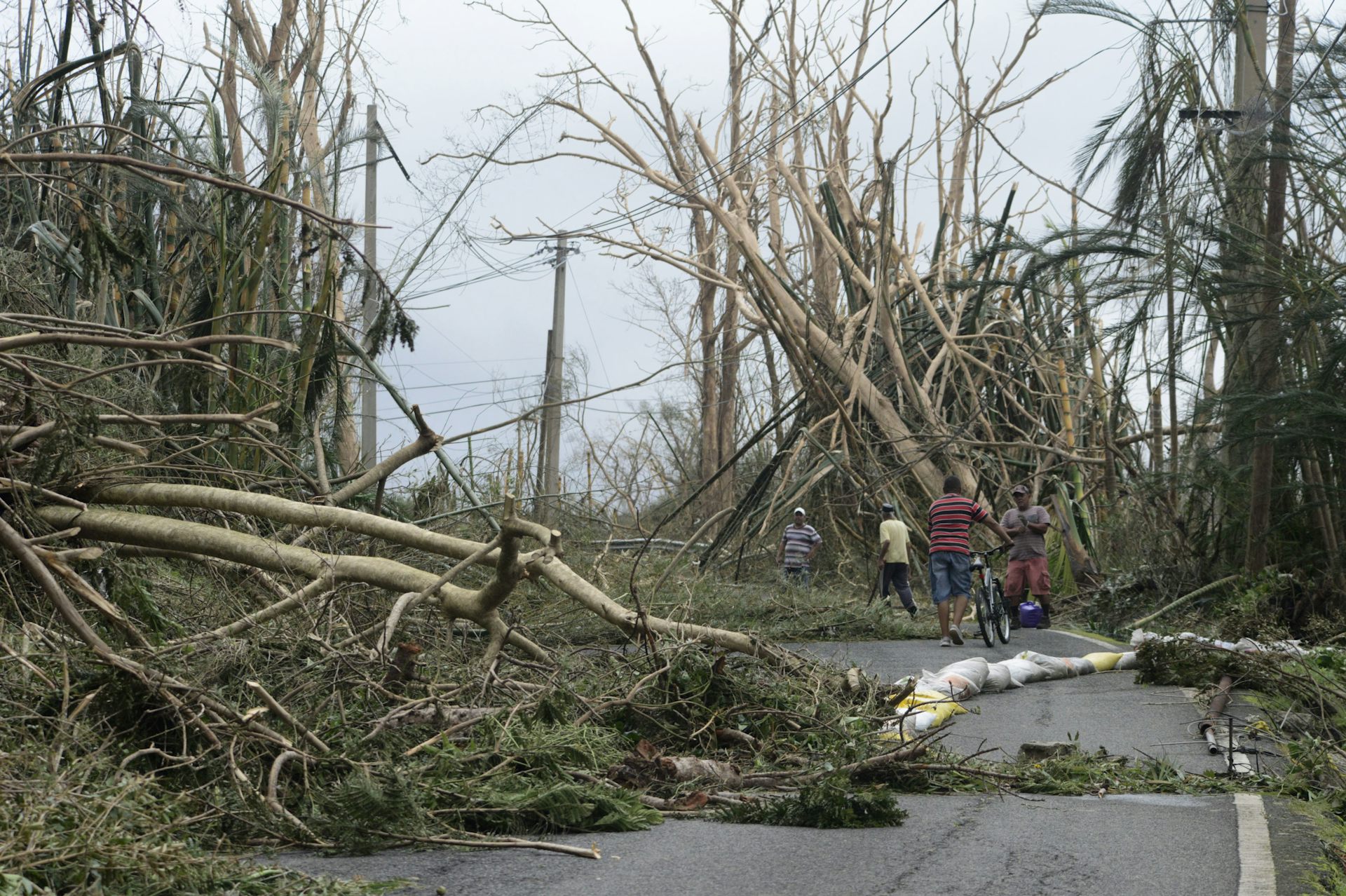
Even if Puerto Rico's transit system was up and running, buses would be hard-pressed to get around the island.
AP Photo/Carlos Giusti
An American humanitarian crisis
If the situation in Puerto Rico seems dire,that's because it is . People on the island will face seemingly insurmountable problems in nearly every aspect of their lives for months to come.
The Trump administration, which has thus fardemonstrated a notable lack of concern for the island , could provide some urgent disaster relief by responding Gov. Rosselló's request for increased aid forlaw enforcement and transportation , among other basic needs.
The U.S. Congress could also play a role in the territory's longer-term recovery.Increasing the island's Medicaid funding , for example, would save lives in this critical time and free up some of the territory's scarce funds for other purposes.
WhileFEMA picked up the pace of aidfive days after the storm, few Puerto Ricansanticipate that they'll seethe kind of 'historic' federal disaster relief sent toTexasandFloridaafter hurricanes Harvey and Irma.
Fortunately, Puerto Rico has a culture of resilience. Since the storm, residents have stepped up tohelp ,feedandshelterone another. If the U.S. federal government won't save Puerto Rico, we Puerto Ricans will.
Food security
Natural disasters
Health care
Austerity
Caribbean
Disaster relief
US Medicare
Debt crisis
Puerto Rico
Hurricane Maria
Global perspectives

Legal Disclaimer:
MENAFN provides the
information “as is” without warranty of any kind. We do not accept
any responsibility or liability for the accuracy, content, images,
videos, licenses, completeness, legality, or reliability of the information
contained in this article. If you have any complaints or copyright
issues related to this article, kindly contact the provider above.


Comments
No comment