




403
Sorry!!
Error! We're sorry, but the page you were looking for doesn't exist.
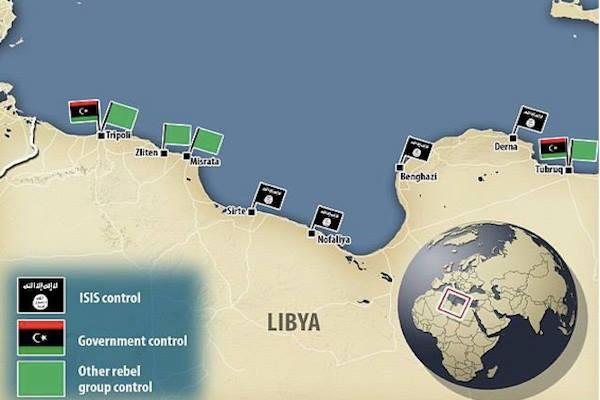
Libya: To Be or Not to Be That Is the Question
(MENAFN- Morocco World News) 'We must not forget that this is the beginning of a difficult journey. There is a critical need for national reconciliation and an inclusive national security dialogue. Urgent solutions must be found to bolster the Libyan-led fight against terrorism and in particular the threat of Daesh. The dire humanitarian situation in Benghazi and other areas needs to be addressed as a matter of highest priority including through the establishment of a dedicated reconstruction fund for Benghazi. The concerns of the Eastern and Southern constituencies should be brought to the forefront. This work must start immediately. The signing of the Libyan Political Agreement is the first step on the path of building a democratic Libyan state based on the principles of human rights and the rule of law.' And no sooner that this agreement was concluded by the main warring factions that the 'no no' answer came from either the marginal groups not invited or the trouble maker ISIS itself. Indeed on January 7 2016 a truck bomb was detonated outside of a police training center in the western city of Zliten leaving 65 people dead the worst bomb attack in years. No group claimed this deadly attack but the message was crystal clear: peace is not for tomorrow. This however entails two possible explanations at the outset: 1- Tribal tug: the several armed groups that represent the various tribes of the country care less about national union because they would lose power and consequent wealth in favor of the federal government and as a result would become insignificant and die out in the long run and that is not an acceptable solution for them and they would surely resist it as long as Libya is in chaos and they bear arms; and 2- Caliphate solution: many hard core Islamists believe strongly that if strict and radical Islam is made to prevail in the Muslim world through the re-islamization of the society and the countering of Western influence it would be made to become an important contender and player on the international scene and consequently regain the prominence it had in the Golden Age. As such it must be made clear that any UN-brokered accord is a Western-imposed subterfuge to halt the inexorable advance of the glorious Islam of such people. Libyan political leaders after signing the reconciliation agreement in the Moroccan city of Skhirate on December 17 2015
The dangers lurking in the dark Since the time of the Ottoman Empire Libya was always ruled by a heavily-centralized government that delegated minimal power to the regions and this insured peace and stability to the people and continuity for the state. Tribes existed but had only a honorific role and a cultural existence no more. They were used at times as auxiliaries to strengthen the power of the state and in return they were given rentier privileges as gratification. When Colonel Gaddafi toppled King Idris Senusi in 1979 in the name of the revolution he consolidated further the state and made it all-prominent. In return he subdued the population through direct generous cash handouts and a wide array of rentier privileges. The population did not have to work in the least and if they did they held senior positions that did not require much effort. This way Gaddafi guaranteed himself total control of the state and the revolutionary legitimacy to get rid of the recalcitrant individuals or groups which he did at will. In the aftermath of the Arab Spring in 2011 and the ensuing uprising of the Cyrenaica region against the rule of the dictator Gaddafi NATO decided to side with the revolutionaries of Benghazi to topple him. However NATO directed the war operations from the skies and never fielded any foot soldiers to mop up the floor. In an article in Foreign Policy Ethan Chorin argues just that: 'The current situation in Libya is the product of a series of significant mistakes erroneous assumptions and myths that date back to NATO intervention in 2011.The United States and its NATO allies made a fundamental mistake in not imposing a robust reconstruction plan on Libya and stabilizing the country before radicalism was able to flourish. Even U.S. President Barack Obama understands that this was a mistake: In aninterview last year with theNew York Times he cited lack of a plan for 'the day after Qaddafi is gone' as potentially one of his biggest foreign-policy regrets. (The Libyans of course share much of the blame too.)' As Gaddafi's forces started withdrawing from various regions religious and tribal groups moved in and helped themselves to the huge arsenal left behind and with that came the temptation to rule and have access to a share of the oil cake. At the fall of the dictator in October 2011 there were over 300 armed groups all dreaming of leadership and control. Tribal-religious instincts On May 2014 the then retired General Haftar armed with US benediction and support from Egypt UAE and Saudi Arabia led an army from the east with the objective to rid the country from the powerful Islamist groups strong in the west. His movement was dubbed: Operation Dignity. In spite of a few limited successes his secular-oriented movement soon faltered miserably. In reaction to the establishment of this front the Islamists supported by Turkey and Qatar put together their own front bearing the name of Fajr Libya (Libya Dawn) on July 13 2014. The declared aim of this front was to correct the direction of the revolution and set up a stable government the undeclared objective is to turn Libya in an Islamist country. The front in principle was made of a myriad of Islamist militias all dreaming of power and wealth and on top of that religious consecration: Libyan Shield Militia of Misrata with links with the Ikhwane (brotherhood);
The Tripoli Brigade of the famous Islamist leader Belhaj who opposed openly Gaddafi in his lifetime;
The Libya Revolutionaries Operation Room; and
The Brotherhood. Fajr Libya brigades in action [i] First Taifa period (10091106) Second Taifa period (11401203) and Third Taifa period (12321287)
Morocco World News. All Rights Reserved. This material may not be published rewritten or redistributed without permission The views expressed in this article are the author's own and do not necessarily reflect Morocco World News' editorial policy

Legal Disclaimer:
MENAFN provides the
information “as is” without warranty of any kind. We do not accept
any responsibility or liability for the accuracy, content, images,
videos, licenses, completeness, legality, or reliability of the information
contained in this article. If you have any complaints or copyright
issues related to this article, kindly contact the provider above.





Comments
No comment