




403
Sorry!!
Error! We're sorry, but the page you were looking for doesn't exist.
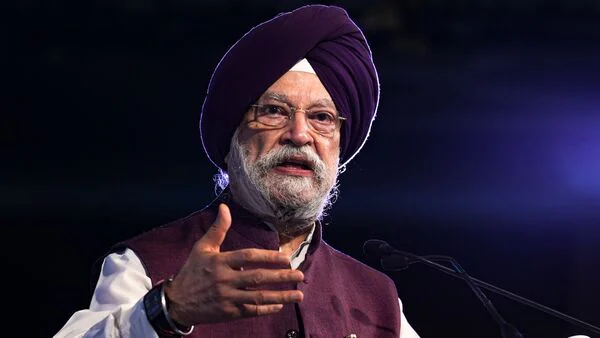
What Is Ethanol Blending? Here's What Petroleum Minister Hardeep Singh Puri Said On Flex-Fuel Adoption
(MENAFN- Live Mint) Union Minister for Petroleum and Natural Gas Hardeep Singh Puri has stated that the government is actively exploring supportive policy measures to speed up the adoption of flex-fuel vehicles, as reported by ANI.
These measures may include fuel price support mechanisms and targeted fiscal incentives aimed at making the technology more affordable and accessible to consumers.
Also Read | Aditya Puri, Bharti Airtel take top honours at Mint Investment Awards 2026Speaking at the launch of Hero MotoCorp's first flex-fuel motorcycle in the national capital on Wednesday, Puri said that India's future transportation ecosystem will be driven by a mix of electric vehicles, biofuels, hydrogen, and renewable energy sources.
However, he described flex-fuel vehicles as a practical and readily available solution for reducing crude oil imports, boosting the rural economy through greater demand for agricultural feedstocks, and supporting the country's transition towards lower carbon emissions.
What is ethanol blending?Ethanol blending is an effective way to make petrol more sustainable and environmentally friendly by mixing it with ethanol derived from plant-based sources. In fact, most petrol sold today already contains ethanol, commonly in the form of E10 fuel.
The Ministry of Road Transport and Highways has proposed revisions to vehicle emission regulations to encourage the use of higher ethanol blends and alternative fuels, creating opportunities for the adoption of flex-fuel and biofuel-powered vehicles across different vehicle segments.
Also Read | E20, E25, E30: India Plans Supermarket-Style Ethanol Fuel Choice At Petrol PumpsThe proposed amendments to the Central Motor Vehicles Rules, 1989, are designed to expand the range of approved fuels, including E85 (containing 85% ethanol and 15% petrol), E100 (allowing vehicles to operate on almost pure ethanol), B100 biodiesel, and hydrogen-CNG fuel blends. These changes are intended to support cleaner transportation options, reduce dependence on conventional fossil fuels, and accelerate the transition to sustainable mobility.
India has successfully reached a 20% ethanol blending level in petrol by using ethanol produced from biomass sources such as sugarcane, maize, and rice. This initiative helps reduce dependence on imported crude oil while lowering carbon emissions through cleaner fuel combustion.
What did Puri say?Minister Puri has emphasised that the government is "actively examining supportive policy frameworks to accelerate affordable adoption", including fuel price support and targeted fiscal incentives.
Speaking at the launch, he said India's future mobility will combine EVs, biofuels, hydrogen and renewables, but flex-fuel vehicles offer a "pragmatic and immediately deployable pathway" to cut imports, strengthen the rural economy, and advance low-carbon goals.
Puri described the launch as a new chapter in India's energy history, with the introduction of new motorcycles compatible with ethanol blends from E20 to E85. He added that the launch of the Splendor and HF Deluxe Flex Fuel motorcycles marks India's entry into mass-market flex-fuel mobility with Aatmanirbhar vehicles.
India has one of the world's largest two-wheeler ecosystems. The flex-fuel technology has the potential to transform mobility at an unprecedented scale, a Ministry of Petroleum & Natural Gas release said.
Also Read | Beyond ethanol and biogas, Praj needs to prove its growth caseThe shift to mass-market flex-fuel mobility can cut crude imports, support farmers, and make vehicle ownership cheaper for consumers.
Puri said the launch marks India's entry into large-scale flex-fuel mobility. Hero is the world's largest manufacturer of motorcycles and scooters for 25 consecutive years, with nearly 29% market share in India. It has an active two-wheeler fleet of over 30 crore vehicles.
The new bikes are compatible with ethanol blends from E20 to E85 and use upgraded fuel systems, revised ECU calibration and flex-fuel capable components.
Puri said India imports nearly 88.5% of its crude oil and“every geopolitical disruption impacts our economy and energy security”.
Is reality far?According to the Society of Indian Automobile Manufacturers (SIAM), more than 250 million vehicles were sold in India between 2011 and 2023, before the introduction of the E20-compliant vehicle mandate.
Petrol-powered two-wheelers and passenger cars account for the majority of these vehicles currently on the road. While all two-wheelers use petrol, industry experts estimate that around 30% of passenger cars sold during this period were diesel-powered, according to a Scroll report.
Also Read | E85 is ready to hit the road: Hero launches flex fuel bikes, Puri green-lightsAs a result, approximately 234 million vehicles, over 80% of all vehicles sold between 2011 and 2025, run on petrol and were designed to operate with ethanol blends of only 5% to 10% (E5 and E10), the report stated.
This suggests that the vast majority of India's existing petrol vehicle fleet is not fully compatible with E20 fuel. As a result, only about 20% of petrol vehicles sold in India over the past 15 years were manufactured to support E20 fuel, highlighting the challenge of transitioning the existing vehicle fleet to higher ethanol blends, the report by Scroll noted.
(With inputs from agencies)

Legal Disclaimer:
MENAFN provides the
information “as is” without warranty of any kind. We do not accept
any responsibility or liability for the accuracy, content, images,
videos, licenses, completeness, legality, or reliability of the information
contained in this article. If you have any complaints or copyright
issues related to this article, kindly contact the provider above.
Most popular stories
Market Research

More Story






Comments
No comment