




403
Sorry!!
Error! We're sorry, but the page you were looking for doesn't exist.
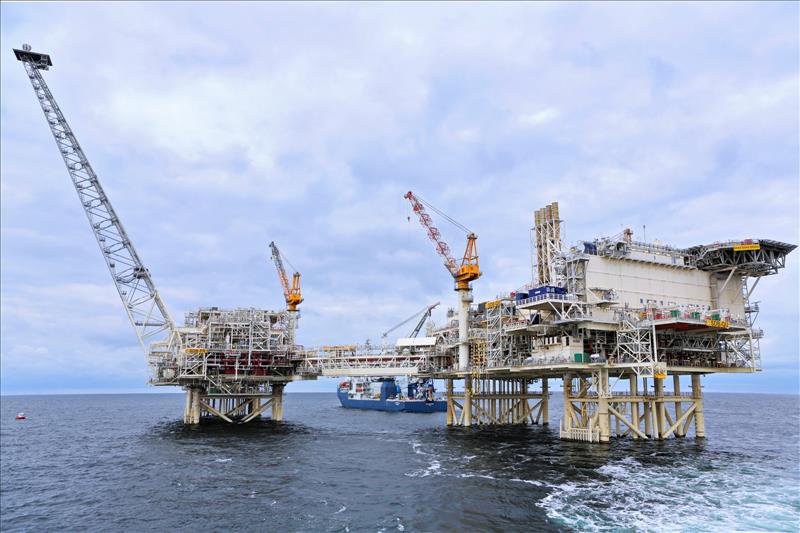
Shah Deniz Turns 30: From Caspian Discovery To European Energy Supplier (PHOTO)
(MENAFN- Trend News Agency)
BAKU, Azerbaijan, June 4. Azerbaijan's Shah
Deniz gas and condensate field is celebrating its 30th anniversary
in 2026.
30 years ago, on 4 June 1996, the Shah Deniz Production Sharing Agreement (PSA) was signed in Baku between SOCAR and a group of foreign companies. The PSA was ratified by Azerbaijan's parliament and became effective on 17 October the same year. The Shah Deniz PSA was initially signed for 30 years and in December 2013 it was extended up to 2048. Shah Deniz participating interests are: bp (operator – 29.99%), LUKOIL (19.99%), TPAO (19.00%), SGC (16.02%), NICO (10.0%) and MVM (5.00%).
Shah Deniz is located in the deep-water shelf of the Caspian Sea, 70 km south-east of Baku, in water depths ranging from 50 to 600 metres. The giant field stretches out over 140 square kilometres. It was discovered in 1999 – with approximately 1 trillion cubic metres of gas and 2 billion barrels of condensate initially in place. Shah Deniz is one of the largest gas-condensate fields in the world and the largest gas discovery ever made by bp.
The discovery and development of Shah Deniz have underpinned Azerbaijan's increasing role as a major regional and international gas supplier adding to the country's oil and gas revenues for decades to come. The project has brought the largest foreign direct investment to Azerbaijan and further strengthened the country's economy. Azerbaijan has gained new onshore assets, offshore facilities end export infrastructure – all built to international standards using advanced technology.
For almost 20 years, Shah Deniz has proved to be a secure and reliable supplier of gas to Azerbaijan, Georgia and Turkey through the South Caucasus Pipeline (SCP). With the completion of the Southern Gas Corridor (SGC) in December 2020, Shah Deniz has become a new source of energy supply for Europe providing natural gas from the Caspian to European customers thousands of miles away.
bp data reveals that in 2025, the field produced around 27 billion standard cubic metres of gas and about 4 million tonnes (around 32 million barrels) of condensate in total from the Shah Deniz Alpha and Shah Deniz Bravo platforms.
Since the start of production till the end of 1Q 2026, Shah Deniz produced 271 billion cubic metres of gas and about 53 million tonnes of condensate.
Shah Deniz wells rank among the top in bp's global portfolio, with 17 of the company's 20 highest-producing wells coming from the field, underscoring its exceptional reservoir quality and operational excellence. The current top producer Shah Deniz well produces 28 thousand barrels of oil equivalent per day. A total of 34 wells – 11 on Shah Deniz 1 and 23 on Shah Deniz 2 – have been drilled to date. Out of them, 32 wells are currently producing 271 bcm of Shah Deniz gas has been exported through SCP and SCPx since 2006, including the domestic market. Capital expenditure in the Shah Deniz project by the end of 1Q 2026 was $31 billion.
First production from Shah Deniz was achieved in 2006, reaching its 20-year milestone this year. On 17 December 2013, the Shah Deniz consortium announced the final investment decision (FID) for the Shah Deniz 2 development. The second phase of the Shah Deniz development came online in 2018.
--
Legal Disclaimer:
MENAFN provides the
information “as is” without warranty of any kind. We do not accept
any responsibility or liability for the accuracy, content, images,
videos, licenses, completeness, legality, or reliability of the information
contained in this article. If you have any complaints or copyright
issues related to this article, kindly contact the provider above.
Most popular stories
Market Research

More Story






Comments
No comment