







403
Sorry!!
Error! We're sorry, but the page you were looking for doesn't exist.
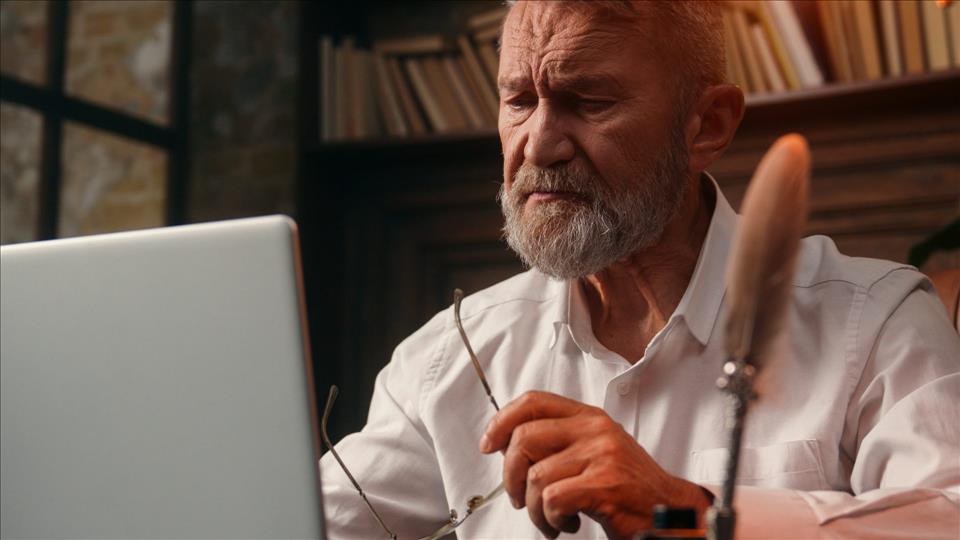
Finland Is Europe's Most Digitalised Country But Older People Are Still Left Behind
Author: Jeff Hearn
(MENAFN- The Conversation) Around the world, countries are moving towards a more digital way of life. Governments have promoted digitalisation of public services to improve efficiency, cut costs and meet modern demands for speedy responses. Yet this push for the digital has caught some people by surprise. Many older adults now feel they face another hurdle in living an independent life.

Across Europe, digitalisation of services is rapidly changing older people's lives. The post-pandemic movement of booking appointments, vaccines and basic services online accelerated things. Banks and insurance companies now operate mainly online, with in-person options getting rarer by the day in many countries.
Our recent study focuses on Finland, the most digitalised country in Europe. Finland's first national strategy report on digitalisation was back in 1995. This laid the groundwork for online public services, well before and other countries, and when using email was not even an everyday experience.
Finland's ombudsman for older people estimated recently that the country has between 500,000 and 600,000 residents over the age of 65 who lack digital skills, or don't have enough skills for independent digital tasks, even if they would otherwise be able to cope independently in their day-to-day lives. This is about 40%-45% out of a total population of about 1.3 million in that age group. However, across political divisions, digitalisation continues to be seen as a self-evident good.
Our study involved talking with over 40 older people in Finland, and analysing over 40 policy documents as part of a larger European study.
Many of our research participants in their late 60s, 70s and 80s had a hard time keeping up with technological and software development. With the erosion of person-to-person contact, daily situations involving medical or financial issues meant dealing with chatbots or, after a long wait, with people who could not answer their questions. As one of our participants put it:
Many of our participants were concerned about how digitalisation of services has proceeded at such a fast pace. In-person visits to banks and health centres can become very limited, even impossible. Older people are worried about not being able to talk directly with a doctor or nurse in person, or being denied contact with a human when dealing with financial matters. Information about essential health and social welfare is sometimes only available online.
Finland ranks highest in Europe on the EU's Digital Economy and Society Index, which measures states' levels of digital infrastructure and skills. Yet according to the Finnish Digital Skill Report 2023, only half of 65- to 74-year-olds have basic digital skills. Of 75- to 89-year-olds, as few as 22% have such skills, and one-third do not use internet at all.
The report also reveals that 89% of Finns help their family members in digital matters. When skills or technology are not up to date, many older people rely on someone else to access vital information or manage their finances. But not everyone has family or trusted neighbours who can help out.
Meanwhile, online fraud has taken new, more sophisticated forms, causing people to lose both assets and dignity – this is of special concern for older people. Such fears create uncertainty, and, for some, isolation. About 20% of Finnish 65-74 year-olds and about 30% of those 75 and over feel quite or very unsafe in their daily activities in the digital environment.
Debating digitalisationSome may argue that, as some services have been digitalised from the 1990s, how long can people continue to claim they are being digitally excluded, rather than simply choosing not to use technology?
But this view ignores how digital exclusion works. Isolation, ill-health, disabilities, uneven skills, changing software constantly updating and access to devices are all part of older people's challenges. Learning new IT skills at work is a totally different matter to coping when old, alone or without support.
There is a clear mismatch here between government policy on digitalisation of services, and the reality of people's lives. The government does not provide digital support for older people. Many non-governmental organisations, as well as some of the larger cities such as Helsinki, do provide some digital assistance and basic training, but the national pattern is patchy at best.
The needs of older Finnish people have not been considered enough in the government's efforts to digitise services, nor have there been sufficient impact assessments in planning and carrying out reforms. People with lower income or fewer resources, less or no digital access, fewer digital skills, fewer opportunities to learn or less support have experienced severe consequences. People with no online presence struggle to manage their day-to-day lives and may miss out socially.
Our research participants themselves suggested various possible solutions or improvements that would help them, such as maintaining continuous access to face-to-face, offline services and making digital support free and accessible.
These issues are not unique to Finland. But if even people in Europe's most digitalised country are struggling, it's likely to be even more acute for older adults in other countries in the coming years. As one of our participants said:“There are so many that do not really manage.” They need to be supported if we are to bring society fully into the digital age.
Institution:Hanken School of Economics

Legal Disclaimer:
MENAFN provides the
information “as is” without warranty of any kind. We do not accept
any responsibility or liability for the accuracy, content, images,
videos, licenses, completeness, legality, or reliability of the information
contained in this article. If you have any complaints or copyright
issues related to this article, kindly contact the provider above.
Most popular stories
Market Research

More Story






Comments
No comment