




403
Sorry!!
Error! We're sorry, but the page you were looking for doesn't exist.
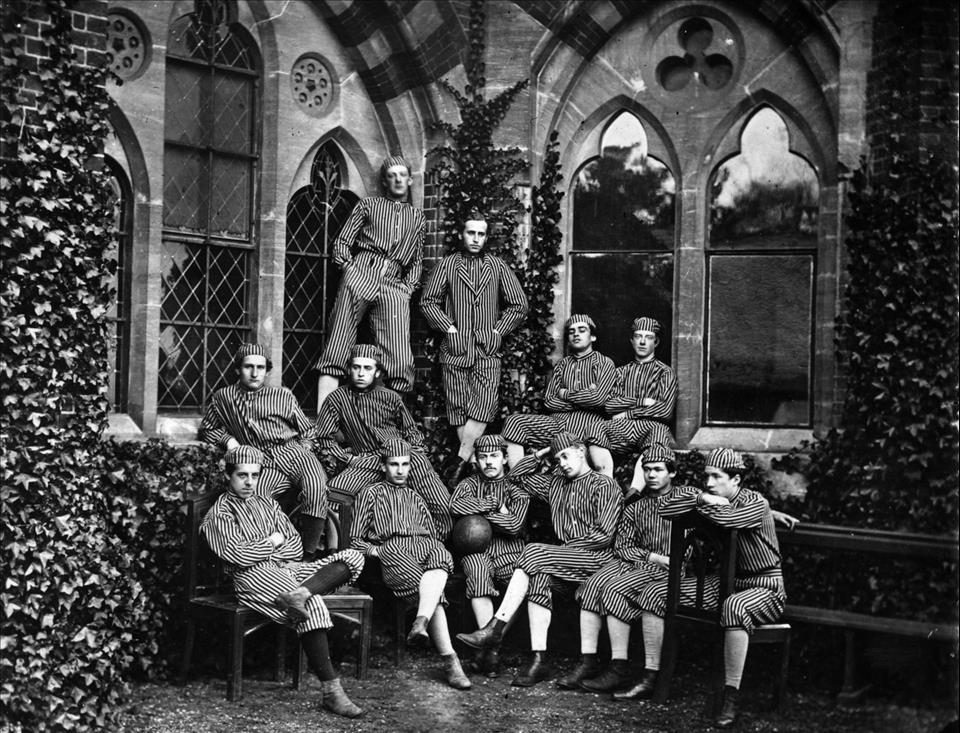
Far Removed From Today's Global Juggernaut, Soccer Was Born In The Well-Heeled Boarding Schools Of 19Th-Century England
Author: Thomas Adam
(MENAFN- The Conversation) Over the past two centuries, soccer – or football, as it is called in much of the English-speaking world – has become a truly global phenomenon that connects fans on all continents. It is also, come World Cup time, a deeply nationalist affair that pits teams and their fans from various countries against each other.

Yet today's deeply competitive professional and spectator sport that spans the globe has far more local origins. As an expert on global history and author of a 2025 book on the subject, I know the game's roots date back to early 19th-century England – and with a very specific social cause.
When English high school students and teachers created football as a sport in the first decades of the 19th century, it was to provide students at prestigious elite schools such as Eton with an opportunity to let off steam and excess energy. Students at such private boarding schools – they are called public schools in the United Kingdom – came mostly from wealthy families and were sent there not just for their education but also for socializing with their peers.
But boarding school students were often hard to control. Overprivileged students had a tendency to see teachers and headmasters not as authority figures but as people of lower social standing. Rebellions were common and pitted spoiled students against helpless teachers. Enter soccer: A strenuous physical activity such as kicking the ball across a field appeared to teachers as a means to regain control over their students and to redirect their energies.
The origins of soccerBallgames that pitted two groups of people against each other were nothing new in Britain.
“Folk football” existed long before it became a school sport. However, these early ballgames were unregulated, raucous and violent encounters of two parties formed by inhabitants of two villages or two neighborhoods. They did not need to involve an actual ball but something that could be kicked across a field or through the streets of a town.
Such events have little in common with modern-day soccer. They could involve hundreds of people. Playing fields were not marked. And the goal was to kick the ball once across a marker, such as a hedge or a field line. These ballgames were not about scoring but about taking on the opposing team by all means available. Such sporting affairs were known to anyone in England in the first half of the 19th century.
The games migrated from there to school grounds.
At Rugby School, a public school in central England whose name was given to the modern game of rugby, students in the 1820s began playing a game that involved the kicking of a ball. Students engaged in these games because they gave them tremendous freedom.
The game was not yet codified, and teachers let students organize games without interfering in their play. Football offered both students and teachers what they craved most. Paradoxically, what for students was freedom was for teachers a useful means of control.
Teachers allowed the game to become a cherished activity of students because it took the students' minds off other temptations. Tired and exhausted students, teachers reasoned, were good students who abstained from committing mischief and sexual behavior they deemed inappropriate.
The development of different gamesSince the game lacked rules, and teachers kept a hands-off attitude toward the game, it gave students an opportunity to make their own rules. And these rules were the result of collective decisions of students.
From the 1840s to the 1860s, students produced rules that regulated how the ball could be handled, how many members a team should have and how scores were counted.
Students at Rugby School were the first to codify the game. These rules of 1844 allowed players to use their hands for controlling the ball. The rules produced by students at Eton in 1847, by contrast, outlawed the use of hands for propelling the ball.
But these were just a few of the many sets of football rules that students wrote in the three decades from the 1840s to the 1850s. And these codes did not yet clearly distinguish between a game that was focused on propelling the ball with hands – a key aspect of the modern game of rugby – versus a game that was focused on using only one's feet, a key aspect of soccer.
The result was a great diversity of rules for a game that high school students played for fun. However, the game – mandatory for all high school students – was also used as an instrument of institutionalized bullying of younger students by older ones, with physical attacks on younger students built into the game. In effect, football of this time was a participation sport without any spectators.
Students played games on meadows and fields in the near surroundings of the public schools. These playing fields often did not have markings for borders or goals. Walls, trees and bushes marked the borders. Gates and doors were used as goals.
The codification of what became soccerPublic school graduates took their versions of the game with them to the next level. At Cambridge, students began in 1837 to iron out some of the modern-day rules. There, three iterations of unified football rules were created over the course of the next 19 years. The third set in 1856 culminated in a game of kicking a ball with one's foot.
In 1863, representatives of football clubs from the larger London area met to discuss the formation of a football association and a common set of rules. Ebenezer Cobb Morley, who served as captain of the London-based Barnes Football Club, convinced the other participants to accept unified rules that banned the use of hands for propelling the ball.
The 1863 rules of the Football Association stipulated that players were not permitted to“carry the ball,” to“throw the ball” nor“to take the ball from the ground with his hands while it is in play.” These rules provided the basis for modern-day soccer.
The game's professionalizationThe London rules of 1863 did not replace existing football rules, and these rules did not find acceptance everywhere. The 1863 London meeting did not include representatives of the public schools that were resolved to continue playing football according to their traditional rules. Rather than unifying football regulation, the London variant added just one more set of rules.
However, the London meeting showed a maturing game. The participants did not come from boarding schools but from football clubs that had formed independently of public schools. And these participants were not teenagers but adults.
Morley was 32 years old when he presided over the meeting that had become necessary because football was transforming into a competitive sport that pitted teams of different football clubs against each other. And for such competitive games, unified rules were needed.
In 1872, the honorary secretary of the Football Association, Charles W. Alcock, suggested the creation of the Football Association Challenge Cup Competition.
The introduction of this tournament helped transform football from a pure enjoyment into a competitive sport, first played by amateurs and later by professionals. With growing crowds of spectators came stadiums.
That's the kind of highly professionalized and dynamic game that will feature in this year's World Cup. And what a far cry it is from the chaotic boarding school pitches of 19th-century England.
Institution:University of Arkansas

Legal Disclaimer:
MENAFN provides the
information “as is” without warranty of any kind. We do not accept
any responsibility or liability for the accuracy, content, images,
videos, licenses, completeness, legality, or reliability of the information
contained in this article. If you have any complaints or copyright
issues related to this article, kindly contact the provider above.
Most popular stories
Market Research

More Story








Comments
No comment