



403
Sorry!!
Error! We're sorry, but the page you were looking for doesn't exist.
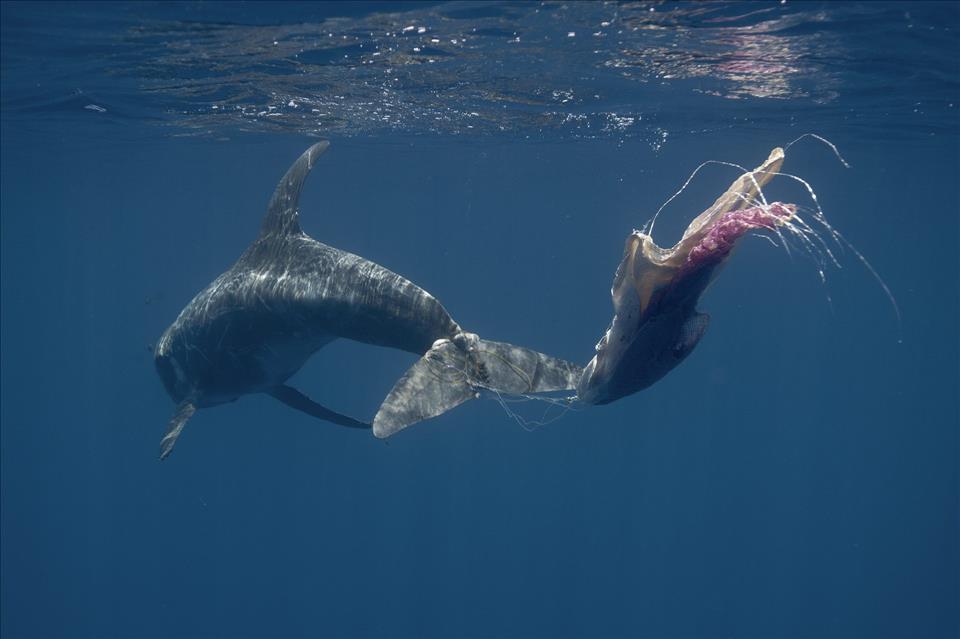
Entanglement Injuries Cause Prolonged Suffering For Whales And Dolphins Early Intervention Is Crucial
Author: Karen Stockin
(MENAFN- The Conversation) When a humpback whale became entangled in a craypot line off Kaikōura last week, witnesses described it thrashing in distress for ten minutes before eventually freeing itself.

It was a fortunate outcome.
Elsewhere in New Zealand and Australia, similar cases have required complex disentanglement operations involving trained rescue teams, multiple vessels and specialist equipment.
In one recent Australian case, rescuers removed hundreds of metres of fishing line, hooks, rope and buoys from a young whale whose movement and feeding ability had already been severely compromised.
These interventions are often reported as conservation success stories. Sometimes they are.
But they also reveal a more confronting and often overlooked reality about whale and dolphin entanglements. For many animals, the real issue is not whether they escape. It is what happens afterwards.
Entanglement is an animal welfare issueGlobally, scientists estimate 300,000 whales, dolphins and porpoises are killed each year due to entanglement or incidental capture (bycatch).
Entanglements occur in all manner of marine debris including gillnets, trawl nets, longlines, pot ropes and shark nets.
The problem is so pervasive that the International Whaling Commission (IWC) leads a global entanglement response initiative which brings together leaders of established national programmes to develop best-practice protocols and train people in other parts of the world where entanglements occur, including New Zealand and Australia.
However, entanglement is not only a conservation issue but a major animal welfare problem.
Some animals drown quickly after becoming trapped in nets or lines. Others survive the initial interaction but endure prolonged suffering over weeks or months as ropes cut deeper into tissue, movement becomes impaired, feeding efficiency declines and infections develop.
In many cases, animals die of secondary complications rather than the entanglement itself.
Hidden suffering despite interventionsOur latest study provides a stark example of this hidden welfare burden.
We detail findings from a necropsy of a bottlenose dolphin that became entangled in fishing line off Auckland. Despite successful disentanglement by an IWC-trained team from the Department of Conservation, the dolphin was later found dead.
Postmortem examination revealed the dolphin had suffered extensive long-term injuries linked to entanglement. The juvenile female was severely emaciated, with deep chronic cuts, tissue damage and widespread skin disease where the line had embedded into her body.
Further tests identified serious secondary infections with evidence of bacteria throughout multiple organs via the bloodstream –- a condition known as septicaemia or blood poisoning.
Together, the findings paint a stark picture of the hidden toll entanglement can inflict on marine mammals. Even when animals are successfully disentangled, stress, impaired feeding, chronic pain and severe infection from entanglement injuries may already be irreversible.
Rather than recovering, the dolphin likely experienced prolonged pain and deterioration long before eventually stranding and dying.
These findings highlight the enormous welfare cost involved in entanglements and the importance of timely interventions and follow-up postmortem investigations.
Timing can determine outcomeThe Kaikōura humpback that freed itself within minutes may ultimately recover well.
But many entanglements do not end so quickly or well.
The longer ropes or gear remain attached, the greater the likelihood of irreversible injury and declining survival probability. Delayed intervention can allow wounds to deepen, infections to establish and body condition to deteriorate.
This is why rapid specialist disentanglement response is so important.
However, many entanglements occur offshore and are never witnessed. Animals may travel hundreds or even thousands of kilometres while carrying gear.
Weather, sea conditions, daylight and safety constraints often prevent immediate intervention. In many cases, whales cannot be relocated once sighted.
Confirmed entanglements represent only a small fraction of the true number occurring at sea. Many animals likely die unobserved.
Others survive long enough to experience chronic debilitation before eventually disappearing or stranding far from where the original interaction occurred.
Scientists have argued these welfare consequences deserve explicit consideration alongside traditional conservation metrics.
Success should not simply be measured by whether an animal swims away after release. It should also consider likely long-term recovery, duration of suffering, severity of injury and realistic survival outcomes.
Beyond the moment of rescueImages of freed dolphins swimming back out to sea are understandably powerful. They represent hope, compassion and the extraordinary efforts of disentanglement teams working in dangerous conditions.
But they can also obscure the broader reality of what entanglement means biologically.
For some animals, rapid intervention truly may prevent severe injury and save a life. For others, delayed intervention means the damage was done long before the dolphin was cut free.
The dolphin described in our study is a reminder of that hidden reality. Mortality was not the consequence of an isolated stranding event but rather the final stage of a incident involving chronic injury and prolonged physiological decline.
Rescue is not simply whether the animal is cut free from the net but whether the intervention allows full recovery afterwards.
Institution:Te Kunenga ki Pūrehuroa – Massey University

Legal Disclaimer:
MENAFN provides the
information “as is” without warranty of any kind. We do not accept
any responsibility or liability for the accuracy, content, images,
videos, licenses, completeness, legality, or reliability of the information
contained in this article. If you have any complaints or copyright
issues related to this article, kindly contact the provider above.
Most popular stories
Market Research

More Story








Comments
No comment