




403
Sorry!!
Error! We're sorry, but the page you were looking for doesn't exist.
Boys To Men: Five PR Campaigns Seeking To Address The Masculinity Crisis
(MENAFN- PRovoke)
The five campaigns summarized below are worth your attention, but here are some key takeaways for those without the time or inclination to read a lengthy analysis:
-
Reissumies created a series of events where fathers and sons were encouraged to talk openly about their relationships-an attempt to challenge toxic attitudes.
“Reissumies saw both an opportunity and a responsibility to take part in the conversation and to present a more diverse image of masculinity.”
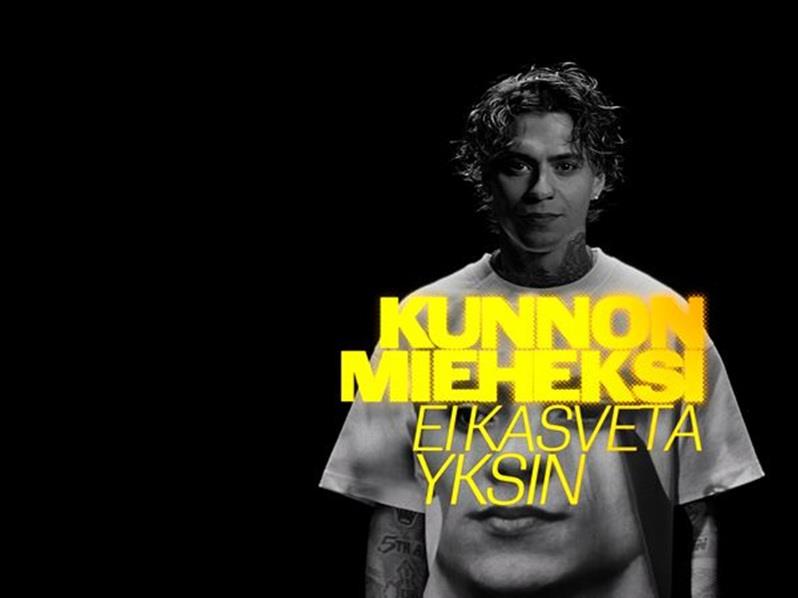
The team worked with Finnish rapper Mikael Gabriel, once seen as a loud, controversial troublemaker, who has evolved into an emotionally intelligent man.
“The campaign increased discussion around a positive representation of masculinity and strengthened Reissumies' role as a socially conscious brand willing to take a stand.”
Despite representing the overwhelming majority of suicide deaths, men receive only 27% of Polish medical services related to depression.
For many men, the greatest fear is not death, but the fear of“falling,” financially and socially. The greatest taboo is admitting weakness.
A fashion show became a powerful performance with 12 men falling one by one into a black abyss, symbolizing the daily reality of male suicide.
The initiative has already contributed to a 10% reduction in male suicides in Poland.
Research in Norway showed that young men not only dominate traffic accident statistics but also rates of school dropout, mental health struggles, and suicide.
Gen Z men are a tough audience to reach.“They're media-savvy, quick to tune out finger-wagging, and only engage with messages that feel authentic.”
“Instead of talking to the guys, we wanted them to talk to each other. Our strategy was to do what society had forgotten: listen to young men without judgment.”
Those conversations were then turned into a four-part mini-series that sparked a conversation on social media.
The campaign achieved 42% unaided recall. More than two-thirds (68%) understood the message, 63% liked it, and 55% considered it relevant to them personally.
69% said they dreaded the typical lads' trip, and 81% said they felt pressure to“man up” when on such a holiday.
“A holiday that makes you anxious? A trip you dread? A weekend you'd rather avoid? That's not good for anyone.”
Gen Z“won't watch a 60-minute travel documentary on BBC2. But they will watch their favorite influencer taking his mates to Prague on a 'better boys' trip.”
“We successfully changed the perception of lads' holidays, package holidays-and First Choice holidays.”
Research in Finland found that the most negative attitudes regarding violence against women are concentrated in younger age groups.
The PR team found that the age group most committed to ending violence against women, with the strongest will to act on that commitment, was fathers.
“A familiar father speaking to other fathers carried more weight than any organization could.”
Thousands of fathers came to the campaign site and spent real time with the conversation tools.
We can all agree that this is not an easy time to be a young man.
Young men are at increased risk of everything from suicide to traffic fatalities. Social media and influencer culture often encourage unhealthy attitudes toward women. Perceived peer pressure can give rise to a wide range mental health issues.
At the same time, young men can be a difficult audience to reach through traditional channels and are often resistant to messaging perceived as critical. Indeed, such messaging sometimes reinforces their suspicion that they are being lectured, and blamed for many of society's ills.
But several of the most interesting campaigns from this year's EMEA region SABRE Awards competition showed that reaching young men is possible and that the right messaging can change both attitudes and behaviors.
These campaigns are helping to redefine what masculinity means in an era of toxic online discourse. Using influencers who understand and relate to the young male audience, they have had an impact on suicide rates, traffic fatalities, the ability to escape peer pressure and more.
“No One Grows Into a Good Man Alone”
Reissumies, Finland's most beloved rye bread brand, has shaped the image of Finnish men for decades through its iconic brand mascot (for American readers, think the Brawny Man with the unique Finnish quality of“sisu”) and in recent years has used its prominence to address a number of critical social issues, featuring variations of its mascot including a trans man and men of different ethnic backgrounds.
In 2025, working with Finnish agency SEK, Reissumies and its parent company Fazer decided to take on another challenge, and created a series of events where fathers and sons were encouraged to talk openly about their relationships-an attempt to challenge the toxic versions of masculinity often found in social media.
As the agency explained,“In Finnish culture, men do not talk about their feelings or difficult topics-except in the sauna or when intoxicated. These patterns have been passed down for generations. At the same time, young men increasingly live in their own bubbles, where their thinking and understanding of masculinity are rarely challenged by new perspectives.”
Jonna Huikuri, brand manager at Fazer, explains that the campaign was a natural outgrowth of Reissumies' long-term ambition to promote discussion around masculinity and personal growth.
“The focus on men was a conscious choice, as men's wellbeing and emotions still too often remain unspoken,” she says.“At the same time, public conversation around masculinity had become increasingly polarized, and many men felt growing pressure to cope on their own.
“Reissumies saw both an opportunity and a responsibility to take part in the conversation and to present a more diverse image of masculinity-one that also leaves room for vulnerability and asking for help. The core idea of the campaign was that 'No one grows into a good man alone.' Becoming a man is a process that requires support, role models, and peer connection.”
The PR team wanted a familiar public figure as the face of the campaign. They selected well -known Finnish rapper Mikael Gabriel, once seen as a loud, controversial troublemaker with a criminal record who has evolved into an emotionally intelligent man.“Choosing him required trust from the client and courage to place a polarizing figure at the center of the campaign,” SEK explains.
The firm organized a workshop together with HelsinkiMissio, a non-profit focused on preventing loneliness, where experts and young men co-created the campaign's themes and insights. That was the core message,“no one grows into a good man alone,” emerged.
“With this message, we aimed to support young men at risk of exclusion and encouraged dialogue, emotional literacy and peer support,” SEK explains.
The team also set up an event where Mikael Gabriel and a HelsinkiMissio expert engaged in a deep discussion about masculinity. That was followed by a TV commercial, influencer collaborations, social media content, and a campaign website where men could share growth tips with one another.
To create a physical manifestation of the campaign, the team came up with the yellow“ManUp Bench,” a symbol and a safe space for conversation. Finland's most popular morning TV show turned the campaign into a news story and invited Mikael Gabriel along with the yellow bench to a live broadcast. On Instagram and TikTok, the campaign featured documentary-style episodes led by Gabriel, where he and his guests discussed personal struggles and what it means to grow into a good man.
The campaign also extended into a medium where the team could reach young men otherwise difficult to engage: the gaming world. Reissumies took over Counter-Strike livestreams and managed to get gamers talking about emotions in the middle of intense gameplay.
There were high levels of engagement on TikTok and Twitch, a significant increase in the number of conversations around topics of masculinity and impressive brand impact: 42% of the target group viewed Reissumies more positively post-campaign and purchase intent rose to 38% within the target group.
Says Huikuri,“The campaign increased discussion around a positive and diverse representation of masculinity. It strengthened Reissumies' role as a socially conscious brand willing to take a stand. And it created a foundation for long-term thematic work that is worth continuing in the coming years.”
Giving Polish Men Permission to Seek Help
Twelve out of every 15 people who die by suicide every day in Poland are men. Yet despite representing the overwhelming majority of suicide deaths, men receive only 27% of all medical services based oh a diagnosis of depression, a consequence of their reluctance to seek help.
Deep-rooted cultural norms, especially outside of major cities, frame vulnerability as weakness, leaving many men isolated. The Era of New Women Foundation-a prominent Polish social movement initiated by fashion designer Joanna Przetakiewicz-sought to break taboos and make men's mental health impossible to ignore, creating a lasting change in attitudes and behaviors.
Research conducted by PR agency SEC Newgate in partnership with experts from PAN (Polska Akademia Nauk, the Polish Academia of Sciences) and the SWPS University in Warsaw, along with in-depth conversations with men of different ages and social backgrounds, revealed the barriers to speaking openly about the issue.
The key insight: for many men, the greatest fear is not death itself, but the fear of“falling”, both financially and socially. The greatest taboo is admitting weakness.
Says Zofia Bugajna-Kasdepke, CEO & founding partner at SEC Newgate CEE,“The urgency of this issue was dictated by a staggering demographic crisis in Poland, where 12 out of 15 daily suicides are committed by men. The primary obstacle was the deeply rooted cultural archetype of the 'tough man' who is expected to handle all difficulties without external assistance.
“Reaching men in smaller communities presented a particular challenge due to the significant social stigma and the perceived risk of losing anonymity when admitting to a psychological crisis.”
And research indicated that loneliness is“a pervasive factor that affects even high-functioning individuals in stable relationships, making it difficult to identify those in need.” As a result, traditional communication methods were insufficient to penetrate barriers of silence and internalized shame.
The PR team set out to create a cultural interruption powerful enough to break through silence,“hijacking” a mainstream fashion show to confront audiences with the reality of male suicide. Przetakiewicz, owner of fashion brand Lamania, invited opinion leaders, television stations, journalists and celebrities to what they believed was a typical fashion show. Instead, the show became a powerful performance with 12 men falling one by one into a black abyss, symbolizing the daily reality of male suicide.
“By subverting the expectations of a fashion show and replacing it with a performance where models fell into a symbolic abyss, we created an emotional shock that served as a catalyst for public debate,” says Bugajna-Kasdepke.
To ensure lasting impact, the initial event led to the creation ofa grassroots movement, the Coalition Against Loneliness, bringing together NGOs, academic and medical communities, as wells as the Ministries of Health and Education.
“We integrated celebrity voices through a dedicated podcast series to humanize the issue and utilized scientific expertise from PAN and SWPS to ensure the campaign's foundations were educationally sound,” says Bugajna-Kasdepke. As part of the podcast series, Przetakiewicz sat down with well-known“strong” men to speak openly about their own mental health struggles, helping to dismantle the stigma through personal testimony.
Media coverage reached 33.5 million people, nearly the total population of Poland. It also led the government to commit a record 4 billion PLN annually to mental healthcare and to introduce mandatory psychological education in schools. At the grassroots level, more than 8,000 individuals participated in local meetings, helping to normalize the act of seeking help.
Most importantly, the initiative has already contributed to a 10% reduction in male suicides.
“Take Care of the Boys”
In Norway, when teenagers age from 15 to 16, their risk in traffic rises sharply. And seven out of 10 young people who die or are severely injured in traffic are male.
“In road accidents it is the boys who stand out,” says Lisa Gjertsen Westad, COO of Norwegian PR agency Trigger Oslo, which worked with the Norwegian Council For Road Safety and Volvo Car Norway to create the“Take Care of the Boys” campaign.“That's why we chose to sharpen the campaign focus and directed it specifically towards them.”
The research showed that young men not only dominate traffic accident statistics but also rates of school dropout, mental health struggles, and suicide. In a country strongly committed to gender equality, the fight for women's rights has dominated public debate. But research showed a clear pattern: boys feel judged, rarely spoken to directly, and 65% of Gen Z men agree that“we have gone so far in promoting equality for women that men are now being discriminated against.”
Gen Z men are a tough audience to reach, however.“They're media-savvy, quick to tune out finger-wagging, and only engage with messages that feel authentic, often in channels that The Norwegian Council for Road Safety had never used before.” Westad says, noting that previous attempts to reach them had delivered poor results, largely because the communication relied on traditional advertising with little or no dialogue.
“Our approach was completely different: instead of talking to the guys, we wanted them to talk to each other. Our strategy was to replace lectures with understanding, doing what society had forgotten: listening to the young men without judgment.”
The PR team wanted to give young men space to talk, not just about traffic safety, but about what it means to be a young man today. To make that happen, they needed a setting where boys felt they could open up. Research showed that a car could be that place. The absence of eye contact, the limited timeframe, and the feeling of safety inside the car created the conditions for honest conversations.
Working with influencer Gard“Mankegard” Øksendal, the firm generated“hours of unfiltered conversations on mental health, free speech, masculinity, cancel culture-and traffic safety.” Participants were rapper Filip Bargee Ramberg, artist Tyr, wrestler Exauce Mukubum, motorsport athlete Emil Gjerdrum, and football rising star Sverre Nypan.
Those conversations were then turned into a four-part mini-series that sparked a conversation on social media. The PR team also created a song“Ta Vare” (“Take Care”) together with the boy group Metropolen and Warner Music. The song was featured on Spotify's New Music Friday and reached more than 100,000 streams in a short time. There was even campaign merch designed by clothing and art collective Cuteshitkids.
“The results were incredible,” says Westad.“In total, the campaign was viewed more than 10 million times, with more than 2 million of those views organic, non-paid. The videos had strong watch time and share rates, and were actively shared across car, gaming, music, and football communities, as well as through the target audience's own channels. At a time of record-low attention spans, we got the target audience to watch more than 15 minutes of mini-documentaries on a platform dominated by short-form video.”
Analysis agency Opinion found that the campaign achieved 42% unaided recall and a credibility score of 75%. More than two-thirds (68%) understood the message, 63% liked it, and 55% considered it relevant to them personally.
Better Trips for“the Lads”
Package holiday company First Choice understood that most people have a stereotypical view of what a“lads' holiday” looks like: booze, cheap hostels, more booze, sunburn, embarrassing T-shirts, and yes, more booze. But First Choice also had access to research and social listening suggesting that many young men found the pressure of conforming to this stereotype stressful rather than relaxing.
“Mental health is front of mind for many 18 to 35 year olds,” says Charlie Coney, UK creative and strategy director at First Choice PR agency Ogilvy.“What they do, where they live, how they find joy-they're vocal advocates for better mental health services and expect governments, schools, and companies to prioritize mental well-being alongside physical health.”
Travel, Coney says“can have an incredibly positive impact on our mental wellbeing. It's a time to relax, soak up different cultures, do new things and meet new people. But a holiday that makes you anxious? A trip you dread? A weekend you'd rather avoid? That's not good for anyone.”
In partnership with mental health charity CALM, the PR team discovered the scope of the problem: 69% said they dreaded the typical lads' trip, and 81% said they felt pressure to“man up” when on such a holiday. So the team created“Better Boys' Trips,” curated to offer a fresh approach to five classic destinations, from Ayia Napa to Prague.
“Traditional media relations, fam trips and coverage in the travel pages are great for holiday brands,” says Coney.“But not if you're trying to reach Gen Z. They won't watch a 60-minute travel documentary on BBC2. But they will watch their favorite influencer taking his mates to Prague on a 'better boys' trip.”
The strategy, he says, as co-created with the client. The“hero content” featured a“Better Boys' Trip” to Prague with media such as Dazed, LADbible, Complex and Pause, with YoTube influencer George Clarkey inviting along friends ItalianBach, ArthurTV, and Arthur Hill-all with their own followings-to document the trip.
More than 1.5 million people watched Clarkey's content, with 47,000 engagements. Says Coney,“We broke daytime TV, were covered by Gen Z relevant media and delivered more than 500,000 views on Instagram. And those views turned into action: Google Trends recorded a 52% spike in searches for 'lads' holidays' and a 12% uplift for 'First Choice,' with site traffic and landing page visits spiking.
“We successfully changed the perception of lads' holidays, package holidays-and First Choice holidays.”
“What does your son think about women?”
Research in Finland found that the most negative attitudes regarding violence against women are concentrated in younger age groups, while the strongest rejection of violence is found among men who are fathers of early-teen boys.
According to research by The Coalition of Finnish Womenʼs Associations, one in four men under 35 believes that a woman can“deserve” violence directed at her, while national school surveys by THL found that roughly one in three girls reports experiencing sexual harassment. In the channels of the Mannerheim League for Child Welfare, harassment and violence are raised weekly by children and parents seeking help.
Says Janne Vahvaselkä, creative director at PR agency Avidly,“Online figures like Andrew Tate, gaming culture, and social media had pushed degrading attitudes into the mainstream, and the consequences were visible.” Awareness of the issue was high“and that was exactly our problem. Everyone could see the issue, and very little was changing.”
Examining the data, the PR team found that the age group most committed to ending violence against women, with the strongest will to act on that commitment, was fathers.
“That finding did something we had not expected,” says Vahvaselkä.“It wrote the brief for us. Fathers carried the strongest motivation, and they lived alongside the boys whose attitudes were still forming, which made them the audience with both the will and the proximity to change things. The entire campaign followed from that single line in the research.”
Working with the Mannerheim League, Acidly distilled the campaign into a single question posed directly to fathers:“What does your son think about women?”
“It worked because the research had told us fathers cared but felt unsure, so the question invited reflection without accusation,” Vahvaselkä says.
Historically, Finnish father–son relationships have avoided emotional or uncomfortable discussions. Fathers know how to talk about sports and other traditionally masculine topics, the agency says, but conversations about values, sexuality, and respect come less easily.
The campaign sought to give fathers a clear role.“We needed someone fathers would actually listen to, and asked [Finnish musician and actot] Konsta Hietanen, himself a father of five, to deliver it peer to peer. A familiar father speaking to other fathers carried more weight than any organization could.”
The campaign offered discussion guides with suggested topics as well as suggestions for action if fathers were concerned about their sons' violent thoughts.
Vahvaselkä admits,“The outcome we most wanted, fathers sitting down to talk with their sons, cannot be measured honestly. Ask a father whether he had the conversation and you get the answer he thinks he should give.
"So we measured the conditions that make those conversations more likely, tracking four signals: whether the topic broke out of advocacy circles into national conversation, whether people would share it and take a public position, whether fathers met it across enough everyday spaces to feel its presence, and whether they came looking for the tools we offered.”
With no paid media, earned coverage and pro bono placements reached close to 8 million people and generated 22 national media features across television, radio, and press. Engagement on the League's channels ran well above NGO benchmarks. Thousands of fathers came to the campaign site and spent real time with the conversation tools.
Says Vahvaselkä,“Looking back, I keep returning to the order in which this happened. The research came first. It identified s problem worth solving, the audience who could solve it, the client who should carry it, and even the reason a fellow father was the right voice. By the time we reached the creative work, the data had already drawn the map.
“As a father of two boys, I was glad it pointed somewhere I could stand behind.”

Legal Disclaimer:
MENAFN provides the
information “as is” without warranty of any kind. We do not accept
any responsibility or liability for the accuracy, content, images,
videos, licenses, completeness, legality, or reliability of the information
contained in this article. If you have any complaints or copyright
issues related to this article, kindly contact the provider above.
Most popular stories
Market Research

More Story






Comments
No comment