




403
Sorry!!
Error! We're sorry, but the page you were looking for doesn't exist.
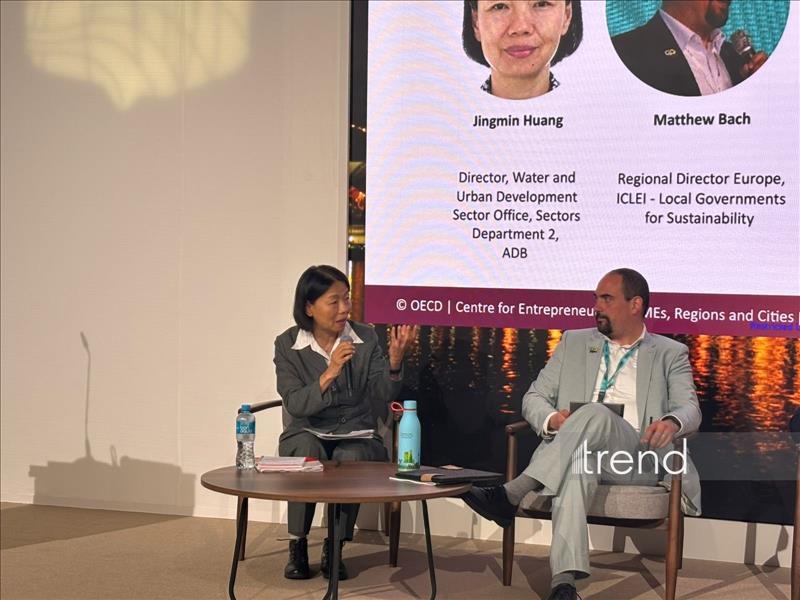
Integration Of Nature-Positive Approaches Into Asian Urban Development Essential - ADB
(MENAFN- Trend News Agency)
BAKU, Azerbaijan, May 20. The deployment of
nature-positive approaches shifts from an option to a necessity for
modern cities, particularly under conditions of rapid urbanization
and escalating climate risks, said Jingmin Huang, Director of the
Water and Urban Development Sector Office at the Asian Development
Bank (ADB), Trend
reports.
The official made the remarks during a session titled "Building Nature-Positive Cities Housing, Resilience, and Sustainable Urban Futures" held within the framework of the World Urban Forum (WUF13) in Baku.
According to her, the ADB actively supports investments in natural capital and the development of nature-positive policies. She recalled that two years ago in Baku, during the COP29 summit, the bank introduced its Environmental Action Plan for 2024–2030, titled "Toward a Nature-Positive Asia and the Pacific."
"This plan represents a roadmap to combat biodiversity loss, environmental pollution, and climate change across sectors such as urban development, water supply, transport, agriculture, and energy," Huang noted.
She emphasized that for Asian cities, nature-positive approaches are no longer optional: "In this regard, the ADB actively deploys nature-based solutions to enhance climate resilience, improve public health, and elevate the quality of the urban environment."
"One development track involves retrofitting existing urban territories by creating additional green spaces. Research demonstrates that such small green zones help reduce stress levels among residents while simultaneously supporting biodiversity, creating habitats for birds and wildlife," she said.
Huang identified the integration of "green" and "blue" infrastructure into urban planning as a second vital priority, highlighting the application of the "sponge city" concept popular in China. She stated that such solutions allow municipalities to manage floods more effectively compared to traditional, costly "grey" infrastructure.
At the same time, according to her, the deployment of nature-positive solutions faces a series of challenges, including land resource scarcity, the necessity of coordination between state structures, municipalities, and local communities, and financing complexities.
--
Legal Disclaimer:
MENAFN provides the
information “as is” without warranty of any kind. We do not accept
any responsibility or liability for the accuracy, content, images,
videos, licenses, completeness, legality, or reliability of the information
contained in this article. If you have any complaints or copyright
issues related to this article, kindly contact the provider above.
Most popular stories
Market Research

More Story




Comments
No comment