




403
Sorry!!
Error! We're sorry, but the page you were looking for doesn't exist.
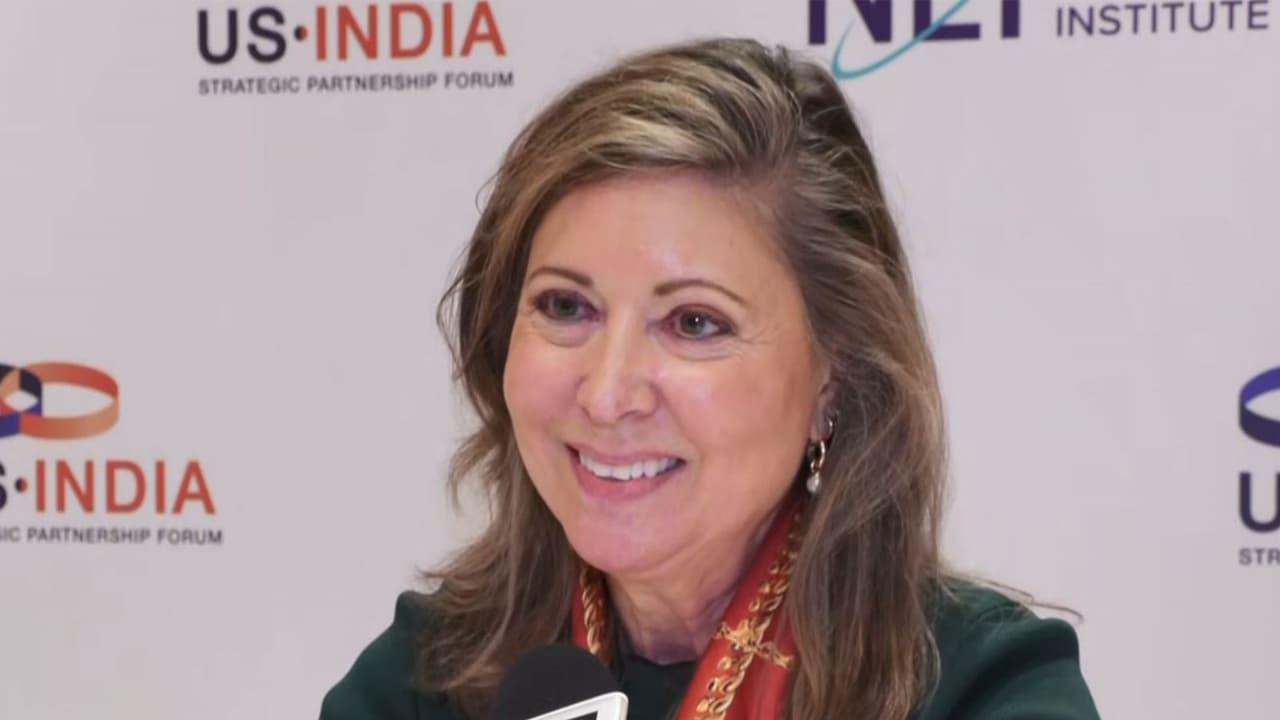
SHANTI Act Opens New Day For US-India Civil Nuclear Ties: NEI Chief
(MENAFN- AsiaNet News)
Marking a major milestone for global energy collaboration, Maria Korsnick, President and CEO of the Nuclear Energy Institute (NEI), stated that the recent passage of the landmark SHANTI Act in India has "opened the door now for a new day", fundamentally reshaping the horizon for the US and Indian civil nuclear industries.
Enacted as a sweeping legislative reform, the Sustainable Harnessing and Advancement of Nuclear Energy for Transforming India (SHANTI) Act, 2025, has fundamentally restructured the nation's civil nuclear architecture. By replacing the decades-old Atomic Energy Act of 1962 and the Civil Liability for Nuclear Damage Act of 2010, the landmark law legally opens the doors for private industry participation in nuclear energy operations for the first time since independence.
US Industry Sees 'A New Day' for Collaboration
Speaking to ANI, Korsnick outlined the primary objectives of a visiting executive trade mission, which is being jointly hosted by NEI and the US-India Strategic Partnership Forum (USISPF). She emphasised that this high-level delegation offers an ideal platform for the American commercial sector to understand the Indian government's clean energy roadmaps, as well as private-sector integration under this new legislative landscape.
This legislative breakthrough addresses a long-standing bottleneck in bilateral relations. Reflecting on the legacy of nuclear diplomacy, Korsnick observed that while the landmark 2005 India-US civil nuclear agreement was a monumental step forward, commercial progress remained stalled for nearly two decades due to unresolved liability issues. "Back in 2005, it was a step forward, but that nuclear liability was not resolved and so for 20 years, we really haven't made significant steps forward," she stated. "The SHANTI Act has opened the door now for a new day."
Beyond resolving these historical liability concerns, Korsnick noted that the technology itself has significantly evolved during this period, offering more versatile options for industrial deployment. "It wasn't just the large reactors, which we had in 2005. Yes, it'll still be large reactors, but large, medium, small, light water, advanced reactors, all different shapes and sizes," she said.
Strategic Partnership with Global Implications
Highlighting the long-term strategic potential of this commercial synergy, Korsnick noted that global clean energy targets will remain heavily reliant on nuclear expansion, prompting deep interest on behalf of American vendors in entering multi-layered joint ventures with Indian entities. "I think long-term clean energy goals are going to be very dependent on nuclear and I think the US commercial sector would love to partner with Indian companies, not only to build here in India, but to partner with companies to not only build in India but also have them also invest in the United States and maybe together build elsewhere in the world," she affirmed. "This is really a long-term strategic relationship that is being built."
This commercial alignment, she suggested, carries broader geopolitical weight. Addressing regional stability and security architecture in the Indo-Pacific, the NEI chief underlined the global significance of India's demographic scale and its choice of clean baseload power. "You have a very large population here in India and what you do and the choices that you make, I think, are very important really to the whole world," she observed. "And by you going with clean, reliable nuclear energy, this is a very significant step forward for the Indo-Pacific region, for us to work together," describing the partnership as a "win-win".
Amid escalating global geopolitical fragmentation and volatile fossil fuel supply chains, Korsnick highlighted the unique intrinsic value of nuclear infrastructure in insulating economies from external shocks. "Well, that's really the magic for nuclear, right, is that it brings you that energy security. You pack the energy in the core, it's there for several years. It gives you that security that you're going to have that electricity from the nuclear power and you don't have the supply disruption concerns that you might have from other sources," she explained. She added that in a fluid geopolitical environment, "that energy security brings you national security. And in the world with changing geopolitics, I think everyone is interested in energy security and national security."
Focus on the Entire Nuclear Value Chain
Expanding the discussion beyond reactor construction alone, Korsnick indicated that the ongoing bilateral dialogue encompasses the entire nuclear ecosystem, including workforce development, technical research, manufacturing, and supply-chain integration. "All of it. In fact, that was really our conversation today," she said. "When you think about nuclear, many people just think about reactors and reactor technology. It's so much more than that. It's manufacturing. It's supply chain. It's fuel. It's the people that are going to be operating and engaging in designing these things. So, it's really a conversation on the whole value chain for nuclear," Korsnick said.
Emphasising the foundational role of private-sector participation following India's sweeping legislative updates and the expanding global conversation around Small Modular Reactors (SMRs), Korsnick underscored that a shared public-private operational philosophy remains vital to maximising the scale of civil nuclear energy. "Sure. Well, again, the whole idea here is that we have private commercial sector in the United States that's very involved in the nuclear sector. And I believe India has the same vision. It's not just about government. It's about government working with the private sector. That is a direction I believe India would like to go, and that's how it already is in the United States. This is why I think working together is a win-win," she concluded.
India Outlines Ambitious Nuclear Expansion Plan
Putting this vision into immediate context, the dialogue built directly upon an earlier high-level meeting in which the US industry delegation held discussions with Union Minister of State for Science and Technology Jitendra Singh on emerging opportunities for private investment and industry collaboration in India's nuclear sector. During that meeting, Jitendra Singh emphasised that India and the US today share a strong and future-orientated partnership, noting that the launch of the US-India TRUST Initiative has opened new avenues for collaboration in critical and emerging technologies. The TRUST initiative, centred around trusted technology partnerships, resilient supply chains, and innovation ecosystems, provides a strong framework for deeper engagement among governments and industry.
This tech-driven synergy extends directly into critical energy frameworks and advanced materials. Connecting these technological ambitions to India's long-term clean energy goals under the vision of Viksit Bharat 2047, Jitendra Singh shared that India aims to scale its nuclear power capacity from the present 8.8 GW to 100 GW by 2047 through a phased expansion strategy. This rapid capacity growth is creating major opportunities for global partnerships in manufacturing, technology cooperation, supply-chain integration, and advanced research.
To facilitate this massive expansion, the Minister informed the delegation that the recently enacted SHANTI Act, 2025, serves as the primary policy vehicle aimed at enabling greater participation of the private sector, including foreign investment. The implementation framework under the Act is currently being finalised by the government to further strengthen these collaborative industrial opportunities.
Advancing Small Modular Reactors and Tech Synergy
In alignment with Korsnick's focus on evolving reactor formats, the Minister highlighted that India is moving ahead with plans for the development of Small Modular Reactors (SMRs), supported by an allocation of nearly Rs 20,000 crore. He added that there is significant scope for India-US collaboration in advanced areas such as micro-reactors, AI-enabled nuclear safety systems, scientific computing, and nuclear energy modelling.
The discussions also reviewed progress across a broad spectrum of ongoing India-US collaborative initiatives. These include the proposed Westinghouse AP1000 project at Kovvada, cooperation under the Indo-US Civil Nuclear Energy Working Group (CNEWG), hydrogen production, and integrated energy systems. The interaction concluded with a shared commitment to deepen practical, industry-led, and mutually beneficial cooperation between India and the US in clean energy, nuclear technologies, advanced manufacturing, and innovation-driven sectors.
Key participants in the dialogue included Secretary, Department of Science & Technology, Rajesh S. Gokhale, alongside senior officials from the Department of Atomic Energy and US industry organisations. (ANI)
(Except for the headline, this story has not been edited by Asianet Newsable English staff and is published from a syndicated feed.)
Legal Disclaimer:
MENAFN provides the
information “as is” without warranty of any kind. We do not accept
any responsibility or liability for the accuracy, content, images,
videos, licenses, completeness, legality, or reliability of the information
contained in this article. If you have any complaints or copyright
issues related to this article, kindly contact the provider above.
Most popular stories
Market Research

More Story






Comments
No comment