




403
Sorry!!
Error! We're sorry, but the page you were looking for doesn't exist.
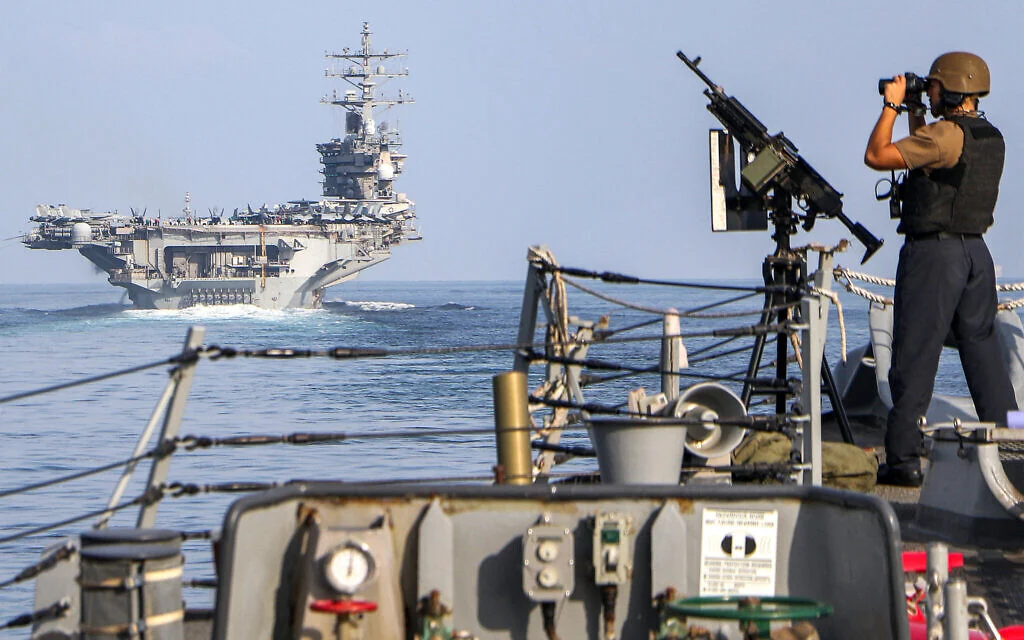
As US Reportedly Mulls Expanded Strikes, Hormuz Raises Stakes In Iran War
(MENAFN- Jordan Times)
AMMAN - The Strait of Hormuz is rapidly emerging as a central pressure front in the confrontation between Iran, the United States and Israel.
The development comes as Washington was reportedly studying broader military options against Tehran, while Iran tightens control over one of the world's most critical energy routes.
The New York Times reported on Friday that advisers to US President Donald Trump had prepared plans for renewed military strikes against Iran if the White House decides to break the current deadlock with Tehran.
Trump has not yet made a final decision on the next steps, while his administration continues evaluating multiple escalation scenarios, according to New York Times
US officials cited by the report said the options under discussion include expanded bombing campaigns targeting military facilities and infrastructure inside Iran.
The report added that American special forces could also be used in operations targeting Khark Island, a major hub for Iranian oil exports, while other scenarios include targeting underground nuclear facilities.
US military officials privately acknowledged that achieving a“decisive victory” against Iran would remain difficult and highly complex, according to the newspaper.
Meanwhile, Iran's Revolutionary Guards announced Thursday that naval forces had allowed several Chinese ships to pass through the Strait of Hormuz following agreements related to Iran's“strait management protocols”.
Iranian state television later reported that more than 30 vessels had crossed, although it remained unclear whether all were Chinese ships.
Iran has largely restricted shipping through the waterway since the outbreak of war with the United States and Israel on February 28.
The Strait of Hormuz carries nearly one-fifth of global oil and liquefied natural gas shipments, making it one of the world's most strategically sensitive trade routes.
The passage of Chinese-linked vessels came as Trump visited China and met President Xi Jinping for talks that included the Iran war and regional security developments.
Political analyst Amer Sabaileh said that there is a growing current inside the United States that leans towards the Israeli approach in dealing with Iran.
“A long-term blockade can produce results, but it may eventually reach a stage of stagnation and adaptation,” he noted.
“The strikes are more likely to take the form of targeted operations against vital energy infrastructure, assassinations of figures obstructing agreements and special operations inside Iran,” he warned.
Areej Jabr, a political science professor, said that Washington's escalating rhetoric towards Iran reflects strategic confusion as much as pressure tactics.
“Washington appears trapped between a costly military confrontation and returning to diplomacy in a way that could be interpreted as retreat,” she argued.
“The growing militarisation around strategic waterways reflects attempts to manage negotiations through pressure, deterrence and maximum political and military leverage,” she warned.
She also explained that the latest developments suggest the Strait of Hormuz is no longer being treated solely as a maritime passage, but increasingly as a geopolitical leverage point tied to military confrontation, energy security and global power competition.

Legal Disclaimer:
MENAFN provides the
information “as is” without warranty of any kind. We do not accept
any responsibility or liability for the accuracy, content, images,
videos, licenses, completeness, legality, or reliability of the information
contained in this article. If you have any complaints or copyright
issues related to this article, kindly contact the provider above.
Most popular stories
Market Research

More Story







Comments
No comment