





403
Sorry!!
Error! We're sorry, but the page you were looking for doesn't exist.
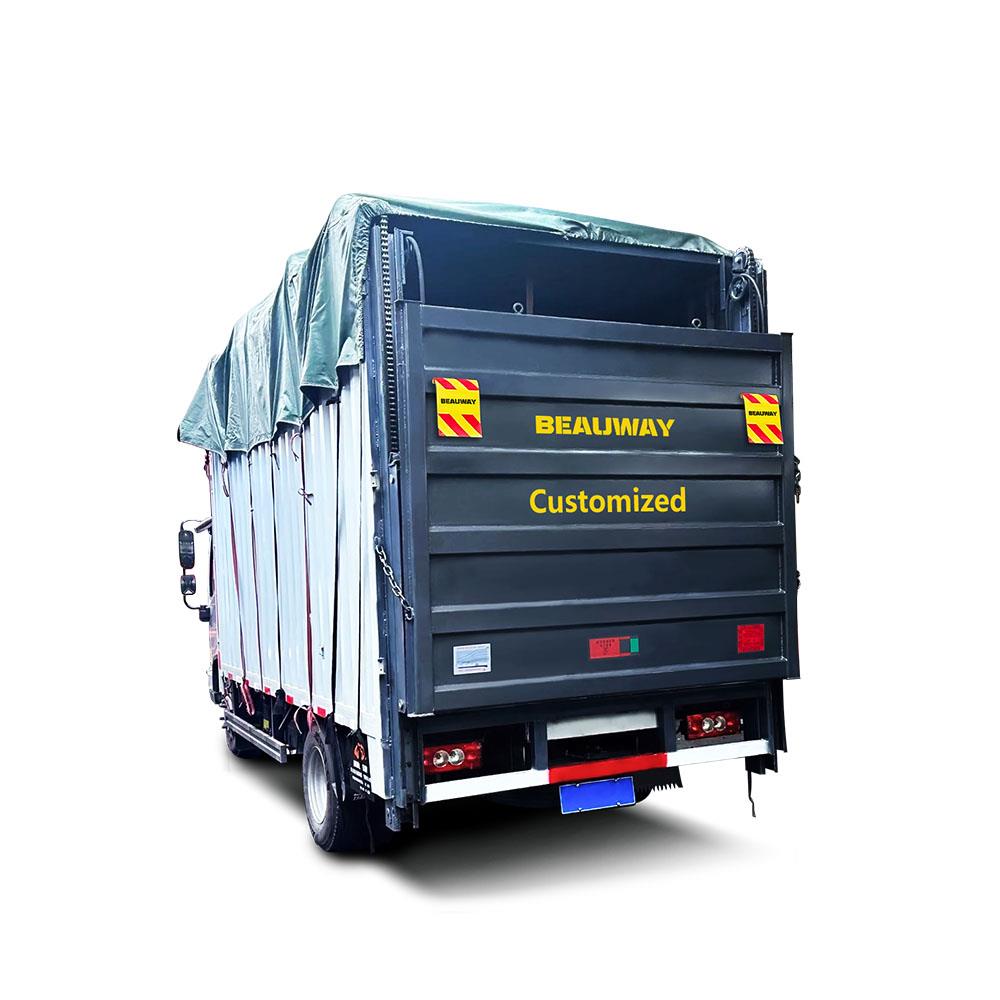
Vertical Lift Tail Lift for Trucks: Improve Loading Efficiency and Reduce Logistics Costs
(MENAFN- MENAFNEditorial) The Role of Vertical Lift Tail Lifts in Modern Freight Logistics Efficiency
In real-world logistics operations, loading speed is often the point where efficiency is either gained or lost. Most companies don’t think about it deeply until labor costs start increasing or delivery cycles begin slowing down. That’s where systems like the truck vertical lift tail lift quietly become important.
A vertical lift tail lift is basically a hydraulic platform installed at the rear of a truck. It doesn’t do anything complicated on the surface—it just moves straight up and down. But that simple movement actually solves a lot of practical problems in cargo handling, especially when forklifts are not always available or when space is limited.
Inside the system, you still have the core engineering elements: hydraulic cylinders, a steel platform, a control unit, and safety protection mechanisms. Nothing exotic, but the way these parts work together is what makes the system reliable in daily use. In practice, operators care less about theory and more about whether the lift works smoothly under load—and keeps working after months of use.
What’s interesting is how quickly adoption is increasing. Many logistics companies switch to vertical lift tail lifts not because of innovation hype, but because of operational pressure. Loading times drop, fewer workers are needed on the dock, and damage rates usually go down. For cold chain or urban delivery, these small improvements compound into real savings.
There are also practical engineering reasons behind the shift. A vertical lifting motion reduces side stress on cargo, which sounds minor but matters a lot when transporting fragile goods. It also fits better with enclosed truck bodies where folding systems are harder to install or operate.
In global sourcing decisions, buyers usually care about very direct things: price, durability, customization options, and whether the supplier can actually deliver consistent quality at scale. That’s why factory-based manufacturers tend to dominate this segment.
Across industries like cold chain logistics, retail distribution, construction supply, and pharmaceutical transport, vertical lift tail lifts are becoming less of an optional upgrade and more of a standard expectation.
In this space, Beauway works as a manufacturer focused on practical hydraulic tail lift systems, offering OEM customization and factory-direct supply for logistics operators looking to improve loading efficiency without increasing operational complexity.
In real-world logistics operations, loading speed is often the point where efficiency is either gained or lost. Most companies don’t think about it deeply until labor costs start increasing or delivery cycles begin slowing down. That’s where systems like the truck vertical lift tail lift quietly become important.
A vertical lift tail lift is basically a hydraulic platform installed at the rear of a truck. It doesn’t do anything complicated on the surface—it just moves straight up and down. But that simple movement actually solves a lot of practical problems in cargo handling, especially when forklifts are not always available or when space is limited.
Inside the system, you still have the core engineering elements: hydraulic cylinders, a steel platform, a control unit, and safety protection mechanisms. Nothing exotic, but the way these parts work together is what makes the system reliable in daily use. In practice, operators care less about theory and more about whether the lift works smoothly under load—and keeps working after months of use.
What’s interesting is how quickly adoption is increasing. Many logistics companies switch to vertical lift tail lifts not because of innovation hype, but because of operational pressure. Loading times drop, fewer workers are needed on the dock, and damage rates usually go down. For cold chain or urban delivery, these small improvements compound into real savings.
There are also practical engineering reasons behind the shift. A vertical lifting motion reduces side stress on cargo, which sounds minor but matters a lot when transporting fragile goods. It also fits better with enclosed truck bodies where folding systems are harder to install or operate.
In global sourcing decisions, buyers usually care about very direct things: price, durability, customization options, and whether the supplier can actually deliver consistent quality at scale. That’s why factory-based manufacturers tend to dominate this segment.
Across industries like cold chain logistics, retail distribution, construction supply, and pharmaceutical transport, vertical lift tail lifts are becoming less of an optional upgrade and more of a standard expectation.
In this space, Beauway works as a manufacturer focused on practical hydraulic tail lift systems, offering OEM customization and factory-direct supply for logistics operators looking to improve loading efficiency without increasing operational complexity.

Legal Disclaimer:
MENAFN provides the
information “as is” without warranty of any kind. We do not accept
any responsibility or liability for the accuracy, content, images,
videos, licenses, completeness, legality, or reliability of the information
contained in this article. If you have any complaints or copyright
issues related to this article, kindly contact the provider above.
Most popular stories
Market Research

More Story








Comments
No comment