




403
Sorry!!
Error! We're sorry, but the page you were looking for doesn't exist.
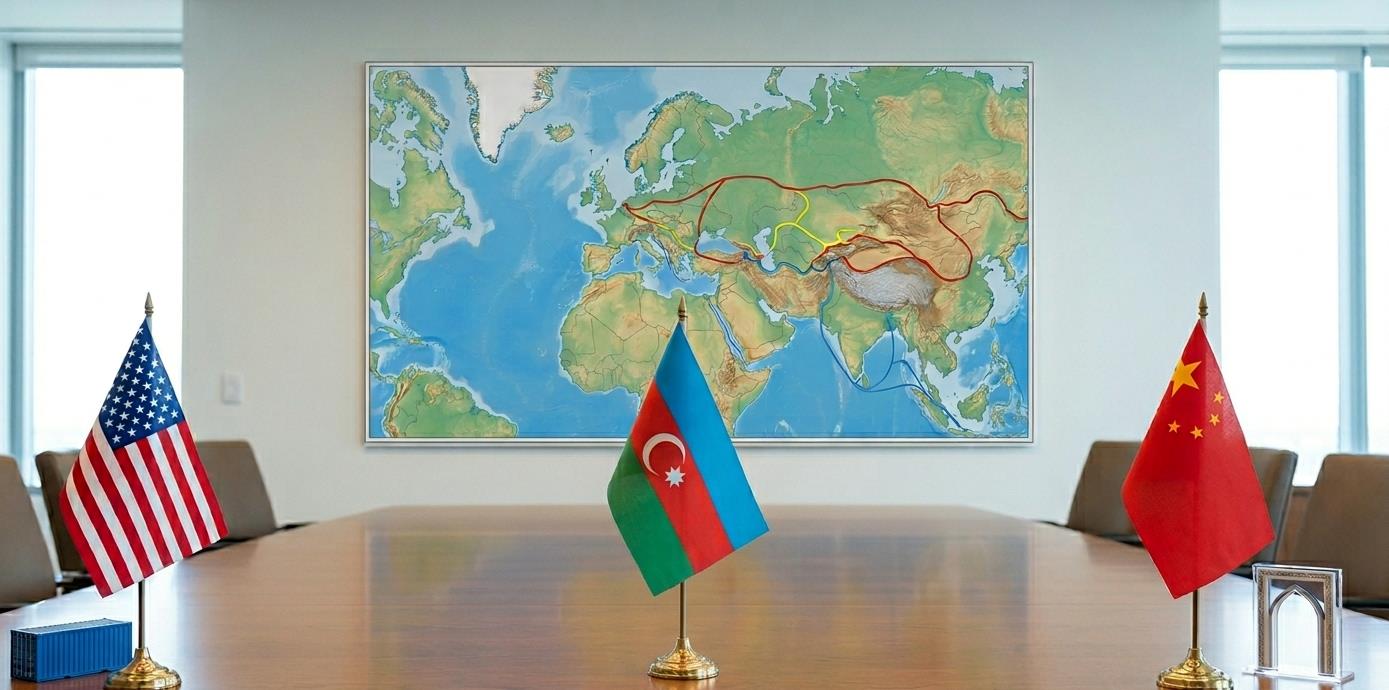
Azerbaijan Positions Itself At Heart Of Emerging US-China Trade Architecture
(MENAFN- AzerNews)
Ulviyya Poladova
Read more
The recent visit of U.S. President Donald Trump to Beijing generated widespread attention in the global media. He did not arrive alone; accompanying him were leading economic experts and business figures, including Tesla CEO Elon Musk, Apple CEO Tim Cook, and Nvidia CEO Jensen Huang, alongside 15 others. This high-profile delegation clearly underscored the strategic focus of the visit: strengthening economic ties between the United States and China, fostering technological cooperation, and expanding international investment opportunities.
In today's world, economic and technological relations among major powers are critically important not only for the countries themselves but also for global stability. Against the backdrop of multiple conflicts, including wars in the Middle East and the ongoing Russia-Ukraine crisis, such economic engagement becomes even more significant. Stability and prosperity increasingly depend on structured, mutually beneficial cooperation among leading nations.
Moreover, Azerbaijan has consistently sought to cultivate economic relations with all countries and, especially here, it maintains strong partnerships with two of the world's most economically advanced powers: China and the United States. The state visits of President Ilham Aliyev to China and the USA in 2025 serve as a vivid illustration of Azerbaijan's commitment to fostering international cooperation. By leveraging its strategic geographic location at the crossroads of Asia and Europe and its significant transit potential, Azerbaijan has advanced the development of the Middle Corridor and positioned the Zangezur Corridor as a new avenue for sustainable peace, reliable security, and multilateral cooperation in Eurasia.
Simultaneously, Azerbaijan's interaction with China continues to expand. As one of the early supporters of Beijing's Belt and Road Initiative (BRI), Baku has positioned itself as a key connector between Asia and Europe. The two nations' trade turnover, reaching over $1.1 billion in the first quarter of 2026, demonstrates growing mutual interest. China's recalibration of the BRI - placing new emphasis on the Middle Corridor route through the Caspian region - aligns closely with Azerbaijan's vision for regional connectivity.
Multilateral cooperation has deepened across trade, transportation and logistics, energy, including renewable energy, and innovation, as well as scientific, educational, cultural, and humanitarian spheres. These efforts, coupled with high-level political dialogue and intensive diplomatic contacts, are central to Azerbaijan's strategic priorities. In the context of a multipolar world, a comprehensive strategic partnership between Azerbaijan and China is critical not only for bilateral development but also for promoting sustainable and mutually beneficial collaboration across Eurasia, particularly within the geography of the Global South.
Meanwhile, Azerbaijan maintains stable relations with the United States. During President Aliyev's visit in August of the previous year and his meeting with Donald Trump, a Memorandum of Understanding was signed to establish a Strategic Working Group for preparing a Charter on Strategic Partnership between Azerbaijan and the U.S. Furthermore, President Ilham Aliyev and Armenian Prime Minister Nikol Pashinyan, under the watch of President Trump, signed a Joint Declaration following the Washington summit.
One of the Washington Summit's landmark achievements is the Trump Route for International Peace and Prosperity (TRIPP). TRIPP is a key segment of the Middle Corridor, which is ready to become a vital transport hub connecting Asia and Europe, expanding international cargo transit opportunities, contributing to the prosperity of the region, and the integration of countries into global supply chains. In the future, TRIPP could support energy transport, renewable energy exports, and fiber-optic infrastructure, transforming the region into an international hub for trade and digital communications. Azerbaijan is mobilizing all efforts to implement this route swiftly.
Azerbaijan's modern strategy draws historical continuity from the ancient Silk Road, which once linked China and India through Central Asia to the Caspian and onward to Europe. The historic Zangezur Corridor - disrupted during the Soviet era - symbolized that east-west linkage. Today, through projects like TRIPP and the revitalization of the Middle Corridor, Azerbaijan seeks to reassert itself as a Land of Connection, uniting economies and cultures across continents.
The TRIPP project is likely to hold substantial strategic weight in Trump-Xi discussions, as it embodies overlapping economic and geopolitical interests for both nations. For China, TRIPP's integration with the Belt and Road framework strengthens the Middle Corridor - a critical diversification route that reduces dependency on the northern path through Russia. For the United States, TRIPP presents an opportunity to engage in Eurasian infrastructure development without directly challenging China's leadership in the BRI, but rather by complementing it through joint standards, green infrastructure investment, and digital corridor development.
Azerbaijan's position at the heart of the emerging TRIPP corridor is no accident - the country has spent two decades building the pipeline infrastructure that now makes it one of Europe's most strategically significant energy partners.
Ongoing conflicts in neighboring regions, sanctions regimes, disruptions in global supply chains, and security risks in the Middle East all directly affect trade corridors and investment flows. Therefore, Azerbaijan's long-term success depends not only on infrastructure development but also on preserving regional stability and maintaining predictable foreign policy relations with all major actors.
Located at the crossroads of Asia and Europe and bordered by volatile regions, Azerbaijan recognizes that maintaining stability and openness is both its greatest challenge and advantage.

Legal Disclaimer:
MENAFN provides the
information “as is” without warranty of any kind. We do not accept
any responsibility or liability for the accuracy, content, images,
videos, licenses, completeness, legality, or reliability of the information
contained in this article. If you have any complaints or copyright
issues related to this article, kindly contact the provider above.
Most popular stories
Market Research

More Story






Comments
No comment