



403
Sorry!!
Error! We're sorry, but the page you were looking for doesn't exist.
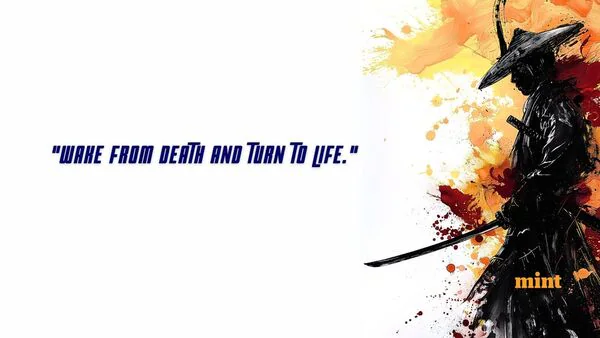
Japanese Proverb Of The Day: 'Wake From Death And Turn To Life' Meaning, Business Lesson And Why It Still Matters Today
(MENAFN- Live Mint) "Wake from death and turn to life."
This Japanese proverb reminds us that even the worst situations can be turned around. It means that recovery is always possible, no matter how devastating the circumstances appear. In a world that often writes people off after failure, this proverb demands a second look.
The closest English equivalent is the familiar saying, "Turn lemons into lemonade." But this proverb carries far greater dramatic weight and spiritual urgency.
This is a proverb that has traveled through centuries of Japanese resilience and cultural wisdom. Its message is quietly defiant. The darkest moment is not the final moment.
Also Read | Japanese Proverb of the day: 'Even monkeys fall from trees'Death here is not literal. It represents the total collapse of a career, a relationship, a business, or a dream. And yet the proverb insists that life can follow. That turning is not accidental. It is a choice, made with deliberate will and courageous action.
The proverb teaches one core idea: transformation is always available to those who reach for it. The most enduring professionals in any field are often those who have survived their own version of collapse. They did not stay in the wreckage. They woke from it.
This lesson cuts across every area of modern life: leadership, career recovery, personal resilience, and long-term decision-making. This article will unpack why that is, and how to use this ancient insight as a daily practice.
Wake from death and turn to life.At its core, this proverb teaches that collapse is a beginning, not an ending.
Meaning of the ProverbLiterally, the image invokes the most extreme human contrast imaginable. Death is the final state of loss. Life is its complete opposite. The proverb deliberately places both in the same sentence. It says the journey from one to the other is possible and real.
Symbolically, death represents any situation that feels irreversible and total. A failed business, a public humiliation, a crushed ambition, or a broken trust. Life represents the renewed state that follows deliberate recovery. The proverb does not say the journey is easy. It says the journey exists.
The emotional insight is profoundly liberating. It removes the permanence from failure. If death itself can turn to life, then your current crisis does not define your final outcome. That reframing is both courageous and deeply practical.
What This Proverb Teaches About Modern LifeModern life is unforgiving toward visible failure. Social media amplifies collapses and rarely documents the slow, unglamorous recoveries that follow. We are conditioned to believe that certain failures are career-ending.
This proverb challenges that belief directly. Resilience is not about avoiding collapse. It is about choosing what comes next. A professional who loses everything at 40 still has decades of productive life ahead. A founder whose startup fails spectacularly carries invaluable lessons into the next venture.
Also Read | Japanese Proverb of the day: 'If you do not enter the tiger's cave...'In decision-making, the proverb demands reframing over resignation. When situations feel irreversible, the proverb asks a harder question: what would it actually take to turn this around? Discipline means staying with that question rather than abandoning it prematurely.
For career growth, this proverb is a survival tool. Professionals who understand that collapse is survivable take bolder, more intelligent risks over time. Those who fear death above everything else never fully wake to life.
Business Lesson From the ProverbThis is where the proverb earns real business value. Consider these five concrete scenarios.
A startup founder loses her primary investor three months before launch. She treats this as a death sentence and shuts down operations entirely. A competitor in identical circumstances uses the crisis to restructure costs, secure leaner funding, and successfully launch six months later.
A senior executive is publicly let go after a failed product launch. He disappears from the industry for two years out of shame. A peer in a similar situation reframes the dismissal openly, writes about the lessons learned, and returns stronger, with credibility intact.
A family business collapses after decades of operation due to market disruption. The next generation treats it as a permanent defeat. One sibling wakes from that death, pivots the brand into an adjacent market, and builds a more profitable operation within three years.
Also Read | Japanese Proverb of the day: 'The nail that sticks out...'A sales professional loses her largest account, which accounts for 60% of her revenue. She spirals into inaction for months. A colleague in the same position immediately maps ten replacement prospects and rebuilds her pipeline with urgent, focused energy.
One company survives repeated industry downturns not because it never collapses. It survives because its leadership culture treats every collapse as a turning point, not a conclusion.
How to Apply This Proverb in Real Life- When a situation feels final, ask what it would take to turn it around. Refuse to let a single failure define your entire professional identity. Identify one concrete action you can take from within the wreckage. Reframe collapse as data, not destiny. Study people who have recovered from worse situations than yours. Build a personal recovery ritual for moments of professional or personal collapse. Choose the turn toward life deliberately, every single time it is available.
We live in a culture that glorifies origin stories but skips the recovery chapters. Podcasts celebrate the comeback only after it is complete and polished. Nobody documents the ugly, uncertain middle period where waking actually happens.
Information overload makes failure feel more permanent than it is. One bad review, one public mistake, one failed launch can feel like a career death sentence in the age of permanent digital records.
But fast-moving business conditions also create faster recovery windows than ever before. Markets shift. Opportunities reappear. Industries reinvent themselves constantly. The professionals who thrive are those who stay ready to wake.
Career anxiety is real. Many professionals silently and alone carry the weight of past collapses. This proverb gently removes that weight. The death was real. But it was not the last word. Stay deliberate, stay moving, and keep turning.
In leadership, this proverb is a team-building tool. Leaders who have genuinely woken from their own deaths lead with a different kind of authority. Their teams believe in recovery because their leader has lived it.
Other Japanese Proverbs With a Related Lesson"Fall seven times, stand up eight.": Resilience is not about the fall. It is about the rising.
"Not knowing is Buddha.": Sometimes the collapse clears the way for a genuine new beginning.
"A frog in a well does not know the great sea.": Recovery often requires seeing beyond the walls of the current crisis.
"Sit on a stone for three years.": Patient, unglamorous endurance is how most real recoveries are actually built.

Legal Disclaimer:
MENAFN provides the
information “as is” without warranty of any kind. We do not accept
any responsibility or liability for the accuracy, content, images,
videos, licenses, completeness, legality, or reliability of the information
contained in this article. If you have any complaints or copyright
issues related to this article, kindly contact the provider above.
Most popular stories
Market Research

More Story







Comments
No comment