




403
Sorry!!
Error! We're sorry, but the page you were looking for doesn't exist.
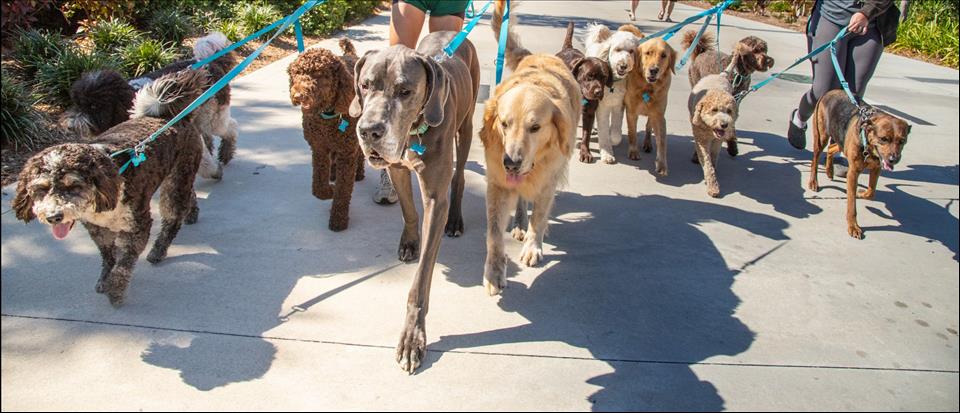
Dogs Display Many Traits Of Great Leaders − Here Are 5 Breeds That Can Be Your Leadership Role Models
Author: Aditya Simha
(MENAFN- The Conversation) I have been a dog lover ever since I was a kid and have spent years learning about the temperaments and histories of different dog breeds, as well as famous dogs and their adventures. I have attended a variety of dog shows to meet various breeds and talk with their owners, and I've also lived with several dogs – including a dachshund, otterhound, German shepherd, Indian spitz and Labrador retriever – over the course of my life.

Beyond my canine concerns, I'm a professor of management who loves teaching courses and conducting research on leadership. So, it was a no-brainer for me to combine my two interests to write a book,“Learning Leadership from Dogs.” Various dog breeds embody distinct traits and behaviors that we humans can emulate to become better leaders.
Here are five qualities dogs model that any leader, at work or in life, can learn from.
Joie de vivreHappy-go-lucky hounds have an abundance of joie de vivre, a French phrase that refers to a cheerful and exuberant enjoyment of life. My own otterhound, Fiona, amply embodied this trait. A simple walk in the woods or hike on the beach was all she ever wanted.
This kind of optimism and cheerfulness can make leaders more empathetic and pleasant to work with, partly because psychology research finds that positive moods increase helping, generosity and interpersonal understanding. Those are key ingredients of empathy.
Followers feel and perform better when led by good-natured, enthusiastic leaders who look on the bright side. A leader's joie de vivre can be passed on to the team. Scholars of positive leadership call this process emotional contagion – how a mood or emotional tone can spread through a group.
CourageWho wants to follow a timid leader, right? Most people want a leader who is brave and who walks the talk – someone who's courageous enough to do the right thing under all circumstances, not just when it's convenient to do so.
While there are many dog breeds that embody courage, I want to single out the Dutch shepherd. Smaller than the German shepherd and the Belgian Malinois, the Dutch shepherd is used in police and military work because of its athleticism, trainability and strong work ethic. Just like how Dutch shepherds run toward danger to protect others, courageous leaders take risks for their values and to support their team.
IntelligenceLeaders must not only know about their domain, they also need to be able to understand which of their followers needs to be treated or led differently. Both emotional and cognitive intelligence are essential for effective leadership and have positive consequences for their followers' attitudes and performance.
I point to the border collie as a dog that exemplifies both forms of intelligence. The border collie not only knows how to herd sheep, but also which sheep to herd with patience and which sheep need a bit more sharpness.
This intelligence is something that needs to be guided and channeled. Border collies left without enough work or stimulation are famous for finding their own“jobs,” such as herding the human children, chasing shadows or inventing new mischief around the house.
Without proper direction, even brilliance can become counterproductive – another lesson leaders can keep in mind when managing their own flocks.
KindnessKindness is one quality that is sadly not given the amount of attention it merits in the world of management, even though it can shape whether followers feel respected, trusted and willing to contribute.
Displaying kindness is a canine specialty. The dog breed that comes to mind for me here is the Newfoundland. First bred in Canada and known as a fine water rescue dog, these gentle giants are supremely kind to everyone and display a benevolent, protective nature.
Leaders similarly need to be kind to their followers, even if a team member has failed at a task. A kind response does not mean ignoring mistakes; it means correcting them in a way that preserves dignity, making followers more likely to learn, speak up and try again. Together those patterns facilitate work environments that promote what researchers call psychological safety: a shared belief that people can ask questions, admit mistakes and raise concerns without fear of embarrassment, rejection or punishment.
ResilienceResilience is not just toughness; it is the ability to recover from setbacks, adapt under pressure and keep moving forward when things don't go as planned. Leaders rely on it during crises, failed projects, public criticism or periods of organizational change, all moments when uncertainty is high and confidence can falter.
Any leader can look to the Rhodesian ridgeback as a resilience role model. This breed hails from South Africa and was originally used to assist in lion hunting – an activity fraught with peril and with high prospects of failure. Rhodesian ridgebacks are dauntless dogs, always ready to try another dangerous hunt even in the wake of repeated failures.
Like these dogs, leaders often must confront perilous tasks with a high likelihood of failure, and they must be ready to bounce forward so they can eventually seize success. Without resilience, leaders may panic, withdraw or become overly reactive, especially during a crisis. When that happens, uncertainty spreads, confidence erodes and teams are less likely to stay focused or move forward effectively.
Dogs are the most popular choice of pet in the United States and worldwide. You probably don't need to look far to find some furry friends who can inspire you with their admirable characteristics. Dogs may never author a leadership book, but they live out leadership lessons in courage, kindness and joy every day.
Institution:University of Wisconsin-Whitewater

Legal Disclaimer:
MENAFN provides the
information “as is” without warranty of any kind. We do not accept
any responsibility or liability for the accuracy, content, images,
videos, licenses, completeness, legality, or reliability of the information
contained in this article. If you have any complaints or copyright
issues related to this article, kindly contact the provider above.
Most popular stories
Market Research

More Story








Comments
No comment