

403
Sorry!!
Error! We're sorry, but the page you were looking for doesn't exist.
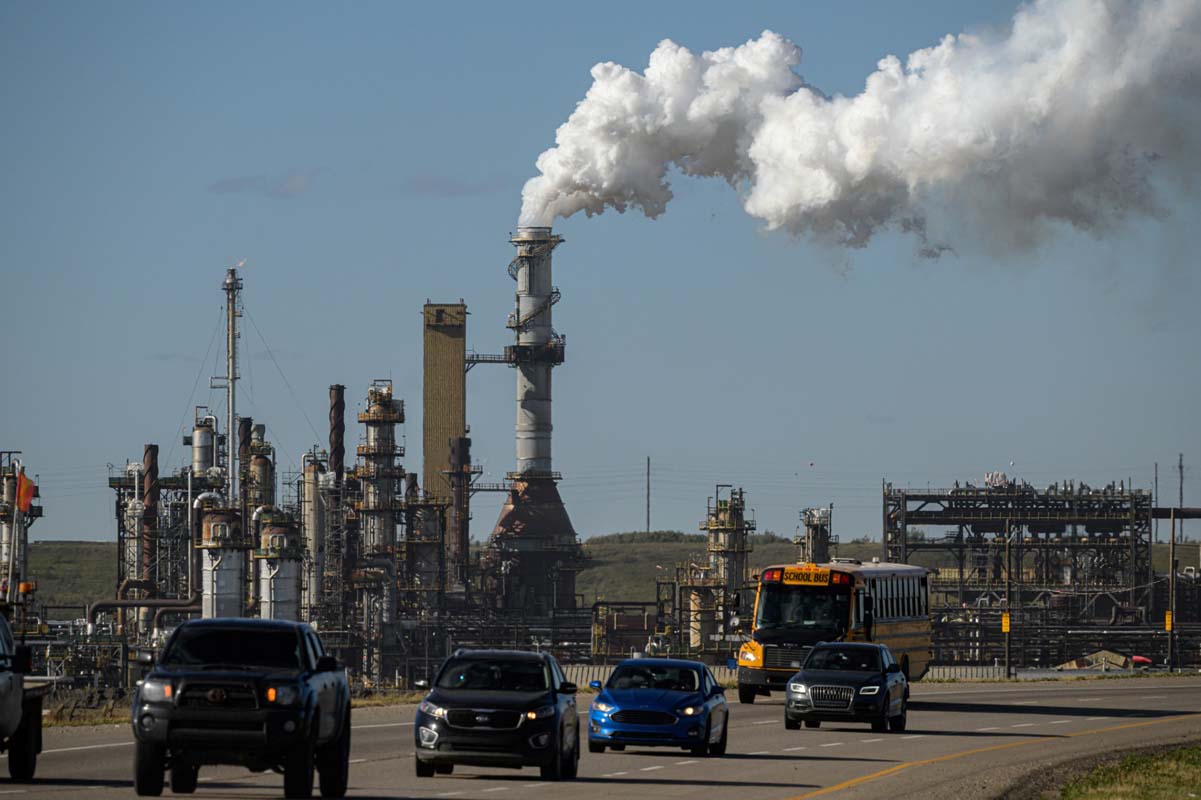
Air Pollution Levels Fail Global Safety Standards Across Most Countries


(MENAFN) A recent global assessment indicates that only a very small number of countries were able to meet internationally recognized air quality safety levels in 2025, as worsening pollution trends continued worldwide. Rising emissions, alongside climate-related impacts and persistent dependence on fossil fuels, were identified as key contributors to the decline.
Findings from a worldwide air quality analysis show that just 14% of cities examined were within recommended safety limits for fine particulate matter (PM2.5), marking a drop from 17% the year before. The data covered thousands of cities across more than 140 countries and territories, revealing a broad and persistent deterioration in atmospheric conditions.
PM2.5 refers to microscopic airborne particles small enough to penetrate deep into the lungs and enter the bloodstream. Exposure to these particles is strongly associated with serious health complications, including heart and lung diseases as well as cancer.
Only a limited group of countries managed to stay within the recommended annual safety threshold of 5 micrograms per cubic meter. These included a few European states such as Andorra, Estonia, and Iceland, along with several island nations and territories like Australia, Barbados, and Bermuda.
Overall, 130 out of 143 countries recorded pollution levels above safe limits, underscoring how widespread the issue has become. South Asia stood out as the most affected region, with several countries in the area ranking among the worst globally. In addition, all of the 25 cities with the highest pollution levels were located in India, Pakistan, and China.
One city in northern India recorded the most severe pollution levels, where fine particulate concentrations were more than 22 times higher than recommended health guidelines.
Experts linked the worsening conditions to a mix of environmental and human-driven factors, including smoke from wildfires, dust storms, and increasingly frequent extreme weather events connected to climate change.
The assessment also pointed to significant gaps in global monitoring systems, noting that many regions still lack consistent access to real-time air quality data, which limits the ability to fully track and respond to the problem.
Findings from a worldwide air quality analysis show that just 14% of cities examined were within recommended safety limits for fine particulate matter (PM2.5), marking a drop from 17% the year before. The data covered thousands of cities across more than 140 countries and territories, revealing a broad and persistent deterioration in atmospheric conditions.
PM2.5 refers to microscopic airborne particles small enough to penetrate deep into the lungs and enter the bloodstream. Exposure to these particles is strongly associated with serious health complications, including heart and lung diseases as well as cancer.
Only a limited group of countries managed to stay within the recommended annual safety threshold of 5 micrograms per cubic meter. These included a few European states such as Andorra, Estonia, and Iceland, along with several island nations and territories like Australia, Barbados, and Bermuda.
Overall, 130 out of 143 countries recorded pollution levels above safe limits, underscoring how widespread the issue has become. South Asia stood out as the most affected region, with several countries in the area ranking among the worst globally. In addition, all of the 25 cities with the highest pollution levels were located in India, Pakistan, and China.
One city in northern India recorded the most severe pollution levels, where fine particulate concentrations were more than 22 times higher than recommended health guidelines.
Experts linked the worsening conditions to a mix of environmental and human-driven factors, including smoke from wildfires, dust storms, and increasingly frequent extreme weather events connected to climate change.
The assessment also pointed to significant gaps in global monitoring systems, noting that many regions still lack consistent access to real-time air quality data, which limits the ability to fully track and respond to the problem.

Legal Disclaimer:
MENAFN provides the
information “as is” without warranty of any kind. We do not accept any
responsibility or liability for the accuracy, content, images, videos,
licenses, completeness, legality, or reliability of the information
contained in this article. If you have any complaints or copyright issues
related to this article, kindly contact the provider above.
Comments
No comment