




403
Sorry!!
Error! We're sorry, but the page you were looking for doesn't exist.
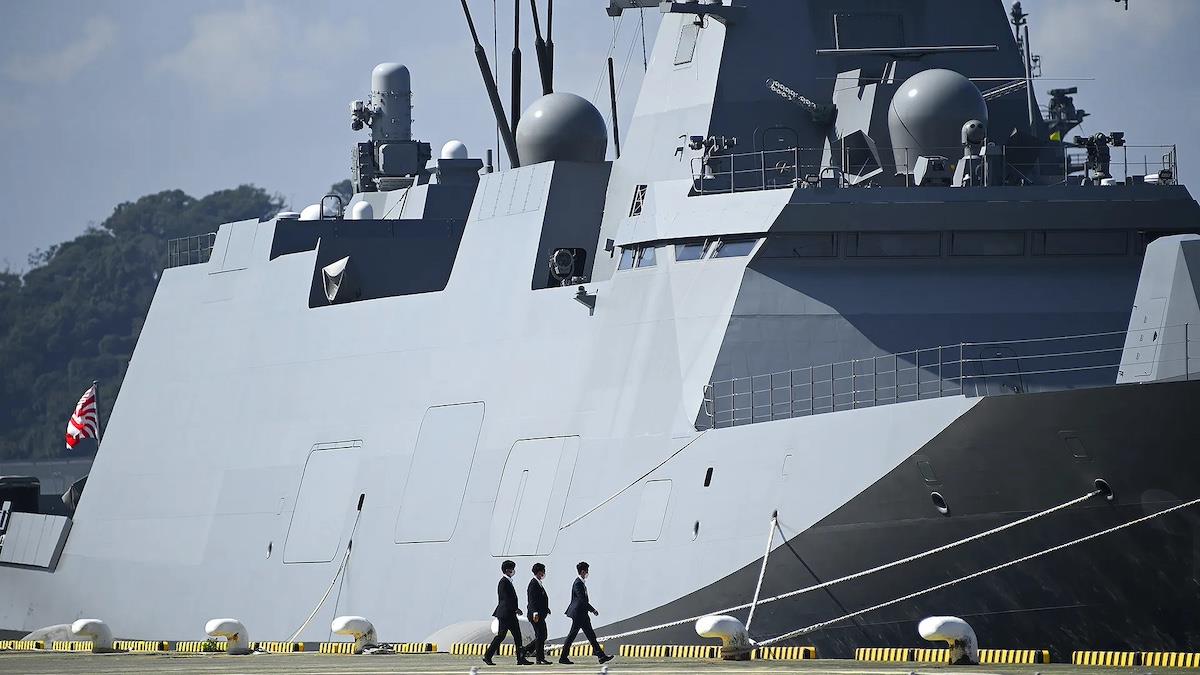
Japan-Australia Frigate Deal About Far More Than 11 Warships
(MENAFN- Asia Times)
The signing of the“Mogami Memorandum” aboard the JS Kumano frigate docked in Melbourne on April 18, 2026, marks a pivotal geopolitical moment, one that signals a tectonic shift in the Indo-Pacific security architecture.
Japan has, in effect, shed the constraints of its post-World War II pacifism to emerge as a major global exporter of defense equipment.
Under the agreement, valued at up to A$20 billion (US$14.4 billion), Tokyo has committed to supplying 11 next-generation Mogami-class frigates (Upgraded Mogami/06FFM) to the Royal Australian Navy.
Japan's Defense Minister Shinjiro Koizumi and Australia's Deputy Prime Minister Richard Marles jointly inaugurated what is now widely viewed as the most integrated north–south defense axis in the region.
The procurement scheme is notably ambitious. The first three vessels will be entirely built by Mitsubishi Heavy Industries in Nagasaki to meet an accelerated delivery schedule by December 2029. The remaining eight will be constructed in Henderson, Western Australia.
This decision concludes a prolonged contest in which Japan outmaneuvered Germany's MEKO A-200 proposal, as well as bids from South Korea and Spain.
Canberra ultimately favored Tokyo due to the maturity of its design, schedule reliability, and superior automation technology, allowing operations with a crew of just 92, roughly half that of conventional frigates.
For Japan, this contract marks redemption after its failed bid for Australia's Soryu-class submarines a decade ago. More importantly, the Mogami deal serves as a geostrategic instrument to anchor Australia within a quasi-alliance, a de facto alignment aimed at balancing China's growing military assertiveness in the Indo-Pacific.
Bilateral relations have evolved well beyond trade, entering a phase defined by shared strategic doctrine, particularly the concept of“deterrence by denial,” designed to prevent conflict in maritime theaters before it can escalate.
This strategic convergence did not emerge overnight. Since the declaration of a Special Strategic Partnership in 2014, Tokyo and Canberra have methodically built a robust legal and operational framework.
The culmination came with the Reciprocal Access Agreement (RAA ), enacted in 2023, which streamlines the deployment of troops and defense assets across each other's territories. It represents Japan's first such defense agreement with a country other than the United States since 1960.
A quasi-strategic allianceThe deepening of ties is rooted in shared vulnerabilities, particularly concerning the security of sea lines of communication (SLOC ). Australia functions as a critical supplier of energy and minerals to Japan, providing roughly one-third of its LNG needs and two-thirds of its industrial minerals.

Legal Disclaimer:
MENAFN provides the
information “as is” without warranty of any kind. We do not accept
any responsibility or liability for the accuracy, content, images,
videos, licenses, completeness, legality, or reliability of the information
contained in this article. If you have any complaints or copyright
issues related to this article, kindly contact the provider above.
Most popular stories
Market Research

More Story






Comments
No comment