


Rare Pigment Worth More Than Its Weight In Gold Found In Roman Infant Burials In York, UK The Art Newspaper International Art News And Events


A pair of Roman infant burials in York has yielded an unusually intimate glimpse of status, grief, and ritual in the late empire: traces of Tyrian purple cloth embroidered with gold thread. Scientists at the University of York say the find is the first evidence of the dye in textiles from York, and one of only a handful of examples from the UK.
The burials, which date to the late third or early fourth century AD, belonged to two children buried with striking care about 1,700 years ago. One was around two years old and placed in a stone sarcophagus between two adults. The other, only a few months old, was laid in a tiny lead coffin and covered in two layers of textiles, including a tassled shawl and a fine purple-and-gold wrap.
Tyrian purple was one of the Roman world's most prized luxury dyes. Produced in Tyre, in modern-day Lebanon, it was made by crushing murex sea snails in specialist dye works. Researchers estimate that as many as 12,000 molluscs were needed to produce a single gram, a measure of how closely the color was tied to wealth and power.
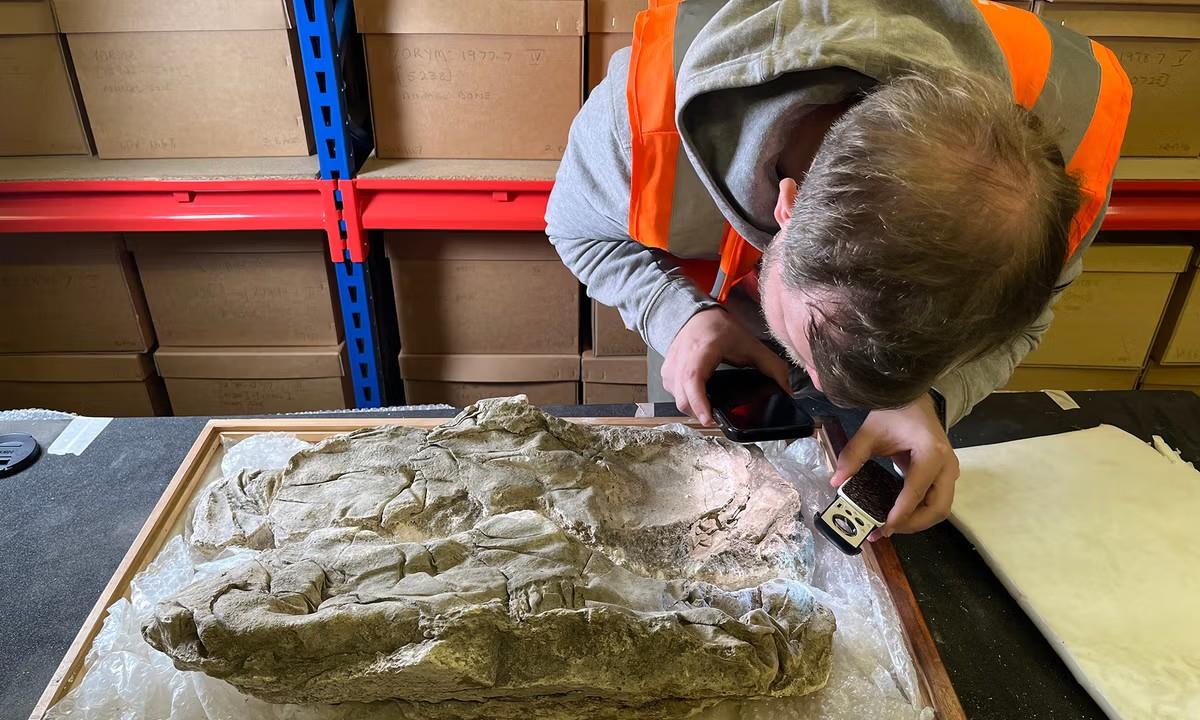
The fabric itself had long since decayed, but the gypsum used in these burials preserved its impressions, along with faint traces of color. Scientists extracted minute samples and analyzed them with liquid-chromatography tandem mass spectrometry, which identified the main chemical compound of Tyrian purple.
The discovery is part of the Seeing the Dead project, led by Maureen Carroll and funded by the Arts and Humanities Research Council. Carroll said the find sheds new light on the place of children in Roman York and on the willingness of families to give infants the best possible burial in tragic circumstances.
York is already known for its unusual group of gypsum burials, a rite in which liquid gypsum was poured into a coffin or sarcophagus before closure, preserving the body's outline and, in some cases, traces of textiles. The new evidence adds a rare layer of material proof to a practice that archaeologists still do not fully understand, while also underscoring how carefully some Roman families marked the deaths of very young children.

Legal Disclaimer:
MENAFN provides the
information “as is” without warranty of any kind. We do not accept
any responsibility or liability for the accuracy, content, images,
videos, licenses, completeness, legality, or reliability of the information
contained in this article. If you have any complaints or copyright
issues related to this article, kindly contact the provider above.


Comments
No comment