







403
Sorry!!
Error! We're sorry, but the page you were looking for doesn't exist.
Botanical Supplements Market Size, Share & Growth Report By 2034
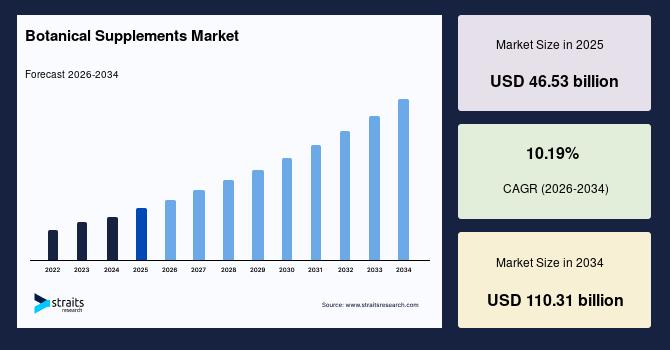
| Market Metric | Details & Data (2025-2034) |
|---|---|
| 2025 Market Valuation | USD 46.53 billion |
| Estimated 2026 Value | USD 51.07 billion |
| Projected 2034 Value | USD 110.31 billion |
| CAGR (2026-2034) | 10.19% |
| Dominant Region | North America |
| Fastest Growing Region | Asia Pacific |
| Key Market Players | Dabur India, The Nature's Bounty Co. (NBTY), Herbalife Nutrition, Amway Corporation, Gaia Herbs |
Download Free Sample Report to Get Detailed Insights.
Emerging Trends in the Botanical Supplements Market Stackable combination formulas are overtaking single-ingredient positioningThe botanical supplements market is shifting away from single-herb products toward multi-ingredient“stacked” formulations designed around functional outcomes. By 2025, combination products will have surpassed single-herb offerings, reflecting a broader transition from ingredient-centric marketing to solution-based positioning across use cases such as sleep, focus, immunity, menopause support, and metabolic health. This allows brands to capture higher value per product by bundling perceived synergistic effects.
E-commerce is becoming the primary commercial and discovery engineDigital channels are emerging as the central growth driver of the botanical supplements category, with e-commerce accounting for a rising share of total sales and expanding at a faster rate than offline retail. The channel's increasing dominance is driven by search-led discovery, influencer traffic, customer reviews, and subscription-based replenishment models. This shift is transferring pricing power and consumer acquisition advantage toward digitally native and digitally optimized brands.
Social media is now the primary catalyst for ingredient demand creationBotanical ingredient adoption is increasingly being shaped by creator ecosystems, wellness educators, and viral content before formal retail validation occurs. Ingredients such as ashwagandha, shilajit, and functional mushrooms have scaled rapidly through online narrative-building rather than traditional clinical or retail-led education cycles. This compresses the time between early awareness and mainstream commercialization, effectively making social platforms a leading demand-generation layer.
Market Drivers Stress, sleep, and emotional resilience are becoming core daily-use health categoriesBotanical supplement demand is increasingly driven by recurring, functional needs such as stress management, sleep quality, and emotional resilience rather than occasional wellness use. The rising adoption of ingredients like ashwagandha and melatonin reflects a shift toward addressing persistent lifestyle strain and performance fatigue. This positions botanicals as part of everyday behavioural health management rather than aspirational natural wellness consumption.
Supplements are being integrated into self-directed healthcare routinesConsumer behaviour is shifting toward viewing supplements as a first-line option for managing non-critical health needs, often preferred over OTC or prescription alternatives where appropriate. A large majority of users now consider supplements essential to maintaining baseline health, indicating a move toward proactive, self-managed care routines. This evolution is embedding botanical products into recurring personal health budgets rather than discretionary wellness spending.
Growth is being driven by repeat consumption and strong brand retention economicsThe botanical supplements market is increasingly characterised by high repeat purchase behaviour and relatively stable monthly spend levels, even in inflationary environments. A significant share of users demonstrate brand loyalty once established, suggesting that habit formation plays a central role in sustaining demand. As a result, market growth is being driven more by retention and consumption continuity than by one-time trial conversion.
Digital discovery is accelerating mainstream adoption of niche botanicalsSocial media and influencer-led education have significantly reduced the discovery barrier for herbal and botanical ingredients, reshaping how consumers evaluate and adopt new products. A growing share of consumers now research botanicals through digital channels before purchase, enabling faster transition of niche herbs into mainstream consideration sets. This has expanded demand pools by shortening the education cycle and amplifying ingredient-level awareness at scale.
Market Restraints Trust erosion creates a structural ceiling on category expansionDeclining confidence among non-users is becoming a meaningful constraint on broader supplement penetration, even as existing users remain highly committed and increase spend. This creates a bifurcated market dynamic where growth is driven more by deepening usage within the believer base than by converting skeptics. As a result, trust acts as a structural“growth tax” that limits mass-market expansion.
Quality failures have category-wide reputational spilloversRegulatory actions, including FDA warning letters related to adulteration, inadequate identity testing, and labeling inconsistencies, highlight persistent quality gaps in parts of the supplement supply chain. In botanical categories, these failures often extend beyond individual brands, as consumers tend to generalize risk at the ingredient or category level rather than isolate brand-specific issues. This amplifies reputational damage and increases scrutiny across the entire segment.
Regulatory ambiguity increases barriers to fast botanical innovationWhile evolving FDA frameworks and updated guidance have improved clarity around dietary supplement compliance, they have also raised the evidentiary and documentation requirements for introducing new or less-established botanical ingredients. This results in longer development timelines, higher regulatory overhead, and increased compliance complexity. Companies with stronger regulatory capabilities gain a structural advantage, while smaller innovators face slower and more resource-intensive commercialization pathways.
Market Opportunities Practitioner-backed botanical systems for premium, protocol-led monetizationA key opportunity lies in building clinician-validated botanical programs rather than retail-only supplement offerings. Consumers who purchase through healthcare practitioners demonstrate significantly higher willingness to pay, with median monthly spending around USD 100, nearly double the broader user base. Positioning botanicals within structured, practitioner-led protocols enhances trust, improves adherence, and supports premium pricing through perceived medical legitimacy rather than lifestyle branding.
Own the quality verification layer as a core brand differentiatorRegulatory scrutiny around identity testing, contamination control, and manufacturing consistency is increasing, particularly in multi-ingredient botanicals and functional mushroom products. In this environment, transparency mechanisms such as third-party lab testing, contaminant screening, and batch-level traceability are evolving from compliance requirements into commercial assets. Brands that visibly operationalize quality assurance can convert trust and safety into a defensible competitive advantage.
Shift from SKU portfolios to condition-led botanical ecosystemsAs consumers increasingly purchase supplements based on desired outcomes rather than individual ingredients, combination formulas are gaining share over single-herb products. This creates space for integrated, condition-specific botanical systems focused on areas such as sleep, hormonal balance, cognitive aging, digestive health, and post-metabolic intervention support. The competitive advantage shifts toward brands that can design structured health pathways rather than fragmented product assortments.
Convert digital discovery into retention-led revenue systemsWith digital channels becoming the primary entry point for supplement discovery, the key value creation opportunity lies in post-acquisition retention design rather than traffic generation. Subscription models, bundled regimens, refill cycles, and guided usage programs are increasingly central to revenue stability. Platforms such as Amazon's Subscribe & Save highlight how convenience, automation, and pricing incentives can transform episodic purchases into predictable, recurring consumption streams.
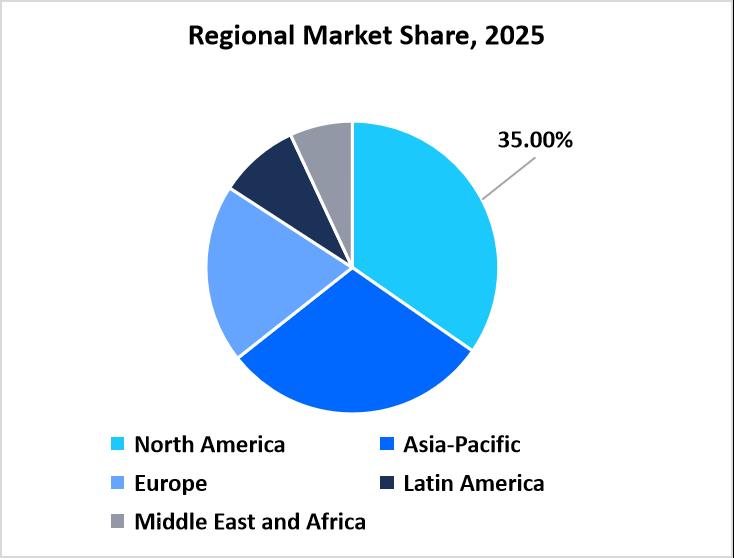
Regional AnalysisNorth America's botanical supplements market is dominant with a market share of over 35%, supported by sophisticated R&D, high consumer awareness of herbal remedies, and broad retail and e-commerce distribution. Demand for adaptogens, immune-support botanicals, and targeted formulations for sleep, digestion, and stress management drives continual product innovation. Manufacturers emphasize clinically backed ingredients, traceable and sustainable sourcing, and third-party testing to build credibility. Moreover, strong partnerships between supplement brands and research institutions accelerate new ingredient validation. Growth is further propelled by personalized nutrition trends, subscription sales models, and rising interest in natural preventive health across diverse consumer segments.
-
The United States market is characterized by deep innovation and heavy investment in clinical validation. Companies such as Glanbia (Optimum Nutrition), Herbalife, and NOW Foods are expanding portfolios with adaptogens, mushroom extracts, and standardized herbal concentrates for immunity, cognitive support, and sleep.
Canada's botanical supplements market is developing with a strong emphasis on quality and regulatory compliance. Firms such as Jamieson Laboratories, Natural Factors, and AOR (Advanced Orthomolecular Research) are introducing clinically supported herbal blends and standardized extracts for joint health, immune function, and stress relief.
Asia-Pacific's botanical supplements market is the fastest-growing, with a CAGR of 11.54%, propelled by rising disposable incomes, renewed interest in traditional botanicals, and expanding retail access. Consumers increasingly adopt plant-derived supplements for immunity, joint health, and metabolic wellness, blending ancestral herbal knowledge with modern formulations. Local manufacturers and global entrants invest in extraction technology, standardization, and clinical research to improve efficacy and safety. As regional tastes and regulatory requirements vary, companies tailor formulations and marketing to align with local traditions while meeting global quality expectations.
-
China's botanical supplements market is expanding rapidly, with firms like By-Health, Infinitus, and Tasly developing herbal extracts, standardized traditional formulations, and concentrated adaptogen blends for immunity and vitality. Investment focuses on analytical testing, modern extraction methods, and packaging that bridges traditional trust and modern convenience.
India's market is growing strongly as companies such as Dabur, Himalaya, and Organic India commercialize Ayurveda-based botanicals in standardized, science-backed formats. Focus areas include adaptogens, herbal immunity boosters, and digestive support formulations designed for both domestic and export markets.
Source: Straits Research
Europe Market TrendsEurope's botanical supplements market is witnessing steady growth in botanical supplements, driven by rising preference for natural wellness solutions, clean-label formulations, and plant-derived functional ingredients. The market benefits from strict regulatory oversight, which reinforces consumer trust and pushes manufacturers to adopt high-quality extraction standards and evidence-based formulations. As per Straits Research, demand is particularly strong for digestive botanicals, sleep and stress support herbs, and herbal blends tailored to healthy aging. Companies are investing in traceability, sustainable sourcing, and organic certifications, while e-commerce and pharmacy-led retail channels expand regional access to premium botanical products.
-
Germany's market is shaped by companies like Queisser Pharma, Dr. Willmar Schwabe, and Salus Haus, which focus on clinically validated herbal extracts that meet stringent quality standards. Investments in pharmaco-botanical R&D, GMP manufacturing, and healthcare practitioner collaborations support product credibility, while wide distribution through pharmacies and natural health stores ensures strong market penetration.
Latin America's botanical supplements market is emerging as a promising market, supported by growing urban health consciousness, expanding middle-class spending, and renewed interest in indigenous herbal traditions. Consumers increasingly adopt plant-based remedies for immunity, energy, and digestive wellness, prompting companies to modernize traditional botanicals into standardized, packaged formulations. Moreover, local manufacturers and regional wellness brands are also forming alliances with global nutraceutical firms to enhance processing capabilities, quality control, and distribution efficiency across key countries.
-
Brazil's botanical supplements market is led by companies such as Herbarium, Nutrify, and Promel that develop herbal extracts inspired by Amazonian and local plant resources. These firms focus on functional blends for immunity, vitality, and metabolic support, incorporating standardized actives and sustainable harvesting practices.
The Middle East and Africa's botanical supplements market is steadily expanding in botanical supplements, supported by rising interest in natural remedies, growing preventive health awareness, and stronger investments in modern retail and pharmacy networks. The market benefits from cultural familiarity with herbal wellness, which blends well with global nutraceutical trends. Companies are increasingly adopting standardized herbal ingredients, clean formulations, and premium packaging to meet consumer expectations. International partnerships and e-commerce platforms are helping accelerate access to high-quality botanical products across major urban centers.
-
The UAE's market is strengthened by brands such as Life Pharmacy, Green Valley, and regional distributors of global herbal firms. Companies focus on premium botanical blends for immunity, sleep, digestion, and stress relief, supported by advanced sourcing and third-party quality testing.
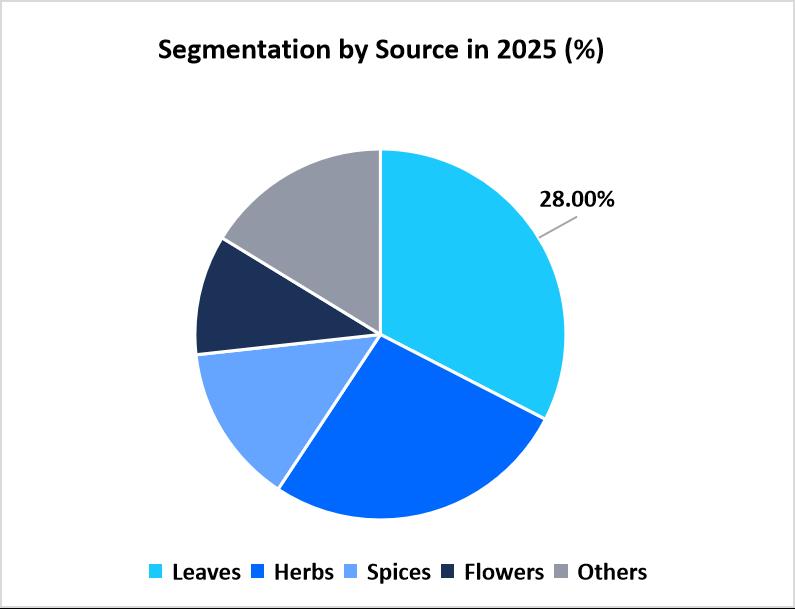
Leaves dominate the botanical supplements market with a share exceeding 28%, supported by their extensive use in digestive health, detoxification, and traditional wellness formulations. Their wide availability and compatibility with multiple extraction methods make leaf-based supplements especially attractive to manufacturers. The segment benefits from rising global interest in plant-derived antioxidants and polyphenols, reinforcing steady demand across capsules, powders, and liquid extracts within mainstream health and preventive nutrition categories.
Flowers represent the fastest-growing source segment, expanding at a CAGR of 10.64%, driven by consumer preference for calming, anti-inflammatory, and aromatherapeutic botanical ingredients. Floral extracts are gaining traction in stress-relief blends, sleep-enhancing formulations, and immunity boosters. Their functional versatility and premium positioning appeal to wellness brands seeking differentiation. Increasing scientific validation of chamomile, hibiscus, and lavender further accelerates adoption, strengthening growth across both nutraceutical and herbal remedy applications.
Source: Straits Research
Form InsightsTablets hold a dominant market share of over 30%, supported by their precise dosing, long shelf life, and strong acceptance among traditional supplement users. The format enables brands to blend multiple botanical extracts efficiently while ensuring consistent potency. Cost-effective production and wide retail presence also reinforce leadership. Moreover, tablets continue to be favored for daily wellness routines, immune support, and general preventive care, maintaining their central role in global botanical supplement consumption.
Liquid botanical supplements are the fastest-growing form, advancing at a CAGR of 11.24% as consumers seek faster absorption and easier consumption. Liquids appeal to younger demographics, athletes, and individuals preferring customizable doses. The format supports innovative delivery styles such as tinctures, drops, and concentrated shots. Moreover, brands are leveraging clean-label formulations and flavorful blends to expand usage across energy, immunity, and holistic wellness categories, driving rapid adoption across channels.
Applications InsightsEnergy and weight management products dominate botanical supplement applications with a market share above 20%, fueled by global demand for metabolism-boosting and fatigue-reducing plant extracts. Ingredients such as green tea, ginseng, and cayenne continue to anchor this segment due to strong consumer trust and sustained marketing visibility. Moreover, growing fitness participation in fitness and lifestyle-driven fatigue issues ensures consistent uptake, keeping this application central to both premium and mass-market botanical formulations worldwide.
Anti-cancer botanical supplements are the fastest growing application, rising at a CAGR of 12.24%, supported by expanding research on plant compounds with antioxidant and anti-proliferative properties. Ingredients like turmeric, graviola, and medicinal mushrooms attract attention for complementary wellness roles. Moreover, consumer interest in natural preventive solutions drives demand, particularly through specialist health retailers and online channels. This segment's growth is further reinforced by rising awareness of holistic and integrative healthcare approaches.
Distribution Channel InsightsOffline channels dominate the botanical supplements market with over 75% share, driven by strong consumer reliance on pharmacies, health stores, and supermarkets for product verification and expert guidance. Physical outlets provide credibility, curated selections, and trusted brands, which remain essential for first-time or cautious buyers. Moreover, many regions still prefer in-person shopping for wellness products, ensuring sustained demand across brick-and-mortar stores despite rising digital penetration.
Online sales are the fastest-growing distribution channel, expanding at a CAGR of 10.84%, propelled by broader accessibility, competitive pricing, and rapid purchase behavior. E-commerce platforms offer extensive product comparisons, transparent reviews, and niche botanical formulations not easily found offline. Subscription models, personalized recommendations, and influencer-driven visibility further elevate online growth. Moreover, increasing consumer comfort with digital wellness purchases continues to accelerate this segment's upward momentum globally.
Company Market ShareLeading firms are heavily focused on standardizing plant extracts, investing in clinical trials for stress reduction and immune support, and expanding into novel formats like gummies and functional foods. Major players are also scaling manufacturing capabilities to ensure high-quality, traceable botanical actives, while forming strategic partnerships to drive R&D, launch targeted health-outcome products, and meet rising consumer demand.
Herbalife NutritionHerbalife Nutrition, founded in 1980 in Los Angeles, is a nutrition company known for its portfolio of botanical and herbal-based supplements. The company develops plant-derived formulations for digestive health, immunity, energy, and weight management. Herbalife focuses on standardized herbal ingredients, science-backed blends, and global distribution through its direct-selling network, making botanical supplements a core part of its strategy.
List of Key and Emerging Players in Botanical Supplements Market Dabur India The Nature's Bounty Co. (NBTY) Herbalife Nutrition Amway Corporation Gaia Herbs NOW Foods Solgar Swanson Health Products Blackmores Limited The Himalaya Drug Company Ricola AG Procter & Gamble BASF SE Glanbia plc Botanicalife International Bio-Botanica Inc. Naturex SA MartinBauer Group Arjuna Natural Extracts Bionorica SE Recent Developments-
In October 2025, Prathista Industries signed an MoU with NMRI (National Meat Research Institute) to collaborate on natural feed supplements and fermentation-based botanical ingredients.
In October 2025, Haleon partnered with Belgian biotech company Botalys to develop high-performance botanical actives using indoor cultivation and metabolomic profiling.
In October 2025, Aker BioMarine entered a two-year exclusive collaboration with Xandro to commercialize brain-health supplements combining marine and botanical bioactives in Southeast Asia.
In September 2025, Ancient + Brave expanded its botanical-based supplement offerings into international wellness markets, strengthening presence in collagen + plant-based supplement hybrids.
In August 2025, the Department of Biotechnology (DBT) and IndiaAI signed an MoU to integrate biotechnology and artificial intelligence capabilities, supporting accelerated development of bio-based health solutions, including nutraceutical and botanical research applications.
| Report Metric | Details |
|---|---|
| Market Size in 2025 | USD 46.53 billion |
| Market Size in 2026 | USD 51.07 billion |
| Market Size in 2034 | USD 110.31 billion |
| CAGR | 10.19% (2026-2034) |
| Base Year for Estimation | 2025 |
| Historical Data | 2022-2024 |
| Forecast Period | 2026-2034 |
| Report Coverage | Revenue Forecast, Competitive Landscape, Growth Factors, Environment & Regulatory Landscape and Trends |
| Segments Covered | By Source, By Form, By Applications, By Distribution Channel |
| Geographies Covered | North America, Europe, APAC, Middle East and Africa, LATAM |
| Countries Covered | US, Canada, UK, Germany, France, Spain, Italy, Russia, Nordic, Benelux, China, Korea, Japan, India, Australia, Taiwan, South East Asia, UAE, Turkey, Saudi Arabia, South Africa, Egypt, Nigeria, Brazil, Mexico, Argentina, Chile, Colombia |
Download Free Sample Report to Get Detailed Insights.
Botanical Supplements Market Segments By Source-
Herbs
Leaves
Spices
Flowers
Others
-
Powder
Liquid
Tablets
Capsules
Gummies
Others
-
Energy & Weight Management
General Health
Bone & Joint Health
Gastrointestinal Health
Immunity
Cardiac Health
Diabetes
Anti-Cancer
Others
-
Offline
Online
-
North America
Europe
APAC
Middle East and Africa
LATAM

Legal Disclaimer:
MENAFN provides the
information “as is” without warranty of any kind. We do not accept
any responsibility or liability for the accuracy, content, images,
videos, licenses, completeness, legality, or reliability of the information
contained in this article. If you have any complaints or copyright
issues related to this article, kindly contact the provider above.
Most popular stories
Market Research

More Story








Comments
No comment