




403
Sorry!!
Error! We're sorry, but the page you were looking for doesn't exist.

Druzhba Shutdown Hastens Europe's Case For A Pipeline Beyond Russia And Iran
| Export route | 2025 Kazakhstan volume | Destination | Russian control? | Status |
| Druzhba (northern leg) | 2.15 million tonnes | Germany (Schwedt) | Yes, Transneft | Halted from May 1st |
| CPC (Caspian Pipeline Consortium) | ~60 million tonnes (all origins) | Novorossiysk, Black Sea | Partial, but Russian majority | Operating, subject to Russian legal pressure and weather stoppages |
| BTC via Azerbaijan | ~1.3 million tonnes | Ceyhan, Mediterranean | None, bypasses Russia entirely | Operating; <50% capacity used; long-term target 20mt |
| China (rail/pipeline) | Growing volumes | Chinese refineries | None | Limited by eastward orientation; not a European solution |
___________________________________
The strategic importance of the BTC corridor is obvious. It is free from dependence on Russia; it links the Caspian suppliers with Mediterranean tanker shipping directly; it has the extra capacity to take the increased volume. Herein lies the limitation: not in the pipelines, but in the terminal for supplying the pipeline network. It is necessary that Kazakhstani oil be delivered by tankers from the Aktau port through the Caspian Sea to Baku, where it would then enter the pipeline network. At present, Aktau has a capacity of transporting just 5–6 million tonnes of oil annually, compared to the target figure of 20 million tonnes. The Caspian max tanker capacity of the state shipping company Kazmortransflot was cut from six to three ships when volumes were low. To reach 20 million tonnes, an expansion ten-fold of Aktau's capacity, building new tankers, and constructing new pipelines will be needed.
Over the shorter period of time, that is, over the next 12-24 months, Kazakhstan is capable of re-routing 2-3 million tons of its oil originally destined for Druzhba transit. First, there is the capacity within BTC's pipelines; second, there is an agreement in place with SOCAR; third, there is an operational facility in Ceyhan for shipping crude to Europe via tankers. Considering the current limits of the number of tankers from the Caspian available in 2026, that amount is not expected to exceed 2.2 million tons – that is the limit according to the agreement. But that still corresponds to the amount sent through Druzhba to Germany.
Best opportunity for Baku
The Druzhba closure is an opportunity that arrives at an awkward moment. On one hand, it brings closer to fruition precisely the transit revenue calculus Azerbaijan had been working towards all along: excess capacity in BTC, a strategic benefit that Europe requires desperately, and something that provides a big commercial gain as well. The war in Iran had already forced oil flows to shift northwards via the Caspian route. Druzhba's shutdown introduces yet another push factor for the same redirection. Azerbaijan finds itself in a uniquely pivotal position regarding the only oil transport corridor that avoids going through either Russia or Iran, a geopolitically advantageous situation that has gained material significance in the last eight weeks alone, which I have been reiterating ever since.
This is because, last year's two-month shutdown of the flow of BTC-bound Kazakh crude due to the poisoning of Azerbaijani crude oil en route to Ceyhan, claimed to be orchestrated by the Russians, revealed that the BTC passage cannot escape hybrid attacks. While the problem was sorted out, the timing, when Europe was starting to rely on it, was very unfortunate and damaging to the reputation of the transit route. Azerbaijan must prove that the BTC route is indeed secure in terms of both operation and international diplomacy before it becomes the main pipeline for European refineries.
BTC capacity: 50 million tonnes/year nameplate; approximately 27 million tonnes used in 2025, leaving roughly 23 million tonnes of headroom.
Kazakh BTC volumes: 1.3 million tonnes in 2025; target 1.6–2.2 million tonnes in 2026 under existing SOCAR agreement. Long-term ambition: 20 million tonnes annually.
Aktau bottleneck: Current port capacity 5–6 million tonnes/year. Tripling required for 20mt ambition. Tanker fleet reduced from 6 to 3 Caspian-max vessels, needs rebuilding.
Near-term feasibility: Substituting the halted 2–3 million Druzhba tonnes via BTC is achievable in 2026 within existing infrastructure. Scaling to 20 million tonnes is a 5–7 year infrastructure programme requiring $5–8bn in port, fleet, and pipeline investment.
Germany's first course of action, diversification through Rostock and Gdansk, may be a decent tactic, but it doesn't address the underlying issue. Both Rostock and Gdansk were already operating at their limits even before Wednesday's announcement. What this announcement did do, however, was hasten the decision that had already been hanging for the last two years over Europe's heads regarding how much investment would have to go into the Trans-Caspian corridor to give it the capability to become a real alternative to the transit facilities of Russia. The pipeline between Aktau, Baku, Ceyhan, and European terminals is there. So too is the arrangement structure. Capacity is present. What has been lacking until now is the urgency, together with the political commitment to complete the infrastructure. Now Russia has supplied the former; the latter becomes much more urgent.
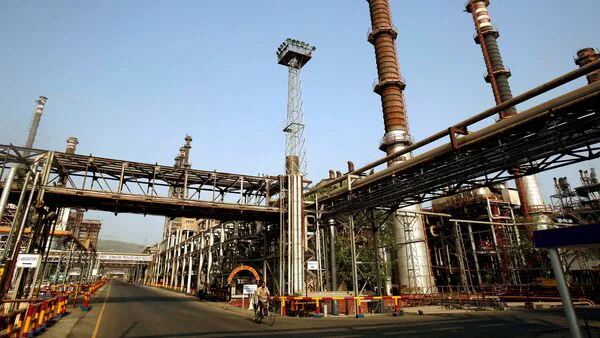
*Image is AI-generated

Legal Disclaimer:
MENAFN provides the
information “as is” without warranty of any kind. We do not accept
any responsibility or liability for the accuracy, content, images,
videos, licenses, completeness, legality, or reliability of the information
contained in this article. If you have any complaints or copyright
issues related to this article, kindly contact the provider above.
Most popular stories
Market Research

More Story







Comments
No comment