




403
Sorry!!
Error! We're sorry, but the page you were looking for doesn't exist.
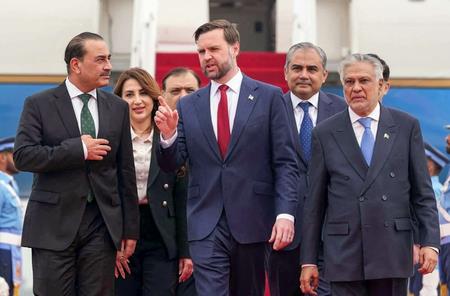
Caught In Delicate Balancing Act, Pakistan Seeks Profits From US-China Rivalry
(MENAFN- IANS) London, April 11 (IANS) With the US image declining in Pakistan, Chinese infrastructure investment, diplomatic influence, and strategic presence are gaining from the contrast. Recent developments have placed Pakistani leadership into a delicate balancing act, seeking to safeguard ties with the US without fully endorsing them to avoid domestic backlash.
According to a report in UK-based newspaper Asian Lite, the longer this balancing act persists and leans towards public sentiment, the more leverage Beijing secures in Pakistan.
It added that pro-Iran demonstrations in Pakistan during the West Asia conflict are not incidental.
“US Consulates stormed, staff evacuated, travel advisories elevated, visa services suspended, and at least 24 people dead in a single day of protest – these are not the indicators of manageable diplomatic friction between Washington and Islamabad. They are markers of an environment in which American presence has become a liability and a target in Pakistan. It is a new wave of anti-US sentiments in Pakistan, which will not dissipate anytime soon," the report detailed.
As the US and Israel launched a military campaign against Iran on February 28, killing Iranian Supreme Leader Ali Khamenei, the report said, the repercussions were felt in Pakistan almost instantly.
“Within hours, protests were forming outside American diplomatic buildings. By March 1, those protests had turned widespread and fatal. What unfolded in the days that followed was not simply an expression of grief or solidarity for Iran. It was the most concentrated outbreak of anti-American violence at US diplomatic facilities in Pakistan since 1979, and it exposed how thoroughly the US-Iran war has reshaped the security calculus for American citizens, diplomats, and projects across the country," it mentioned.
“Protests erupted across Pakistan on March 1, primarily among Shia Muslim communities, in response to the killing of Khamenei. Demonstrators condemned the attacks and expressed solidarity with Iran, with chants of 'Death to America' and 'Death to Israel', and protesters also accused the Pakistani government of siding with the US during the conflict," it stated.
The report emphasised that the strategic beneficiary of the situation is neither Pakistan's government nor its public, but China. As the United States reduces its diplomatic footprint and its institutions in Pakistan face sustained hostility, Beijing's influence expands without any effort.
“As Pakistan seeks to profit from the China-US rivalry, any revival in Islamabad's relations with Beijing would be evident in the fate of the China-Pakistan Economic Corridor (CPEC), long described by Washington as a 'debt trap', with renewed commitment to CPEC 2.0 signalled at all recent high-level exchanges,” it noted.

Legal Disclaimer:
MENAFN provides the
information “as is” without warranty of any kind. We do not accept
any responsibility or liability for the accuracy, content, images,
videos, licenses, completeness, legality, or reliability of the information
contained in this article. If you have any complaints or copyright
issues related to this article, kindly contact the provider above.
Most popular stories
Market Research

More Story



Comments
No comment